
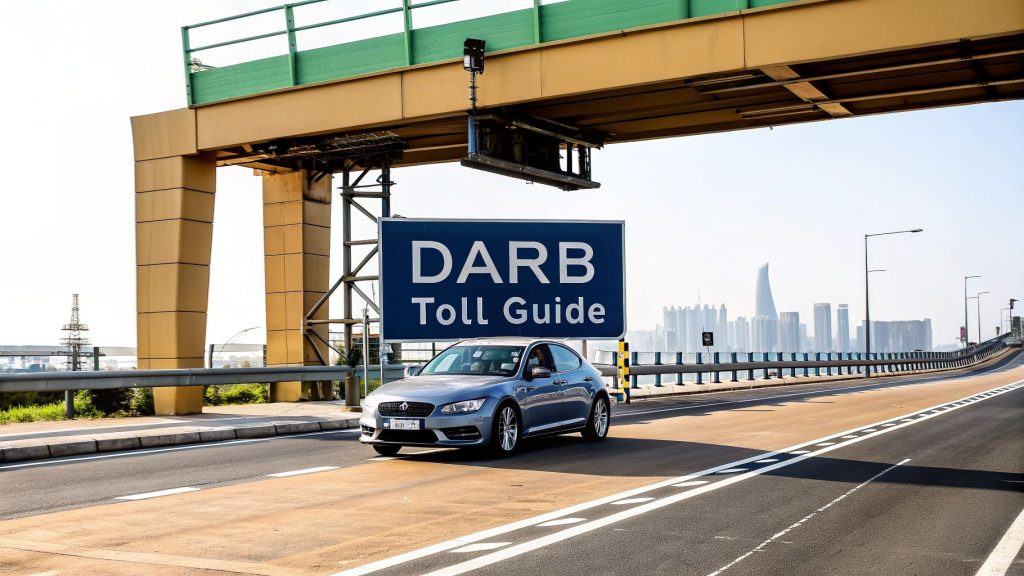
If you’ve been driving around Abu Dhabi and heard people mention "Abu Dhabi Salik," let's clear things up. The official name for the capital's toll system is actually DARB, and it’s a smart, seamless way to manage traffic flow.
Unlike older systems that need a physical tag on your windscreen, DARB is completely digital. It uses high-tech cameras to spot your car's number plate as you drive under a toll gate, making the whole process invisible.
What Is The Abu Dhabi Toll Gate System?

Anyone familiar with Dubai’s Salik system will get the basic idea right away, but DARB has its own set of rules. The Department of Municipalities and Transport (DMT) rolled it out to ease up congestion, especially during those hectic morning and evening rush hours.
Think of it like this: there’s an invisible net cast over the main bridges leading into the city. As your car passes through, cameras instantly read your licence plate and deduct the toll from your online DARB account. No stopping, no fumbling for cash, and no toll booths. It’s designed to keep you moving.
For a quick overview, here's a look at the key details of the system.
Abu Dhabi DARB Toll System At A Glance
| Feature | Details |
|---|---|
| System Name | DARB |
| Technology | Automatic Number Plate Recognition (ANPR) |
| Gate Locations | Sheikh Zayed Bridge, Sheikh Khalifa Bridge, Al Maqtaa Bridge, Musaffah Bridge |
| Toll Fee | AED 4 per crossing during peak hours |
| Peak Hours | 7:00 AM – 9:00 AM and 5:00 PM – 7:00 PM (Monday to Saturday) |
| Off-Peak Hours | Free of charge |
| Daily Cap | AED 16 per vehicle |
| Exemptions | Sundays and public holidays |
This table covers the essentials you need to know before hitting the road in Abu Dhabi.
Key Toll Gate Locations
The DARB system is cleverly positioned on the four main bridges that act as the arteries connecting mainland Abu Dhabi to the island. This placement helps manage the daily pulse of traffic.
You'll find the toll gates at:
- Sheikh Zayed Bridge: A stunning architectural landmark and a major entry point into Abu Dhabi.
- Sheikh Khalifa Bridge: The main connection for anyone heading to or from Saadiyat Island and Al Reem Island.
- Al Maqtaa Bridge: One of the original, historic bridges linking the mainland to the island.
- Musaffah Bridge: A vital route, especially for commuters coming from industrial zones and southern suburbs.
It's worth remembering that the DARB system isn't just about collecting money. It’s a sophisticated traffic management tool. The goal is to encourage drivers to think about their routes and travel times, maybe using alternative roads or driving during off-peak hours to help ease congestion for everyone.
Knowing where these gates are is your first step to a smooth drive, whether you're a long-time resident, a first-time visitor, or picking up a rental from a provider like Uptown Rent A Car. Every vehicle that passes under these gates needs to be registered, so a little planning goes a long way in managing your travel budget and avoiding any surprises.
How DARB Toll Charges Really Work
Getting your head around the DARB toll system is actually pretty straightforward once you understand its main goal: it only charges you during the busiest times of the day. Unlike other systems that might charge you 24/7, Abu Dhabi’s approach is smarter, designed to ease up traffic when it really counts.
The system kicks into gear during peak hours from Saturday to Thursday. This means a standard fee of AED 4 is charged each time you drive under a toll gantry within two specific windows: the morning rush from 7:00 AM to 9:00 AM, and again for the evening commute from 5:00 PM to 7:00 PM.
Simply put, timing is everything. If you drive through those same gates any time outside of these peak periods, your trip is completely free.
Off-Peak Travel and Free Days
One of the best things about the DARB system is how generous it is with off-peak travel. Any trip you make on a weekday that doesn't fall into those morning or evening rush hours won't cost you a dirham.
Better yet, the entire system switches off on Fridays and all official public holidays. This makes weekend drives and holiday trips around the capital much easier on the wallet. For a full breakdown of the active hours and free days, you can check out our complete guide on Abu Dhabi toll gate timing.
Smart Payment Caps To Keep Your Costs Down
To stop daily travel costs from spiralling, the DARB system has built-in payment caps for people who drive frequently. Think of these as a financial safety net, making sure you never pay more than a fixed amount, no matter how many times you pass through the toll gates.
There are two main caps to know:
- Daily Cap: You will never be charged more than AED 16 for a single vehicle in one day. Once you've made your fourth peak-hour crossing, any other trips on the same day are free.
- Monthly Caps: For residents with more than one car, the system offers tiered monthly limits to help manage household expenses. The cap is AED 200 for your first registered car, dropping to AED 150 for a second vehicle.
These payment ceilings are a key part of DARB's design. They ensure the system can manage traffic flow without hitting daily commuters with huge bills, striking a nice balance between city-wide efficiency and individual affordability.
This intelligent fee structure lets you budget your travel costs without any nasty surprises. By understanding the peak hours and making the most of the daily and monthly caps, you can navigate Abu Dhabi with confidence, knowing exactly how the charges work and how to keep them under control.
Abu Dhabi DARB Vs Dubai Salik Explained
If you’ve spent any time driving around the UAE, you're probably well-acquainted with Dubai's Salik system. But the moment you cross into Abu Dhabi, you're playing by a whole new set of rules with the capital’s DARB toll system.
Figuring out the differences between the two isn’t just trivia—it’s essential for anyone driving between the emirates, especially if you're in a rental car.
The first thing you’ll notice—or rather, won’t notice—is the technology. Salik uses a physical RFID tag that you have to stick onto your car’s windscreen. DARB, on the other hand, is a completely tag-less system. It uses high-tech Automatic Number Plate Recognition (ANPR) cameras, making the whole process digital and invisible. Your licence plate is your tag.
DARB vs Salik Key System Differences
To get a clear picture, it helps to see how the two systems stack up side-by-side. While both are toll systems, their philosophies and mechanics are quite different.
| Feature | Abu Dhabi (DARB) | Dubai (Salik) |
|---|---|---|
| Technology | Tag-less (ANPR Cameras) | RFID Windscreen Tag |
| Charging Model | Time-based (Peak hours only) | Location-based (Per crossing) |
| Peak Hour Fee | AED 4 | AED 4 (all times) |
| Off-Peak Fee | Free | AED 4 |
| Registration | Online account linked to plate | Online account linked to tag |
| Primary Goal | Congestion Management | Traffic Flow & Revenue |
This table makes it obvious: DARB is all about managing rush hour, while Salik is a constant, 24/7 system. It's a fundamental difference that directly impacts your driving costs.
How The Charges Really Work
This is where the real-world difference hits your wallet. DARB's entire model is built around easing rush-hour traffic.
You only get charged AED 4 for passing through a toll gate during peak hours, which are 7 AM to 9 AM and 5 PM to 7 PM, from Saturday to Thursday. Drive through at any other time—or on a Friday or public holiday—and it’s completely free.
Salik is much simpler: you pay a flat AED 4 every single time you pass under a gate, no matter the day or time. A late-night drive across Abu Dhabi's bridges costs you nothing. That same trip through Dubai could easily rack up multiple Salik charges.
This handy graphic breaks down exactly how DARB's cost-saving features work, especially its peak-hour fees and protective payment caps.

As you can see, the structure is designed to encourage drivers to travel during off-peak times, not just to collect a fee for using the road.
While both are effective, there's no denying that Salik's 24/7 model is a powerful revenue machine for Dubai. In fact, Salik's net income in Q2 2025 jumped by nearly 50% year-on-year, crossing the AED 400 million mark. This really highlights the financial strength behind Dubai's toll infrastructure.
Key Takeaway: The fundamental difference is this: Abu Dhabi’s DARB is a time-based system targeting peak traffic. Dubai’s Salik is a location-based system that charges per crossing, anytime, day or night.
For anyone in a rental car planning to drive between the cities, knowing this is non-negotiable. It helps you anticipate costs and navigate both emirates without getting hit with confusing charges on your final bill. If you're new to Dubai's system specifically, it's worth learning how to register for Salik so you're prepared for both.
Navigating Abu Dhabi Tolls With A Rental Car

So you’re picking up a rental car and wondering how you're supposed to deal with Abu Dhabi's DARB tolls. Good news: it's incredibly simple, and you won’t have to lift a finger to get the car registered.
Any reputable rental company like Uptown Rent A Car takes care of this for you. Their entire fleet is pre-registered in the DARB system, meaning the car is ready to go the moment you drive away. No fuss, no paperwork for you.
Thanks to the system's tag-less tech, every time you cross one of the main bridges during peak hours, cameras automatically scan your car’s licence plate. A toll charge is logged against the vehicle, and that's it—you won't even notice it happening.
How Rental Toll Charges Are Handled
When it's time to pay, the process is just as smooth. The rental company gets a full report of every toll crossing for each car they own.
Once your rental period is over, they'll simply tally up the accumulated DARB charges and add them to your final bill. It’s a completely hands-off system designed so you can focus on driving, not administration.
Important Note: Most rental agencies add a small administrative or service fee on top of the actual toll charges. This is pretty standard, as it covers their time and effort in managing payments for a large fleet. Just make sure to ask about this fee upfront so there are no surprises on your final invoice.
This approach lets you enjoy the drive without the headache of managing a toll account. It's a system built for efficiency, which is essential given the massive traffic volumes across the UAE.
Just look at Dubai’s Salik system, which tracked a staggering 638 million journeys in the 2024 fiscal year. That activity brought in AED 2.29 billion in revenue, an 8.69% jump from the year before, highlighting just how crucial these streamlined toll systems are for rental services. You can dig into the numbers yourself on Salik's investor overview on salik.ae.
Tips For A Smooth Rental Experience
To make sure your journey is completely stress-free, a quick chat before you leave the rental office can go a long way. Take a moment to confirm their specific toll policies.
Here are a few key questions to ask your rental agent:
- Can you confirm this car is already registered with the DARB system?
- What is your administrative fee for handling the toll charges?
- Will I get an itemised list of the toll charges on my final receipt?
Asking these simple questions clears up any potential confusion about costs. Getting an itemised receipt is a great way to see a clear breakdown, letting you match the charges to your travel times. It’s a small step that gives you complete peace of mind, so you can hit Abu Dhabi’s roads with total confidence.
How To Register And Manage Your DARB Account

Getting set up with your own DARB account is surprisingly simple, and it’s the key to driving through Abu Dhabi’s toll gates without a second thought. If you’re driving your own car in the capital—whether you live here or are just visiting from another emirate—this is a must-do.
The whole process is online. You can register on the official DARB website or use their slick mobile app, which you can grab for either iOS or Android. You'll just need a couple of key details to get rolling.
The Registration Process Step By Step
The system is designed to get you on the road quickly. Here’s a simple breakdown of how to create your account and link your car.
- Visit the Portal: Head over to the official DARB website or fire up the mobile app. Look for the "Create a New Account" option to get started.
- Enter Your Details: The system will ask for your registered mobile number and your valid Emirates ID.
- Add Your Vehicle: Next, punch in your car's traffic code number, your plate number, and the emirate where the car is registered.
- Fund Your Wallet: The last step is adding some money to your account’s digital wallet. Registration is free, but you need a starting balance to cover any tolls you pass through.
That's it! Once your account is active, you're good to go. The system automatically handles the charges whenever you pass through a gate during peak hours. For a deeper dive into this, check out our guide on Abu Dhabi toll registration.
Here’s a pro tip for anyone new to the system: register before you drive through your first toll gate. You technically get a 10-working-day grace period to sign up after your first pass, but why risk it? Registering ahead of time completely removes any chance of getting fined.
Managing Your Wallet and Payments
Keeping your DARB account topped up is the most important part of avoiding penalties. The portal makes it easy to manage your balance so you're never caught short.
You can add funds using a credit or debit card right on the website or in the app. But honestly, the smartest move is to set up the auto-recharge feature. This automatically adds a specific amount to your wallet from your card whenever your balance drops below a certain point.
Think of it as total peace of mind. It guarantees you’ll never get hit with an insufficient balance fine (a painful AED 50 per day after the grace period) and keeps your drives through Abu Dhabi completely seamless.
Common DARB Fines and How to Avoid Them
Getting the hang of the DARB toll system is pretty straightforward, but it's easy to get caught out by the rules. Forgetting a small step can lead to some surprisingly hefty fines that sneak up on you. Knowing the pitfalls is the best way to keep your drive through Abu Dhabi smooth, affordable, and free from any annoying penalties.
The most common trap drivers fall into is passing through a toll gate with an unregistered vehicle. You get a grace period of ten working days after your first crossing to get your car registered. Miss that window, and the fines kick in. It starts at AED 100 for the first day, jumps to AED 200 for the second, and then hits AED 400 for every single day after that.
Key Violations to Know
Another easy mistake is letting your DARB wallet run dry. If you cross a gate with an insufficient balance, the system gives you five working days to top up your account. If you don't, you'll be hit with a fine of AED 50 for each day your balance stays in the red. For daily commuters, that can add up fast.
And it should go without saying, but tampering with your vehicle's licence plate to dodge the cameras is a serious offence with significant penalties. It’s just not worth it.
The best way to deal with fines is to make sure you never get them in the first place. A few minutes of setup when you first create your account can save you a world of headaches and money down the road. Think of it as putting your toll payments on autopilot.
Proactive Steps to Avoid Penalties
Your best defence is a good offence. The two most powerful tools you have against unexpected fines are registering your vehicle right away and setting up automatic payments. Simple as that.
Here’s your game plan to stay clear of violations:
- Register Immediately: Don't put it off. The moment you know you'll be driving in Abu Dhabi, get your vehicle registered on the DARB website or app. Don't even think about the grace period.
- Set Up Auto Top-Up: This is the single best trick to avoid insufficient balance fines. Just link a credit card to your account and tell it to automatically add funds whenever your balance drops below a certain amount. Set it and forget it.
- Check Your Account Occasionally: It doesn't hurt to log into the DARB portal every now and then just to make sure all your vehicle details are still correct and there are no surprises waiting for you.
By taking these simple steps, you can cruise through Abu Dhabi's Salik-style system with total confidence, knowing you're fully covered and safe from unnecessary charges.
Got Questions About Abu Dhabi's Tolls? We've Got Answers.
Any new road system is bound to come with a few questions. We get it. To make sure you can drive through the capital with total peace of mind, we’ve put together answers to the most common queries about the DARB toll system, especially for drivers who are used to Dubai's Salik.
Do I Still Pay Tolls If I'm Just Driving Through Abu Dhabi?
Yes, you do. The tolls are triggered by any vehicle passing under one of the four main toll gates during peak hours, no matter where your journey started or where you're headed. These gates are strategically placed on the major bridges that lead onto Abu Dhabi island.
So, if your route takes you across one of these bridges between 7-9 AM or 5-7 PM, from Saturday to Thursday, the system will automatically charge the toll to your vehicle's licence plate. If you're in a rental, don't worry—the rental company (that's us!) takes care of tracking this and will add it to your final invoice.
Are Any Vehicles Exempt From Abu Dhabi's Tolls?
They are. The system is set up to allow certain essential and public service vehicles to pass without charge. The official exemption list includes:
- Taxis registered in Abu Dhabi
- Public transport buses and school buses
- Emergency services like police cars and ambulances
- Motorcycles
- Vehicles belonging to the Armed Forces
On top of that, the system also accommodates the needs of the local community. Senior Emiratis, retired citizens, and people of determination can apply to have one of their personal vehicles exempted from the charges.
The whole point of the DARB system is to be fair. It’s designed to manage traffic congestion during the busiest times of the day, while making sure essential services and specific members of the community can travel freely.
What Happens If I Forget to Top Up My DARB Account?
It happens. If you drive through a toll gate and don't have enough credit in your account, the system gives you a five-working-day grace period to add more funds to your DARB wallet.
As long as you top up within that window, the standard AED 4 toll fee is deducted just like normal, with no penalties. But if you don't top up within those five days, things get a bit more expensive. You'll face a fine of AED 50 per day for every day your account was in the red after the grace period ended.
Navigating Abu Dhabi’s roads should be a pleasure, not a puzzle. At Uptown Rent A Car, our entire luxury fleet is pre-registered with DARB, so all you have to do is drive. Explore our premium vehicles and book your next journey.