
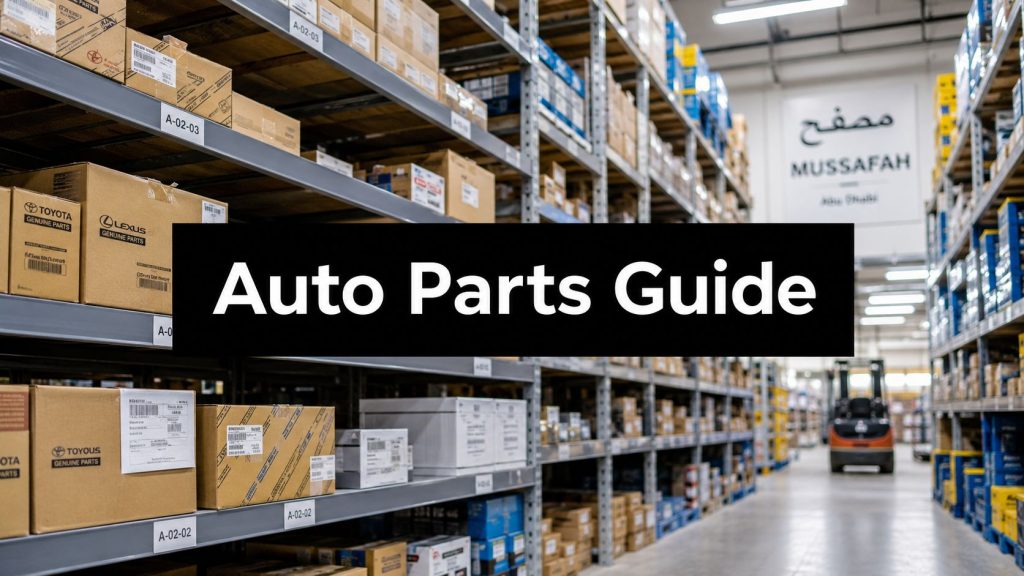
You're standing in Mussafah with a bonnet issue, a warning light, or a dead alternator, and the clock's already against you. The parts shop you called first gave you a vague answer, the second one asked for a photo, and the third told you to “come and see.” That's exactly why Popular Auto Parts Mussafah matters, because in Abu Dhabi's busiest auto corridor, the ultimate success isn't just finding a shop, it's finding the right part, the right branch, and the right level of confidence before you pay.
Mussafah has earned its reputation because it isn't a single market, it's a working parts ecosystem. You've got multiple branches, industrial access, late opening hours in some locations, and the kind of density that makes same-day sourcing realistic for a lot of repairs. If you know how to work the area properly, you can save time, avoid mismatched parts, and stop wasting fuel driving from counter to counter. For a practical area guide, a map of Mussafah Industrial Area helps, but the smarter move is knowing how to buy there with discipline.
Why Mussafah Is Your Go-To for Auto Parts
A car issue in Abu Dhabi rarely waits for a convenient moment. You might get a call from a workshop saying the part they ordered won't arrive today, or you may discover at the end of a long workday that your vehicle can't make it through tomorrow's shift without a replacement. In that moment, Mussafah stops being “just an industrial area” and becomes the most practical place to solve the problem fast.
The reason is simple. Mussafah concentrates suppliers, workshop traffic, and parts knowledge in one industrial zone, so buyers aren't dealing with scattered retail options. That concentration makes it easier to compare options, confirm fitment, and keep the repair moving instead of letting the vehicle sit idle. For drivers who rely on their cars daily, that kind of access matters more than a polished showroom.
What makes the area work in practice
The advantage isn't only choice, it's operational convenience. If a part is widely stocked across nearby counters, you can phone ahead, compare branch availability, and avoid the worst habit in the market, which is driving blind from one outlet to another. That's especially useful for fleet operators and busy owners who don't have time for guesswork.
Practical rule: use Mussafah for speed, but never treat speed as proof of quality. Fast access is useful only if you verify the part before you hand over money.
Popular Auto Parts fits that pattern well because it operates as part of a broader branch network rather than a single storefront. Its presence in Mussafah gives buyers a real starting point for sourcing, especially when the vehicle needs something specific and the workshop wants the part quickly. In an area like this, that combination of proximity and density is what turns an urgent repair into a manageable errand.
Navigating Mussafah's Top Parts Suppliers

A long operating history matters in Mussafah. A Dubizzle UAE listing places Popular Auto Parts' establishment in 1979, and the same source places one of its Abu Dhabi outlets in Mussafah M8 while showing a wider Abu Dhabi presence across several branches. Dubizzle's Abu Dhabi spare parts guide is useful because it connects the company's history with where buyers can find it on the ground.
How to read the Mussafah branch pattern
Mussafah does not behave like a neat retail strip. It works more like a working industrial cluster, where branch locations, workshop traffic, and stock movement matter as much as the brand name on the sign. One public listing identifies a branch at M7, Mussafah – 7, while another map listing places the store at 32, 5 Street, M8, Mussafah with the contact number +971 2 555 4952 and hours shown as open until 10:00 PM. That spread tells you something practical, the company is present across more than one access point in the zone, so you should verify the branch that best matches your route and the part you need.
An official contact page lists Popular Auto Parts locations in M8, M6, M7, M9, M23 in Mussafah, plus branches in Al Dhafra, Al Ain, Dubai, and Sharjah. It is the cleanest place to confirm which branch is closest before you drive across the industrial area. The same kind of branch spread also helps explain why this supplier stays visible to workshops and repeat buyers who value short lead times and easy pickup.
Why branch density matters
Branch density affects more than convenience. It shapes whether you can source a part after a workshop diagnosis, compare prices without crossing half the city, and keep a repair moving when one counter does not have stock. A buyer in Mussafah should treat access points as part of the decision, not just store names on a directory page.
Use Popular Auto Parts as the starting point, then compare nearby counters for availability, warranty support, and whether the branch itself can hand over the part you need that day. For buyers who also need to check key and lock details while sorting out parts, Blade Auto Keys for car key information is a useful companion read.
Understanding the Types of Auto Parts Available
The first mistake buyers make in Mussafah is asking for “the part” without knowing what category they want. That sounds harmless until the counter offers a cheaper option that doesn't match your expectations, or a more expensive one that doesn't really add value for your vehicle. In practice, you're usually choosing between OEM, aftermarket, used, and reconditioned parts.
OEM and aftermarket are not the same decision
OEM parts are built to the original specification, so they're the safest choice when fitment and consistency matter most. They're the first call for buyers who want the closest match to the vehicle's original setup. The trade-off is usually less flexibility, because you're narrowing the search to exact-spec components rather than broader alternatives.
Aftermarket parts come from other manufacturers and can be perfectly sensible if you choose a reputable brand and the right specification. They often give you more variety, which helps when you're balancing budget and availability. The downside is that quality can vary, so the seller's honesty matters as much as the product label.
Used and reconditioned parts need more scrutiny
Used parts can keep a car moving when the budget is tight, but they carry wear that you can't always see at first glance. They make sense for non-critical items or when you need a temporary solution, but they're a poor choice if you haven't checked condition carefully.
Reconditioned parts sit between used and new. They've been restored and tested, so they can be a practical middle ground when a new OEM part feels excessive but a raw used part feels too risky. That said, the quality of the restoration process matters more than the category name.
If your job involves locks, keys, or immobiliser-related components, part selection gets even more sensitive because vehicle access and security systems have to stay aligned with the car's electronics.
For that reason, it's smart to separate the buying conversation into two questions, what type of part fits the job, and what proof do you have that it fits my exact vehicle. Public listings rarely answer that second question properly, so don't assume the first quote is the final answer.
How to Verify Part Authenticity and Quality
Most directory-style advice often proves inadequate. A shop listing can tell you where a branch is and when it opens, but it won't tell you whether the counter staff checked the right compatibility, whether the packaging is genuine, or whether the seller stands behind the part after the sale. That gap matters, especially because public listings for Mussafah parts shops often omit details on OEM versus aftermarket compatibility, warranty terms, and return policy. The market also has growing refurbishment activity in the region, which makes your own verification step even more important. The UAE refurbishment and compliance context supports that caution.
The on-site checklist that saves bad purchases
Start with packaging. Genuine parts usually arrive with intact seals, proper branding, and clean labelling. If the box looks re-taped, the print is inconsistent, or the label details feel too generic, pause before you pay.
Next, inspect the part itself. Serial numbers, casting marks, and part codes should look deliberate, not roughly etched or mismatched. If the seller can't explain why the part number corresponds to your vehicle, that's a red flag.
Then check material quality with your hands and eyes. Uneven edges, rough finishing, loose connectors, or signs of poor assembly can reveal a lot before the car ever leaves the bay. A part can look acceptable in a photo and still feel wrong once you hold it.
Ask the questions that expose weak inventory
Use direct questions, not vague ones. Ask where the part came from, whether it's OEM, aftermarket, used, or reconditioned, and whether the seller offers a warranty or return policy in writing. If they hesitate, that hesitation matters.
You should also verify fitment by VIN or chassis number before buying. That step reduces the risk of ordering the right-looking part for the wrong trim, engine, or model year. A quick VIN check guide for Dubai buyers is helpful if you want to tighten that process.
Practical rule: if the seller won't confirm fitment by VIN or chassis number, treat the part as unverified until proven otherwise.
Finally, ask for documentation. A receipt, warranty note, or authenticity paper gives you something to fall back on if the part fails early or doesn't match the claim made at the counter. In this market, paperwork isn't bureaucracy, it's an advantage.
Mastering the Deal Price Negotiation and Logistics
A clean deal in Mussafah starts before money changes hands. The first question is not what the sticker says, it is whether the part is the right match, available now, and worth the trip you are making. Buyers who come in with the part details, a fallback option, and a clear idea of the vehicle's needs usually leave with less wasted time and less regret.

Negotiation works best when you know your target
Start with a target price range, not a guess. If you have already checked a few branches, you can see whether a quote is fair, inflated because of urgency, or tied to limited stock. That strengthens your negotiating position in the conversation, because you are comparing availability, part condition, and seller confidence, not just one number on its own.
Cash can still help in some shops, but the better advantage is speed once the fitment is confirmed. The goal is to avoid paying extra for confusion, rushed sourcing, or a second trip after discovering the part does not suit the car. A clear ask, a clear part number, and a clear acceptance point save more money than aggressive haggling.
Hours, lunch breaks, and parking shape the day
Branch timing affects the deal more than many buyers expect. Some Mussafah outlets run late, and some close for lunch in the middle of the day, so a call before you drive over is the safest way to avoid wasted time. Their contact page is useful for checking daily windows before you head out.
Lunch breaks matter because a nearby branch may still be open while the one you planned to use is not. If you arrive at the wrong moment, you can lose the hour you meant to use for comparison shopping, fitment checks, or pickup. Calling first is simple, and it prevents that kind of delay.
Late-day buying helps drivers, workshops, and fleet operators who need to keep a vehicle moving without waiting until the next morning. A breakdown near closing time can still be handled if the seller has stock and the branch is open long enough to complete the sale. That reduces downtime and keeps the repair plan from slipping.
If you are carrying a bulky part, plan transport before you buy. A bumper, headlight assembly, or large panel becomes a logistics problem the moment you have paid for it.
Parking, loading space, and route planning matter too. If you are crossing Salik routes or moving between areas, this Abu Dhabi Salik reference helps you think through the trip more realistically. In Mussafah, the smart buyer does not just secure the part, he also makes sure the handoff, transport, and timing will work without extra hassle.
Your Essential Mussafah Pre-Visit Checklist
Before you head out, make the trip count. Bring the VIN or chassis number, the car's registration card, and clear photos of the old part from multiple angles. If possible, take the actual worn part with you, because visual comparison still catches mistakes that a phone call can miss.
Prepare a short list of pre-vetted branch numbers, starting with the location you're most likely to use. Call ahead to confirm stock, branch hours, and whether the seller can verify compatibility before you arrive. If you're buying for a workshop job, write down the repair deadline too, because it changes how much room you have to compare options.
Keep these checks in your pocket:
- Confirm the exact part number: Don't rely on model name alone, because trims and sub-variants can differ.
- Verify the seller's policy: Ask about warranty, return handling, and whether the part is new, used, or reconditioned.
- Match the fitment details: Use VIN or chassis information before you commit.
- Plan the pickup route: Extended hours help, but lunch breaks and parking still affect timing.
- Compare at least two branches: A second quote often exposes whether the first price is fair or rushed.
The biggest mistake is treating Mussafah as a place where every answer is instant. It's a strong sourcing hub, but the buyer still has to do the final verification. That discipline protects the car's value, keeps the repair honest, and stops a quick purchase from becoming a costly repeat visit.
If you need a smoother way to keep your vehicle moving while you source the right parts or repair window, contact Uptown Rent A Car today and book a practical, well-maintained alternative that keeps your day on track.