
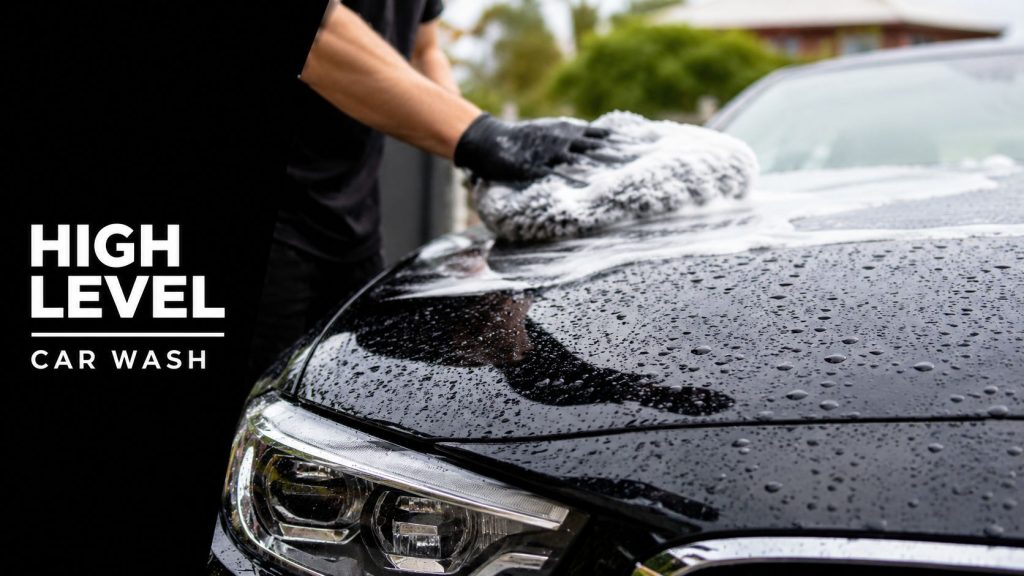
Your car can leave valet looking immaculate and pick up a visible film of dust before the next meeting. In Dubai, that isn't bad luck. It's normal. The problem starts when owners and renters treat that dust as a cosmetic nuisance instead of what it really is: a paint-care issue.
A luxury vehicle's finish is soft enough to show poor washing habits quickly. Fine sand dragged across clear coat can leave light swirls. Harsh detergents can dull protection. Too much pressure can do more harm than the grime you were trying to remove. That's why a high level car wash matters. It isn't about extra foam, bigger branding, or a fancier waiting lounge. It's about using the right process so the car comes out cleaner without sacrificing the finish you're trying to preserve.
More Than Just a Wash It Is a Statement
You know the scene. The car was spotless last night. This morning, sunlight hits the bonnet and reveals a fine beige layer across the paint, glass, and trim. By afternoon, that same dust has mixed with road film around the lower doors and rear bumper. On a black saloon, a white SUV, or a satin-finish supercar, the change is immediate.

That moment is where many people make the wrong choice. They think any wash will do. For an older commuter car, maybe that feels acceptable. For a luxury vehicle with sensitive paint, coated trim, gloss black pillars, polished wheels, and expensive finishes, a rushed wash can leave marks that stay long after the dust is gone.
Dubai also has the scale to support serious vehicle care. Dubai's Roads and Transport Authority reported 1.94 million registered vehicles in Dubai in 2023, up from 1.86 million in 2022, a rise of about 4.3% according to this market discussion citing RTA vehicle figures. In a city where premium vehicles are part of daily life, protecting appearance isn't a niche concern. It's part of ownership.
Why luxury owners notice bad washing faster
A premium finish shows defects more clearly than an average one. Dark colours reveal swirls under direct light. Matte and satin finishes can't be polished in the same way as standard gloss paint. Ceramic-coated cars still need proper washing because coating doesn't make the surface invincible.
A poor wash removes dirt. A proper wash removes dirt without adding damage.
For many drivers, the car is also part of the wider Dubai experience. If you're here for business, a celebration, or a weekend escape, the vehicle has to look the part. That's one reason luxury mobility and presentation are tied together in a city built around image, service, and arrival. You can see that expectation reflected in the broader luxury experience in Dubai.
A high level car wash is the answer to a simple question. When your car is covered in dust, do you want it cleaned quickly, or cleaned correctly?
Defining the High-Level Car Wash Philosophy
A high level car wash is a paint-preservation process. The goal is to clean a luxury vehicle in a way that reduces wear at every stage, especially in Dubai, where fine sand, baked-on dust, and intense sun put constant pressure on the finish.

That philosophy changes the whole process: how the dirt is loosened, how each surface is touched, which chemicals are used, and how the car is dried before water spots can set. On a luxury car, those choices matter because the finish is part of the asset itself. Gloss, clarity, and surface condition all influence how the vehicle looks today and how well it holds value over time.
A proper service also adjusts to the vehicle in front of it. Soft clear coat, satin paint, gloss black trim, polished wheels, carbon fibre pieces, leather, and coated surfaces all need specific handling. Using one brush, one towel, and one strong cleaner across the whole car is like using the same shoe polish on suede, patent leather, and nubuck. You may get a quick visual improvement, but you also raise the risk of lasting damage.
Clean first, then preserve the surface
The first principle is straightforward. Remove loose contamination before contact washing begins. In Dubai, that contamination often includes windblown sand and fine grit that can mark paint the moment a mitt drags across it. Good operators spend time on pre-rinse, foam, wheel cleaning with separate tools, and controlled washing methods because prevention starts there.
The second principle is material awareness. Each surface has its own limits. Matte wraps can stain or become patchy with the wrong product. Piano-black trim marks easily. Leather needs cleaning that removes body oils without drying the finish. If you want a useful reference for the cabin side of that care, this expert car seat cleaning guide explains why interior materials also benefit from the right method rather than the fastest one.
Later in the process, it helps to see the philosophy in motion:
What separates it from a quick tunnel wash
Readers often assume “high level” means only more time. Precision is the key difference.
- Pre-wash has a clear purpose: It lifts dust and grit before hand contact.
- Tools stay assigned to areas: Wheels, paint, glass, and interior trim use separate cloths and brushes.
- Chemicals match the surface: pH-neutral shampoos and purpose-specific cleaners reduce the chance of staining, stripping, or dulling finishes.
- Drying is controlled: Clean microfibre towels or filtered air help prevent spotting and fresh marring.
- Inspection is built in: Skilled technicians look for delicate trim, existing damage, and areas where extra care is needed.
Practical rule: If a service cannot explain how it avoids adding swirls, there is a good chance it will add them.
The mindset behind premium care
The philosophy is preservation. Foam and shine are only part of the result. What matters more is leaving the vehicle with less risk of wash-induced marks and with better resistance to the next layer of dust, heat, and contamination.
That is why a high level car wash feels methodical rather than theatrical. Done properly, it protects the finish you paid for and helps a luxury vehicle keep the crisp, well-kept appearance that supports long-term value.
Core Services and Premium Add-Ons Explained
Most owners hear detailing terms thrown around and aren't told what they accomplish. “Snow foam”, “decontamination”, and “sealant” can sound technical when the fundamental question is straightforward: what problem does each step solve?
The core wash done properly
A premium exterior wash usually starts with a foam cannon pre-wash. The foam's job isn't to entertain. It softens and lifts loose grime so technicians can rinse away contamination before touching the paint. In Dubai conditions, that matters because airborne dust often sits across the entire body and collects heavily behind wheels and along lower panels.
After pre-wash comes a careful hand wash, often using the two-bucket method. One bucket is for clean shampoo solution. The other is for rinsing the wash mitt before it goes back to the paint. That separation reduces the chance of carrying grit from one panel to the next.
Drying is where many decent washes become poor ones. A high standard wash uses clean microfibre drying towels, filtered air, or both. Rubbing aggressively with a worn towel is one of the quickest ways to put fresh marks into soft clear coat.
Add-ons that are worth understanding
Not every car needs every extra. Some do.
- Clay bar treatment: This removes bonded contamination that normal washing leaves behind. If the paint feels rough even after washing, that's the sort of issue clay is meant to address.
- Single-stage paint correction: This targets light haze, faint swirls, and minor wash marks. It's a polishing step, not a miracle cure for deep defects.
- Sealant or wax application: These add a sacrificial layer between the paint and the environment. In practical terms, they help the surface shed grime more easily and improve washability.
- Wheel and tyre detailing: Brake dust and road film build up fast on performance wheels. Proper cleaning protects the finish and improves the overall look of the vehicle.
- Glass and trim finishing: Clean paint beside streaked glass and faded trim never looks fully finished.
Interior care belongs in the same conversation
A high level wash often includes at least light interior attention because luxury ownership is about the cabin as much as the bodywork. Dust settles inside too, especially on dashboards, screens, leather bolsters, and door cards. If you want a practical breakdown of seat-specific care, this expert car seat cleaning guide is useful because it helps you match cleaning methods to upholstery type instead of treating every seat the same way.
The best add-on is the one that solves a real condition issue. If the paint is smooth and protected, you may not need decontamination or correction that day.
A simple way to think about the menu
| Service | What it does | When it helps most |
|---|---|---|
| Pre-wash foam | Loosens surface grime before contact | Dusty cars and frequent-use vehicles |
| Hand wash | Cleans paint more safely than rushed brush contact | Any premium vehicle |
| Clay treatment | Removes stubborn bonded contamination | Rough-feeling paint |
| Light correction | Refines minor swirls and haze | Dark colours, gloss finishes |
| Sealant | Adds short-term protection and slickness | Cars exposed to heat, dust, and regular driving |
If a provider can explain each service in plain language and tell you why your car does or doesn't need it, that's a good sign.
Protecting Your Luxury Car Finish in Dubai
Your car can look clean when you park it at breakfast and feel gritty again by lunch. In Dubai, that is normal. Fine dust settles quickly, windblown sand clings to horizontal panels, strong sun heats the paint, and coastal air can leave behind salt residue. On a luxury vehicle, those conditions affect more than appearance. They wear down the clear coat, shorten the life of sealants, and can leave the finish looking older than the car really is.
That is why a high level wash matters. It protects the surface the same way good skincare protects sun-exposed skin. Cleaning removes the contamination. Proper technique stops that contamination from being rubbed into the paint.
Why ordinary washing can shorten the life of the finish
A rushed wash often does the opposite of what the owner expects. Sand and dust behave like very fine sandpaper. If a brush, sponge, or dirty mitt drags that material across black paint, the result is usually light scratching, haze, or swirl marks that only show once the sun hits the panel.
Heat makes the problem worse. Warm paint dries water and shampoo faster, which raises the chance of residue, spotting, and friction during contact washing. Strong detergents can also strip away the protective layer that should be shielding the clear coat from UV exposure and airborne fallout.
The key question is simple: is the wash removing contamination, or grinding it into the finish?
What a protection-first wash looks like
The safest process starts by reducing friction before anyone touches the paint. A thorough rinse removes loose grit. Pre-wash foam softens and lifts stubborn dust. Only then should a technician move to careful hand washing with clean tools and controlled pressure.
Method matters more than labels. A touchless wash can be useful for a heavily dusted car, but harsh chemistry can leave its own problems. Hand washing can be very safe, but only if loose particles are removed first and wash media are changed often. Luxury paint does not care what the package is called. It responds to technique.
Some finishes need extra caution:
- Ceramic-coated cars: pH-appropriate products help preserve water behavior and gloss.
- Wrapped or matte vehicles: the wrong shampoo or towel can change the surface look.
- Rented or leased luxury cars: preserving factory condition matters more than adding temporary shine.
- Dark paint colours: poor drying and dirty wash tools show up faster and more clearly.
Ask one practical question before booking: how do you remove sand and dust before contact washing?
Protection after the wash is where value is preserved
Washing removes harm. Protection slows the return of harm.
A quality sealant or ceramic topper creates a sacrificial layer between the environment and the clear coat. In Dubai, that matters because UV, dust, and repeated washing all chip away at unprotected paint over time. Water behavior is only part of the benefit. The larger gain is that contamination releases more easily during the next wash, so the technician needs less force and the paint sees less friction.
For owners who want stronger long-term defense on high-impact areas such as the bonnet, bumper, mirrors, and door edges, this guide to paint film protection for cars is a useful next step. Film and careful washing work as a system. One reduces impact damage. The other helps prevent wash-induced marring.
Luxury vehicle care also shows in how the car is presented for business, hotel arrivals, and private events. If your plans include professional transport, this guide to choosing a luxury chauffeur is worth reviewing because vehicle presentation standards often overlap with executive travel expectations.
Mobile Detailing vs Fixed-Site Shops
Convenience and quality aren't always the same decision. Sometimes you want the car cleaned at your villa, hotel, or office tower car park. Other times, the vehicle needs a proper bay, controlled lighting, and equipment that a mobile team can't carry.

Where mobile detailing shines
Mobile detailing is strongest when the car needs regular maintenance washing and your schedule is the limiting factor. A good team can bring wash media, drying towels, interior tools, and carefully selected products directly to you. That can be ideal for busy executives, hotel guests, or residents who don't want to spend part of the day driving to a facility.
The trade-off is environmental control. Outdoor work can be affected by heat, wind, dust, limited drainage, and lighting. Those factors don't make mobile work poor by default, but they do make consistency harder, especially for more advanced correction or coating work.
What fixed-site shops do better
A dedicated facility has structural advantages. Professional wash bays for luxury fleets require minimum dimensions of 30 ft x 16 ft to properly service large SUVs, and automated systems in the region can process 20 to 100 vehicles per hour. The important part for premium finishes, though, isn't speed. It's controlled pressure and reduced chemical concentration to protect delicate coatings.
That tells you something important. A serious shop is built around the size and needs of modern luxury vehicles, not around squeezing cars through as fast as possible. More space means safer movement around the vehicle, better dryer positioning, and less chance of technicians rushing tight areas like bumpers, mirrors, and wheel arches.
A practical comparison
| Factor | Mobile detailing | Fixed-site shop |
|---|---|---|
| Convenience | Comes to you | You travel to the facility |
| Environment | Exposed to weather and dust | More controlled working conditions |
| Equipment depth | Good for maintenance work | Better for advanced services |
| Large vehicle handling | Depends on site space | Bay layout is designed for it |
| Best use case | Routine care with minimal disruption | Precision work and complex treatments |
If the car only needs a careful maintenance wash, mobile can be excellent. If it needs decontamination, correction, or a controlled drying environment, a fixed-site facility usually has the edge.
The right choice depends on the job. Don't choose by format alone. Choose by whether the provider's setup matches the service your vehicle needs.
How to Choose a Provider and Tips for Renters
You pull into your hotel after a dusty afternoon in Dubai. The car still looks expensive from a distance, but under the lights you can see the issue: a fine layer of sand on the paint, on the glass, around the window seals, and packed into the lower panels. At that point, choosing the wrong wash is not a cosmetic mistake. It is how soft clear coat picks up swirls, how trim gets stained, and how a luxury car starts to lose the sharp, well-kept finish that supports its value.
A strong provider should be able to explain the process in plain language. If they hide behind vague promises or only talk about speed, treat that as a warning. Premium washing is careful surface management. It works like cleaning a fine watch. The goal is not just to make it look shiny for an hour. The goal is to remove contamination without adding new damage.
What to ask before handing over the keys
Use these questions to separate trained operators from generic wash outlets:
- Ask how they handle dusty paint first: They should describe a pre-rinse and foam stage that loosens grit before any mitt touches the surface.
- Ask how they control contact: A good team will explain wash media, clean rinse procedures, and how they reduce the chance of dragging abrasive particles across the paint.
- Check tool separation: Wheels, tires, exhaust tips, and paint should have separate brushes, towels, and buckets.
- Ask about chemical choice: They should know why pH-neutral shampoo suits regular maintenance and when stronger cleaners are reserved for specific contamination.
- Ask about sensitive finishes: Matte paint, wraps, satin films, piano-black trim, and ceramic-coated surfaces all need different treatment.
- Ask how they dry the car: Filtered air and clean microfiber towels are much safer than aggressive wiping on a dusty day.
- Ask what they do not do: A professional provider knows the limits of a wash and will not claim every mark can be polished away afterward.
One bad answer is often enough. If a provider cannot explain its method, uses the same towel on every surface, or treats all finishes as if they were the same, you already know the risk.
Tips that matter more for renters

Renters have a narrower margin for error. You are responsible for the car's condition during your booking, but you do not control its long-term maintenance history. That makes gentle decisions even more important.
Dubai's climate adds pressure here. Dust settles quickly. Sand behaves like a fine abrasive. Strong sun heats panels and makes residues dry faster than many drivers expect. A rushed wipe-down at a fuel station can do more harm than leaving the car alone until it can be cleaned properly.
A few habits make a real difference:
- Inspect the vehicle at collection: Check paint, wheels, glass, and trim in daylight. Record existing marks before you drive away.
- Do not dry-wipe dusty panels: A tissue, bath towel, or sleeve can grind dust into the finish within seconds.
- Ask the rental company what cleaning method is acceptable: Some vehicles have coatings, films, or delicate trim that need specific care.
- Use professional cleaning only when the car needs it: Frequent poor washes are worse than fewer careful ones.
- Return the vehicle sensibly clean: A properly washed car is safer than an aggressive DIY cleanup done in a hurry.
If you are renting, review the financial side too. Understanding how car rental security deposits are handled helps you know what to document, what condition standards matter, and what to clarify before return.
One practical example is Uptown Rent A Car, which operates in Dubai's luxury rental segment and states that its vehicles go through maintenance and inspection procedures. For renters, that matters for a simple reason. A well-kept vehicle is easier to keep in proper condition throughout the hire period.
For a renter, proper washing is paint protection, trim protection, and risk reduction in one decision.