
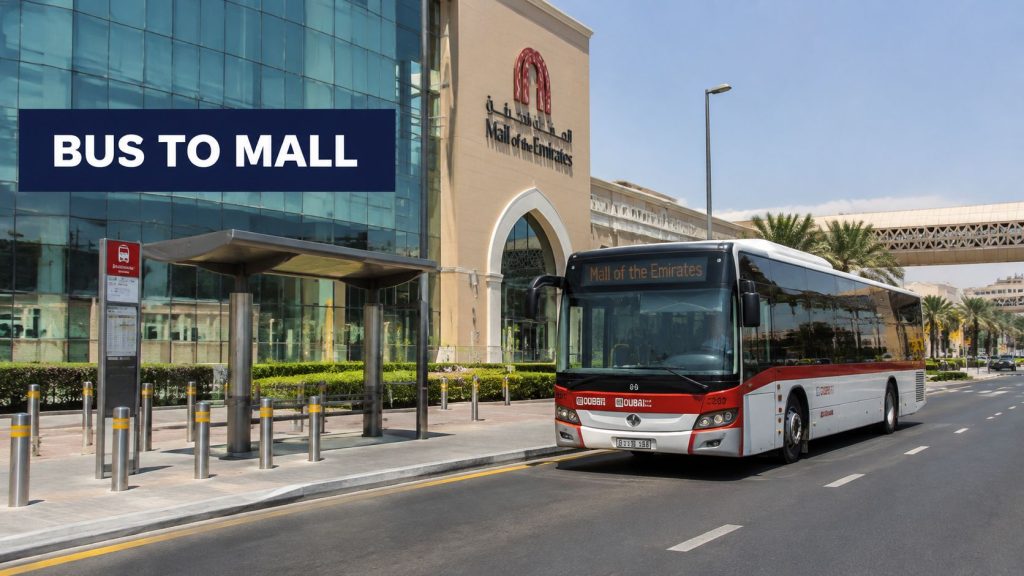
You've just landed in Dubai, your bags are heavier than expected, and someone in your group wants to reach Mall of the Emirates before a booking, meeting, or evening event. The bus to Mall of Emirates can be a sensible choice, but only when you understand which service you need, where to board, and whether your luggage and timing make public transport practical.
The important change is that Mall of the Emirates is no longer best understood as a single bus stop. It's a connected transport interchange, with buses, the Red Line metro and mall access working together. This guide approaches the journey as a Dubai travel concierge would, with attention to route choice, Nol cards, walking, waiting and the occasions when a private vehicle makes more sense.
Why the Bus to Mall of Emirates Just Got Easier
A traveller arriving at a Dubai hotel often asks the same question: “Can we take the bus, or should we get a taxi?” The answer depends on where the traveller starts, how much luggage they have and whether arriving at a precise time matters. For a solo visitor with a light bag, public transport can be straightforward. For a family arriving after a long flight, the same journey may feel considerably less convenient.
The opening of the Mall of the Emirates Smart Bus Station in May 2026 changed the practical picture. Dubai's Roads and Transport Authority described it as Dubai's first smart bus station, directly connected to Mall of the Emirates Metro Station and serving 11 bus routes, including 6 Dubai Metro feeder routes, 3 internal routes and 2 seasonal routes. You can verify those launch details in the RTA announcement about the Mall of the Emirates Smart Bus Station.
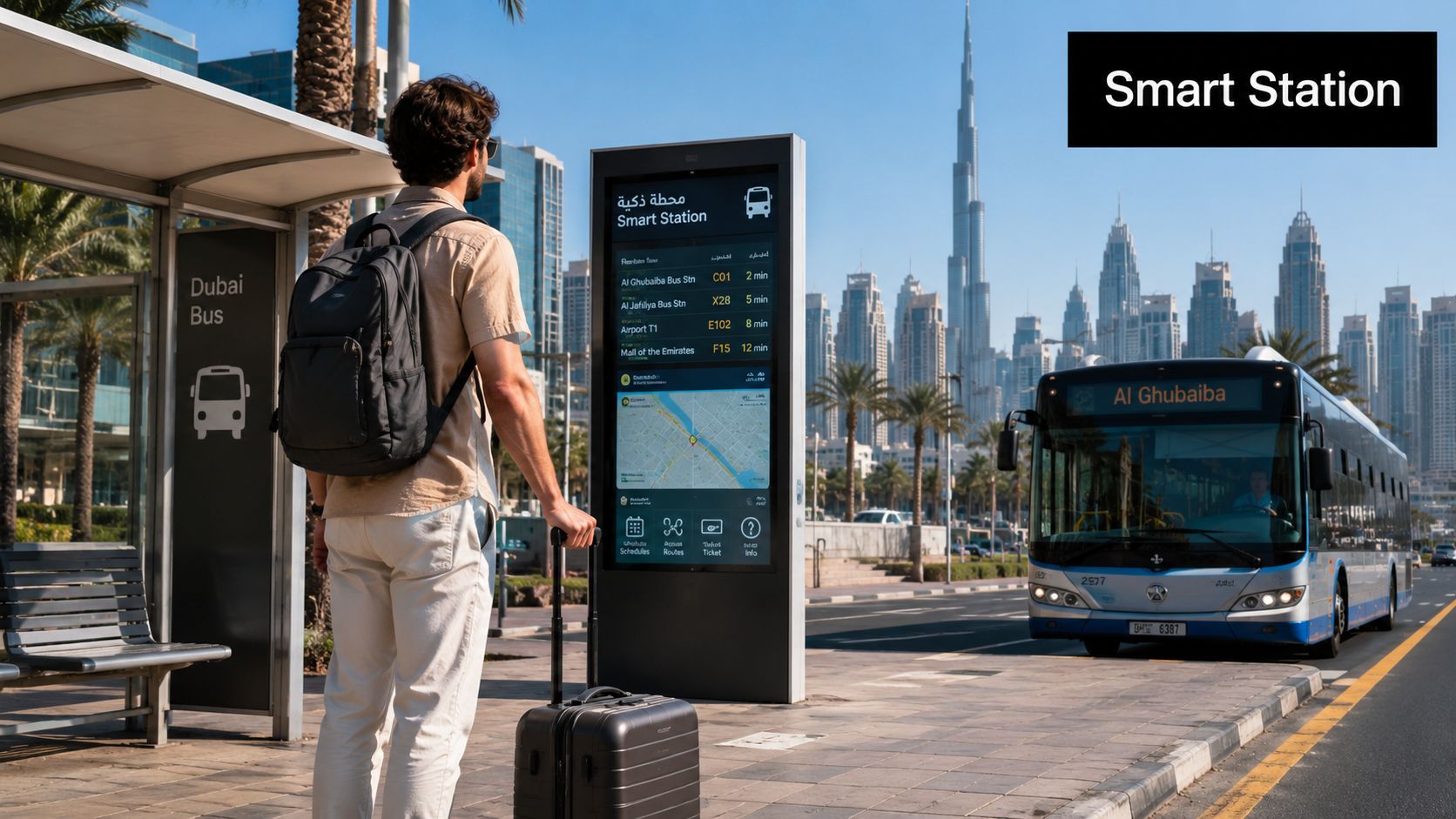
What the upgrade means for visitors
The value isn't just the word “smart”. A digitally enabled interchange gives passengers a clearer place to transfer, more visible route information and a direct relationship between bus and metro services. That matters to tourists who may be unfamiliar with Dubai's road layout, executives moving between hotels and meetings, and event guests who can't afford to board an unsuitable feeder route.
Mall of the Emirates also functions as a retail destination with direct rail access and multi-route bus coverage. In practical terms, visitors can reach it from several parts of Dubai without treating every journey as a separate taxi decision.
Practical rule: Choose the interchange first, then choose the route. The first bus you see may not be the right bus for your destination.
The station's role is especially useful for journeys beginning on the Red Line. Rather than searching for an isolated roadside stop, passengers can use the metro connection as their reference point, then move through the organised bus concourse. That simple mental map reduces the uncertainty that used to make first-time bus journeys feel harder than they needed to be.
Navigating the Smart Bus Station and Metro Link
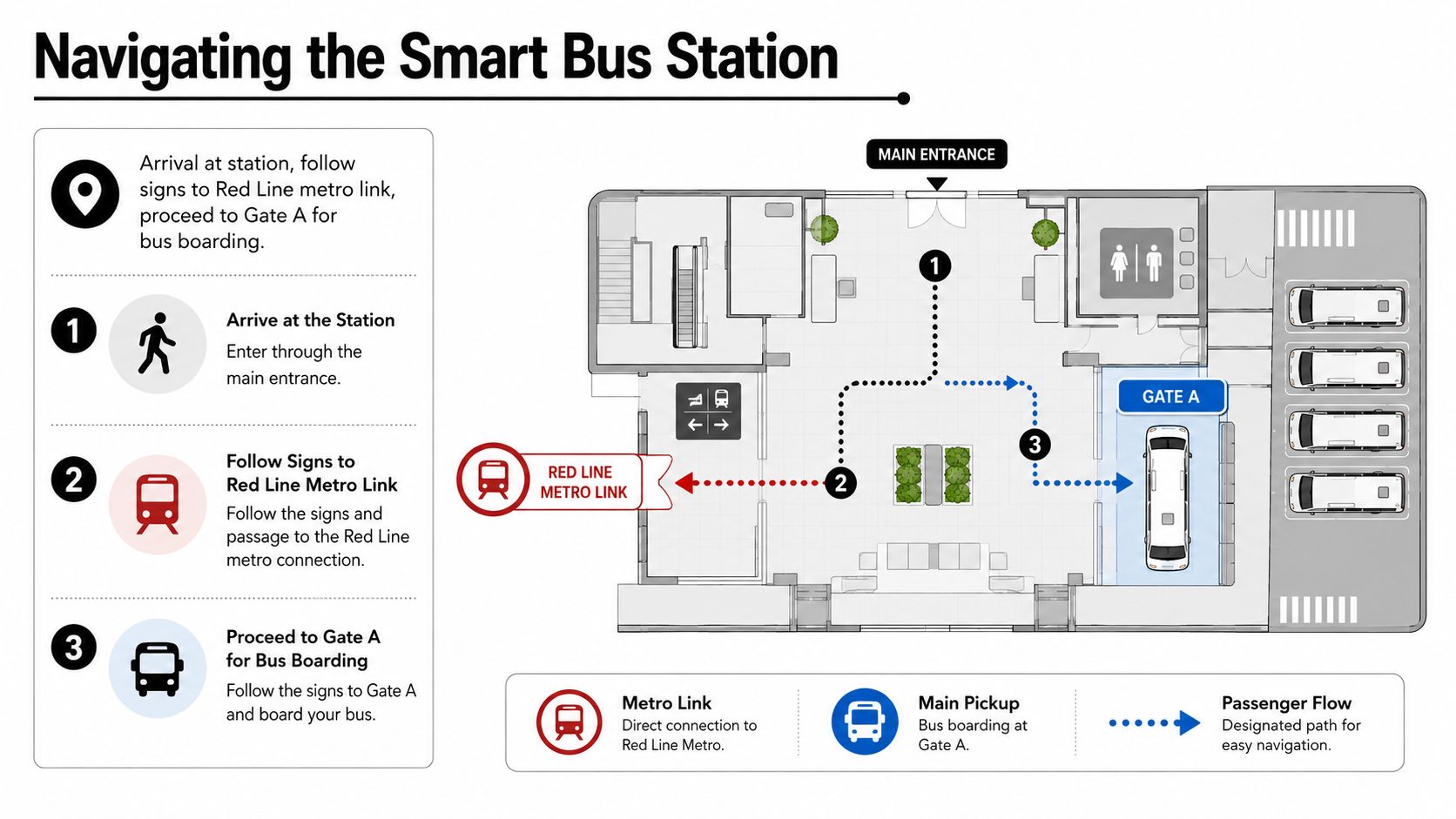
Start with the Mall of the Emirates Metro Station on the Red Line. The station is directly connected to the Smart Bus Station, so metro passengers should follow the signs towards the bus concourse rather than exiting onto the surrounding roads and trying to find a separate stop.
If you're already inside the mall, use the transport and metro signs as your reference. The main mall bus pickup area is at Gate A, according to the official Mall of the Emirates visitor information. That gate is the useful landmark to remember when asking mall staff or checking your route on a journey-planning app.
A simple wayfinding sequence
- Identify the Red Line connection. Use the metro signage to orient yourself, even if you arrived by taxi or walked in from the mall.
- Follow signs to the bus concourse. Don't assume every bay serves the same type of route.
- Proceed towards Gate A. The official visitor information identifies Gate A as the bus pickup area.
- Read the digital display before boarding. Check the route number and destination, not just the direction of travel.
- Confirm the bay. Feeder services and cross-city links may use different boarding positions, so match the display with the route shown in your app.
Digital arrival boards are useful because a route name on a static map doesn't tell you whether the bus is approaching, delayed or operating differently that day. The S'hail app and Wojhati can also help with live arrivals, route planning and disruptions. Use them before leaving your hotel and again at the station, particularly if you're travelling to a reservation or event.
For a wider view of Dubai's roads and districts, keep a reliable Dubai maps app guide available on your phone. It helps you understand whether a suggested journey involves a short transfer, a long walk or a change of transport.
The station's direct metro relationship is the main advantage for travellers coming from elsewhere on the Red Line. You can arrive by rail, locate the bus concourse and continue without navigating an unfamiliar street network.
Key Bus Routes and Typical Journey Times
Mall of the Emirates has value as a hub because its services do different jobs. Some routes act as local feeders through residential districts, while others connect the mall area with destinations across the city. Treating every service as an interchangeable “bus to Mall of Emirates” is the quickest way to choose badly.
The clearest example is F33, which serves 34 stops and completes its full trip in 52 minutes, based on independent route listings referenced alongside the official RTA bus route list. That makes it useful for neighbourhood access, but it may not be the best choice if you're carrying shopping bags or trying to reach a meeting quickly.
Route 81 links Dubai Mall and Mall of the Emirates, taking about 52 minutes and serving 24 stops, according to the same verified route information. It's a cross-city link, so passengers should think of it as a practical connection between major retail and metro corridors rather than a short local shuttle.
Route guide by likely origin
| Route | Key Origin or Link | Stops | Approximate Time |
|---|---|---|---|
| F33 | Al Barsha residential areas | 34 | 52 minutes |
| 81 | Dubai Mall to Mall of the Emirates | 24 | 52 minutes |
| F30 | Al Barsha South and surrounding districts | Not specified | Varies by journey |
| F32 | Dubai Studio City and wider residential links | Not specified | Varies by journey |
| F35 | Al Barsha Heights and nearby business districts | Not specified | Varies by journey |
| F36 | Jumeirah Village Circle and Al Barsha links | Not specified | Varies by journey |
| F37 | Dubai Sports City, Motor City and Madina Mall links | Not specified | Varies by journey |
The route directory information identifies F30, F32, F35, F36 and F37 as services from the Mall of the Emirates area, with connections covering places such as Al Barsha, Dubai Studio City and Dubai Science Park. Those services are most relevant when your origin is in a residential or business district away from the Red Line.
Matching the route to the situation
- From Downtown Dubai: Route 81 provides a direct retail-corridor connection, but the full service includes many stops. If you're already near the Red Line, metro travel may be simpler.
- From Al Barsha: F33 and the other F-series services can be practical for local movement, particularly when your hotel or apartment isn't close to a metro entrance.
- From Dubai Studio City: Check F32 and current live routing before leaving. The route may connect you efficiently, but the right bay and operating status matter.
- From Dubai Marina: A Red Line metro journey towards Mall of the Emirates is often easier to understand than combining several local bus legs. Use the bus for the final connection if your destination requires it.
- From a business district: F35, F36 or F37 may offer the relevant corridor, but don't judge suitability by route number alone. Check the direction and stop sequence in S'hail or Wojhati.
A feeder route is not automatically a poor route. It becomes a poor choice when the traveller expects a quick point-to-point transfer from a service designed to collect passengers across several communities.
Fares, Nol Cards and Payment Essentials
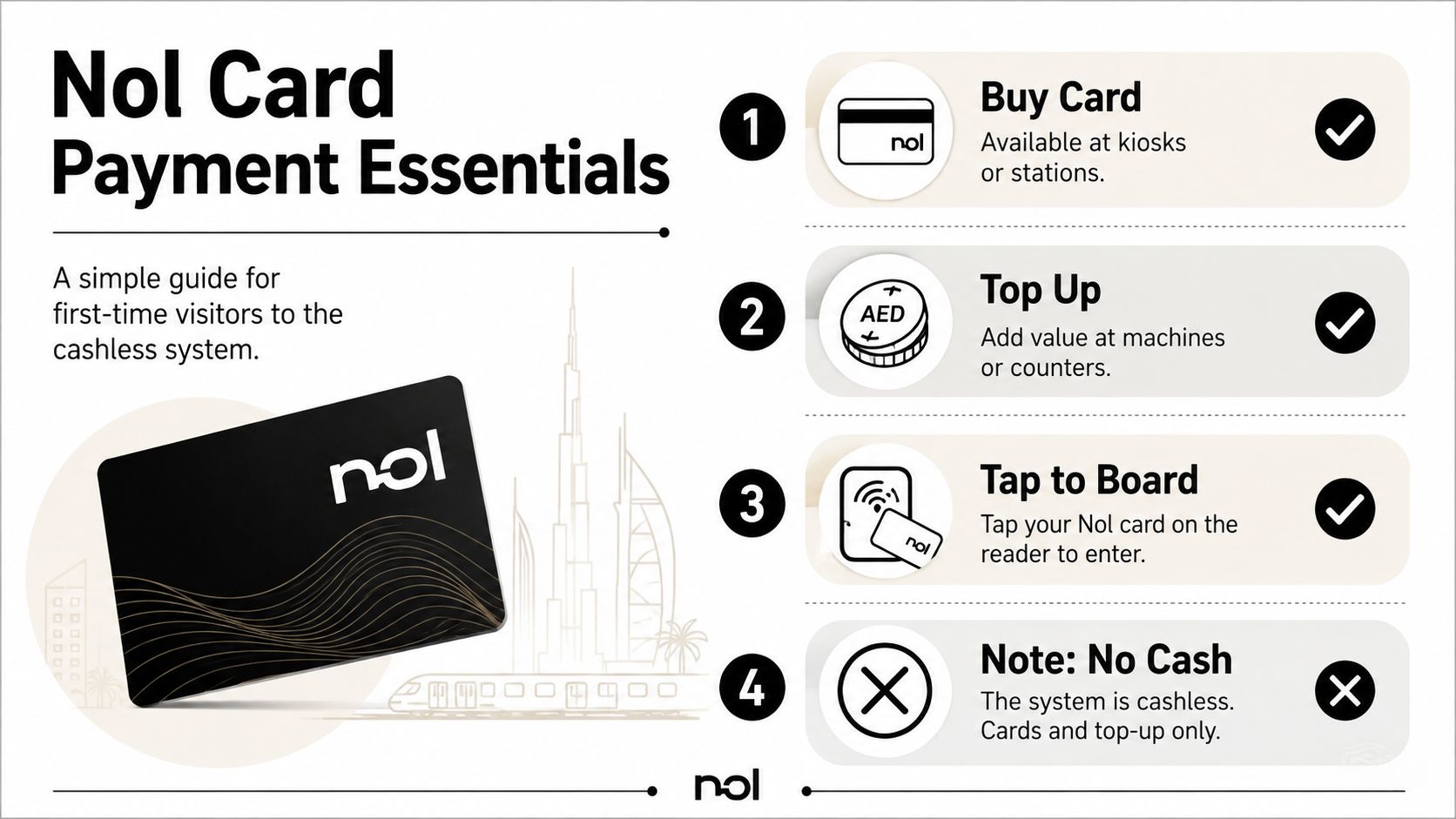
The first public-transport mistake many visitors make is arriving at the bus bay with cash and assuming they can pay the driver. Dubai buses and the metro require a valid Nol card, and cash isn't accepted onboard. Independent UAE transport guidance confirms the cashless requirement, while the official mall information provides the location and visitor transport details.
Buy your Nol card at a metro station, transport counter or approved ticket machine before starting the journey. If you arrive through the metro network, that's usually the easiest place to sort out the card because you can purchase it, add credit and check the balance before walking to the bus concourse.
Use the card in the correct order
- Buy the card first. Don't wait until you're standing at the bus door.
- Top up before boarding. Metro stations, kiosks and machines are the most practical places to add credit.
- Tap in at the reader. Hold the card against the reader until the system registers it.
- Keep the same card with you. Don't lend it to another passenger during a journey.
- Tap out when leaving. The system uses the journey taps to process the applicable zone-based fare.
Check the balance before you leave the station. A card that worked earlier in the day may not have enough credit for the next leg, and trying to solve that problem at a busy boarding point creates unnecessary delay.
Plan the trip before you walk out
Use S'hail for live arrivals and journey planning, and check Wojhati when you need another route-planning option or want to review disruptions. These tools are more useful than relying on a screenshot saved earlier because feeder services and road conditions can affect the journey you face.
The official visitor page also states that buses depart hourly from the mall pickup area at Gate A between 11:00 AM and 6:00 PM, seven days a week, for the relevant mall visitor service. That timetable shouldn't be confused with every RTA route serving the interchange, so check the service name before planning around it.
Before boarding: Nol card ready, balance checked, route confirmed, destination direction verified.
Comparing Bus, Metro, Taxi and Luxury Car Rental
The best transport mode depends less on the destination than on the conditions of the trip. A solo traveller with a small backpack has different needs from a family with suitcases, and an executive heading to a meeting has different priorities from a shopper with flexible timing.
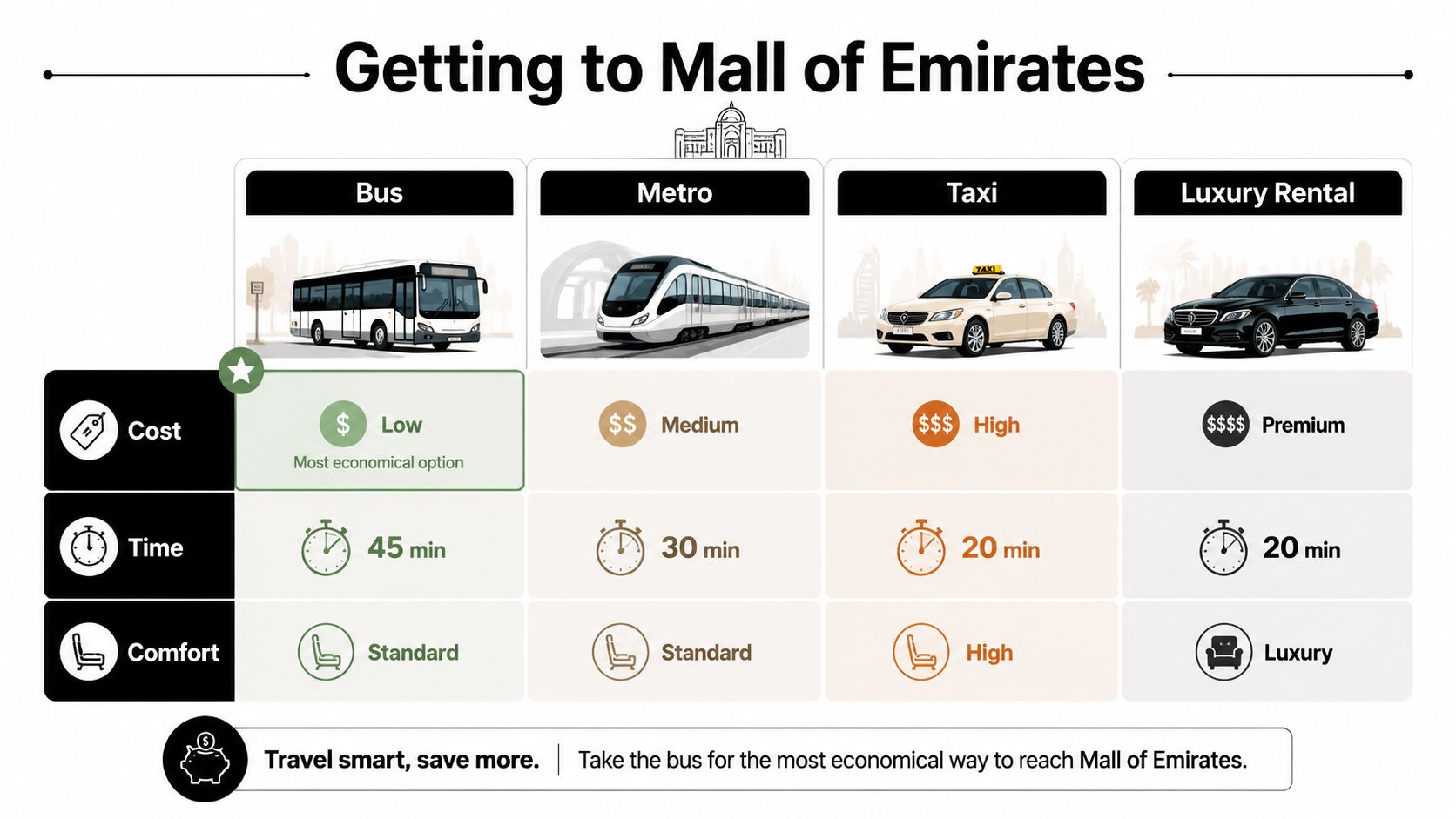
Bus
The bus is usually the economical option and works well when you're travelling alone or with light luggage. The Smart Bus Station's route variety means you can reach the mall from local communities and connect with the metro, but journey comfort depends on crowding, walking and the number of stops.
It's a good fit for flexible shopping plans. It's less attractive when you're wearing formal clothing, carrying fragile purchases or trying to arrive immediately before a scheduled appointment.
Metro
The metro provides the clearest backbone for visitors already near the Red Line. Its direct connection to Mall of the Emirates reduces the uncertainty of roadside navigation, although you may still need a bus or a walk depending on your starting point and final entrance.
For many tourists, metro travel is easier than a long feeder bus because the route is simpler to follow. It doesn't eliminate luggage handling, though, and station walking can matter when the weather is hot.
Taxi
A taxi offers door-to-door convenience and removes the need to locate a bay or transfer between services. The trade-off is variable travel time and pricing because road conditions, demand and pickup location affect the experience.
Taxi is often the sensible compromise for families, late arrivals and travellers with several bags. It also works well when the group wants to avoid a long return journey after shopping.
Luxury rental
A luxury vehicle gives you control over departure time, luggage space and the impression you make outside the mall. That can matter for business meetings, weddings, private celebrations and high-profile events, where arriving composed has value beyond the transport itself.
Travellers who need a driver for more than one journey may also want to explore the practical considerations involved in finding a household driver, especially when airport transfers, meetings and family movements form part of the same itinerary. For broader intercity planning, the Dubai to Abu Dhabi transport guide provides useful context on private and public options.
Accessibility, Luggage and Family Travel Tips
A route can look efficient on a map and still be uncomfortable in real life. Suitcases, children, strollers, formal clothing and Dubai's heat all change the calculation between the bus stop and the mall entrance.
Use this practical checklist
- Suitcases: Keep bags compact and close to you. A large case can become awkward on a feeder bus, particularly when other passengers are boarding.
- Strollers: Fold the stroller before boarding if the vehicle and crowding require it. Check that your child is secure before you move through the concourse.
- Mobility needs: Allow extra time for ramps, lifts and the walk between the transport area and the mall entrance. If a step-free route is essential, confirm the station path with staff before committing to the bus.
- Young children: Board with the children together and keep the Nol cards accessible. A taxi may be calmer for a tired family returning with shopping.
- Shopping bags: Use a taxi or private car after a substantial shopping trip rather than assuming the return bus will feel as easy as the outward journey.
- Formal clothes: For a wedding, dinner or business event, reduce exposure to outdoor walking and waiting. A bus remains possible, but it may not produce the arrival you want.
The mall's Gate A pickup area is a useful landmark, but your final destination may still involve internal walking. Check the entrance you need before you leave the bus, especially if you're meeting someone at a hotel lobby, cinema entrance or event area rather than visiting the mall.
Family travel insight: Public transport is easiest when everyone has free hands, a clear route and spare time. Remove any one of those conditions and a private ride becomes more appealing.
For visitors with mobility concerns, the metro and bus network's accessible infrastructure can help, but accessibility isn't the same as zero effort. Ask for assistance when needed, use lifts rather than rushing escalators with luggage and keep the route on your phone so you can adjust if a bay or entrance changes.
When to Choose the Bus and When to Upgrade
Take the bus when your priority is economical, integrated city travel and your journey has flexibility. It's particularly suitable for a solo traveller, a couple with light bags or someone already close to a feeder route or the Red Line. The Smart Bus Station gives those passengers a clearer interchange than an isolated roadside stop, with route choice extending into residential and business districts.
Choose the metro when you're near the Red Line and want a straightforward rail connection. Choose a taxi when you need door-to-door convenience but don't require a particular vehicle or arrival presentation. Choose a private luxury car when the trip involves formal clothing, multiple bags, children, a tight meeting time or a high-profile event.
The decision is also about the return journey. A visitor may manage the outward trip comfortably, then leave the mall carrying shopping, tired children or equipment for an event. That's when the convenience of a waiting private vehicle can outweigh the savings of public transport.
Dubai traffic can affect every road-based option, so check a current Dubai traffic map before setting a strict arrival time. For a time-sensitive itinerary, leave a practical buffer rather than relying on the most optimistic route estimate.
The bus to Mall of Emirates is a strong choice when flexibility, route integration and low cost matter most. It's the wrong choice when the journey itself could compromise comfort, punctuality or your arrival impression. For executives, wedding guests, families with luggage and travellers attending important events, a luxury rental offers the more controlled Dubai experience.
Uptown Rent A Car offers a curated luxury fleet for airport transfers, business visits, celebrations and comfortable travel around Dubai. If you'd rather avoid bus changes, luggage handling and uncertain waiting, visit Uptown Rent A Car to browse available vehicles and book your journey online.