

Think of Third Party Liability (TPL) Insurance as the safety net that comes with your Dubai car rental. It steps in when you’re at fault in an accident, covering other people’s repair bills and medical expenses—not yours.
It’s more than just fine print. TPL is the minimum legal requirement on UAE roads, setting the ground rules for responsible driving.
Understanding The Basics Of TPL Insurance
When you slide into the driver’s seat of a rental car, you’re not just in control of the wheel—you’re also taking on financial responsibility. TPL insurance is that first line of defence, making sure anyone hurt or whose property is damaged by your actions isn’t left out of pocket.
Whether it’s a fender bender in a parking lot or a scrape against a roadside barrier, TPL kicks in to pay for repairs or medical treatment for the third party. That means you avoid surprising bills if you accidentally ding someone else’s car or injure a pedestrian.
Why Is It A Legal Requirement?
Requiring every driver to carry TPL isn’t an arbitrary rule—it’s a public safeguard. By mandating this coverage, the law guarantees accident victims a reliable source of compensation. This framework supports the entire motor insurance market in the Middle East and Africa, where third-party policies dominate.
“The person responsible for the accident should also be responsible for the costs.”
TPL insurance ensures the at-fault driver’s policy honours that simple principle without causing financial hardship.
That said, TPL has its limits. Here’s what it generally covers:
- Property Damage: Repairs to the other person’s vehicle or any other property you might harm, from fences to signposts.
- Bodily Injury: Medical bills for injuries sustained by occupants of the other vehicle or pedestrians.
TPL does not cover damage to your rental car or any injuries you or your passengers suffer. For those, you’ll want to explore additional insurance options.
To make things crystal clear, here’s a quick snapshot:
Third Party Liability Insurance at a Glance
This table provides a quick summary of the core components of Third Party Liability insurance for car rentals.
| Coverage Aspect | What It Means for You | Example |
|---|---|---|
| Property Damage | Pays for repairs to third-party vehicles or property | Covering a dented bumper and broken tail light in a parking lot |
| Bodily Injury | Covers medical expenses for people outside your vehicle | Hospital bills for someone you accidentally injure crossing the road |
That table highlights the essentials so you know at a glance what TPL does—and doesn’t—cover.
Remember, TPL is your commitment to others on the road. It’s the baseline protection every driver in Dubai needs. For anything beyond, consider adding collision or comprehensive coverage to keep yourself and your passengers safe, too.
Understanding What TPL Insurance Actually Covers

To really get your head around third-party liability insurance, you first need to know who the “third party” actually is. Think of it like this: in any accident, you (the driver) are the first party. Your insurance provider is the second party. The third party is, quite simply, everyone else.
This means TPL is built to protect other people from the financial mess of an accident you cause. It’s a shield that faces outward, protecting others from you, not the other way around.
A "third party" is any person or entity—another driver, a passenger in their car, a pedestrian, or a property owner—who is not you or your insurance company. TPL insurance exists to cover the costs you are legally responsible for paying to them.
This is the single most important thing to understand about the basic insurance that comes with your rental car. Let's walk through a real-world scenario to see how it plays out.
What You Are Covered For
Picture this: you're reversing out of a parking spot and, with a crunch, you hit another car. The other driver is fine, but their door is badly dented. This is exactly where your TPL insurance jumps in.
Specifically, it’s designed to cover:
- Damage to Their Vehicle: Your TPL policy will pay for the repairs needed to get the other person's car back on the road.
- Damage to Their Property: If you swerved and knocked down a garden wall or damaged a shopfront, TPL would handle those repair bills.
- Bodily Injury to Others: If the other driver or even a pedestrian was injured in the accident, your insurance would cover their medical bills and related expenses.
What You Are Not Covered For
Now, let's rewind to that same parking lot fender-bender and look at what TPL pointedly will not cover. While the other driver’s car is sorted, the damage to your own rental car is another story.
Your TPL policy will not pay for:
- Repairs to Your Rental Car: Any scratches, dents, or more serious damage to the car you're driving are your financial responsibility.
- Your Own Medical Bills: If you get hurt in an accident that was your fault, TPL won't cover your medical care.
- Theft or Non-Collision Damage: TPL has nothing to do with situations where your rental car is stolen or damaged by something like a fire or vandalism.
The basic idea of liability is consistent across different types of insurance, like the comprehensive business insurance for contractors. The core principle is always about covering the financial consequences of your actions on others. To get full protection that includes your own vehicle, you'll need to look at additional coverage options.
Meeting UAE Legal Requirements for Rental Car Insurance

Here in the United Arab Emirates, third-party liability insurance isn't just a good idea—it's the law. This isn't a suggestion; it’s a non-negotiable legal mandate for every single vehicle on UAE roads. From a local's private saloon to our entire Uptown Rent A Car fleet, this essential coverage is the absolute bare minimum.
But this isn't about ticking boxes or mindless bureaucracy. At its heart, this law is about public safety and ensuring financial responsibility on the roads. It's a system designed to protect people who find themselves the victim of an accident.
By making TPL insurance compulsory, the authorities have created a clear financial path for compensation. If someone is injured or their property gets damaged, there's a safety net. This simple rule prevents the nightmare scenario where an at-fault driver can't cover the costs, leaving the victim stuck with huge medical bills and repair costs.
The Foundation of Responsible Renting
When you rent a car from a reputable company like ours, you get to drive with the confidence that this legal stuff is already handled. We make sure every single vehicle in our collection is fully compliant with UAE regulations, and that includes having valid TPL insurance locked in before you even get the keys.
Think of this foundational coverage as part of our promise to deliver a safe, stress-free rental experience. It’s the invisible shield that protects you from being financially liable for damage you might cause to others on the road.
The legal requirement for TPL insurance means that every driver contributes to a system of collective financial security. It guarantees that if an accident happens, the focus can be on recovery, not on a prolonged financial dispute over who pays for the damages.
While this baseline protection is crucial, it's just as important to understand what it doesn't do. It satisfies the law and covers the other party, but it offers zero protection for the rental car itself or any injuries you might sustain.
Understanding what is third party liability insurance and its legal role is step one. The next is to think about whether you need more complete protection. For those managing vehicle fleets for their business, getting these details right is vital; our guide on corporate car rental in Dubai offers a much deeper dive. To truly drive with total peace of mind, exploring comprehensive coverage is always a wise decision.
Comparing TPL with Comprehensive Insurance Options
So, you've got the basics of Third Party Liability (TPL) insurance down – it's the legal minimum you need to be on the road in Dubai. But what happens when you want more than just the bare minimum? This is where comprehensive insurance options come into play, acting as a full-body shield for your rental car, not just the other guy's.
Let's break it down with a simple, real-world story.
A Tale of Two Renters
Picture this: two drivers, both behind the wheel of a beautiful Uptown Rent A Car, navigate a busy Dubai mall car park. In an unlucky turn, they both have a minor scrape with another vehicle, and both are found to be at fault. This is where their insurance choices make all the difference.
Our first driver stuck with the standard TPL insurance. True to its purpose, the policy kicks in and covers the repair costs for the other person's car. But when he looks at the long, ugly scratch on his own luxury rental, a sinking feeling sets in. That entire repair bill is his responsibility, a sudden and costly expense he wasn't planning for.
Driver number two, however, had the foresight to add a Collision Damage Waiver (CDW), which is a type of comprehensive coverage. In the very same situation, their insurance covers the damage to the other car and the repairs needed for their own rental. All they have to pay is a small, pre-agreed excess fee. What could have been a financial headache is just a minor hiccup.
The whole point of comprehensive options like CDW is to bridge that huge gap that basic TPL leaves wide open. They shield you from having to pay for damage to the rental car itself, turning a potential disaster into a manageable inconvenience.
Think of it like this: the more protection you want, the slightly higher the premium might be, but that extra cost buys you a massive amount of peace of mind.
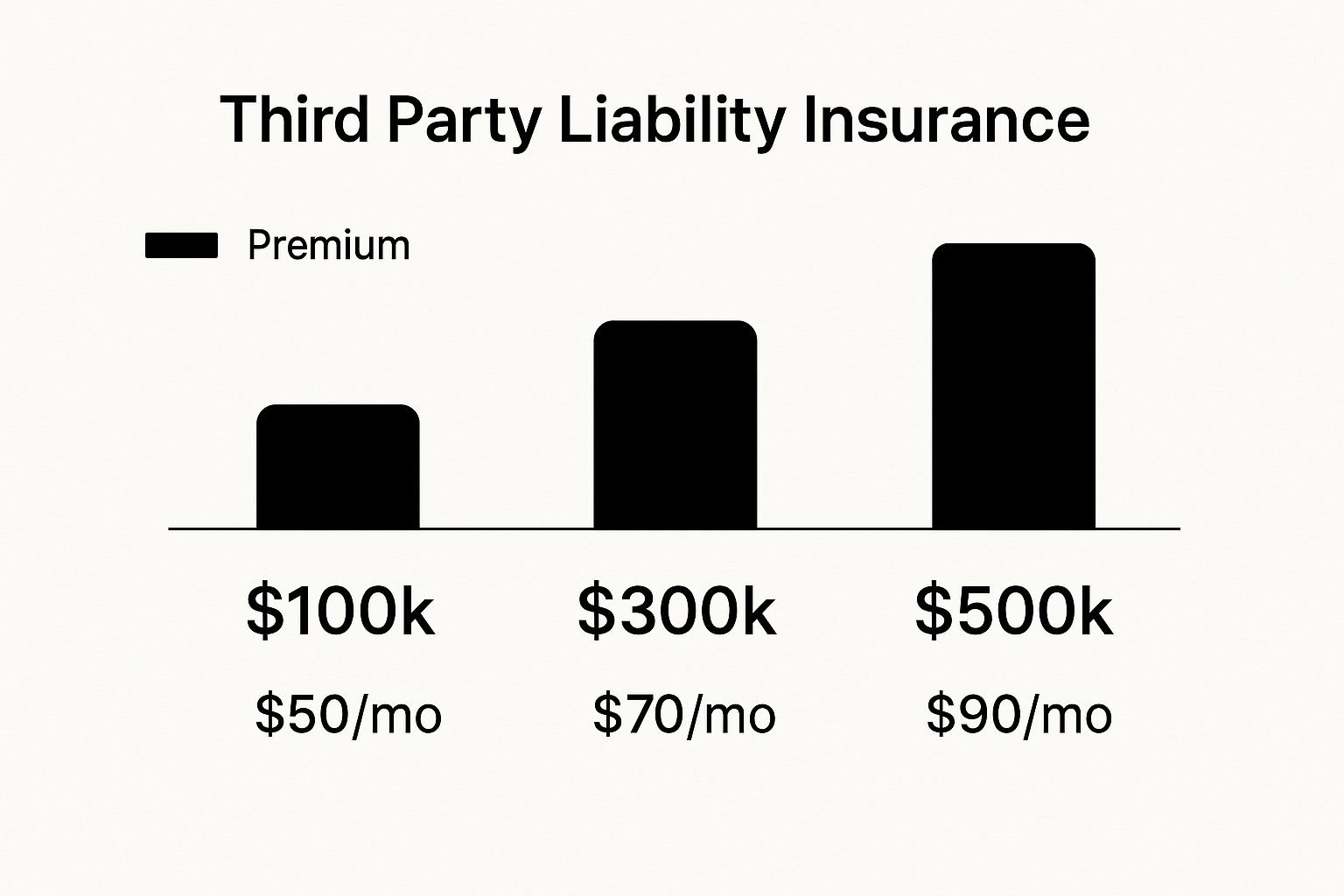
As you can see, a small step up in cost can lead to a giant leap in your financial safety net. It's something every driver should think about carefully.
TPL vs Comprehensive Insurance: A Head-to-Head Comparison
To make the choice crystal clear, let's put these two insurance types side-by-side. Understanding their core differences is key to making an informed decision that protects you on your journey.
| Feature | Third Party Liability (TPL) | Comprehensive (CDW/SCDW) |
|---|---|---|
| Damage to Other Cars/Property | Covered. This is its primary function. | Covered. Includes all TPL benefits. |
| Damage to Your Rental Car | Not Covered. You are fully liable for repair costs. | Covered. Pays for repairs, minus your excess. |
| Theft of the Rental Car | Not Covered. You could be liable for the car's full value. | Covered. Provides financial protection against theft. |
| Personal Injury to Third Parties | Covered. Protects against medical claims from others. | Covered. |
| Peace of Mind | Basic legal compliance. | High level of security and financial protection. |
Ultimately, TPL gets you on the road legally, but comprehensive coverage lets you actually enjoy the drive without worrying about the "what-ifs."
Key Differences at a Glance
Choosing the right insurance really boils down to this: TPL is the safety net for other people, while comprehensive options like CDW protect you and the fantastic car you’re driving. When you're looking at the luxury car rental Dubai price, adding that extra layer of protection is one of the smartest investments you can make.
Behind the scenes, the entire process is becoming more efficient. The insurance claims market in the Middle East and Africa, valued at around US$ 10.32 billion in 2023, is managed by a growing network of third-party administrators who help settle claims quickly.
While TPL is a non-negotiable legal requirement, upgrading to comprehensive coverage provides a much stronger layer of security. It’s the best way to ensure your Dubai driving experience stays positive, no matter what surprises the road throws your way.
How to Handle a Third Party Liability Claim
All the talk about what third party liability insurance is suddenly becomes very real the moment an accident happens. If you find yourself in a collision where you might be at fault, the most important thing is to stay calm and follow the correct procedure.
The minutes right after an accident are always stressful, but what you do next sets the tone for the entire insurance claim process.
No matter who you think is to blame, the first few actions you take are critical for a successful claim. For a broader overview, you can review these essential steps to take immediately after a car accident, which offer a solid roadmap for any driver. For our clients, however, we’ve boiled it down to three absolute must-dos.
Your first priority is simple: ensure everyone is safe. Check on yourself, your passengers, and the people in the other vehicle. If anyone is injured, call for an ambulance immediately.
Your Immediate Action Plan
Once you've made sure everyone is okay, it's time to start the official process. In the UAE, you have to follow strict legal protocols after an accident to make sure your insurance claim is valid. This isn't a time for roadside chats or handshake deals; you need a formal record.
Here is exactly what you need to do:
- Stay at the Scene and Call the Police: Never, ever leave the scene of an accident. Your first call should be to the Dubai Police. A police report isn't just a good idea—it's a legal requirement for any insurance claim, no matter how small the fender-bender seems.
- Do Not Admit Fault: This one is crucial. Even if you're pretty sure the accident was your fault, don't say it out loud. Let the police conduct their investigation and determine who is responsible in their official report. Admitting fault on the spot can seriously complicate things with the insurance company.
- Notify Uptown Rent A Car Immediately: As soon as you've spoken with the police, call us. Our team is ready to support you. We’ll walk you through the next steps and start coordinating with the insurance provider for you.
The official police report is the single most important document in a third-party liability claim. It serves as the definitive, unbiased account of the incident, and insurance companies rely on it to assign fault and process payments.
By following these three steps, you protect yourself and allow the third party liability insurance to do its job properly. Our role at Uptown Rent A Car is to make a stressful situation as smooth as possible, giving you clear guidance and support right when you need it most.
Avoiding Common Insurance Myths and Mistakes

Knowing what your Third-Party Liability insurance covers is one thing, but understanding its limits is what really keeps you safe. Too many renters fall for common myths, a shortcut to expensive mistakes and, even worse, voided coverage. Let's bust these dangerous misconceptions so you can drive with genuine peace of mind.
One of the biggest misunderstandings out there is that TPL covers damage to your rental car. This is completely false. Think of it this way: TPL is all about the other person. It only pays for the damage you cause to their car or property, or for their injuries. Any dings, dents, or serious damage to the car you're driving are your responsibility unless you've opted for more comprehensive coverage.
Another trap people fall into is thinking a police report isn't a big deal for a minor fender-bender. In the UAE, this is a critical error. A police report is mandatory for any accident, no matter how small it seems. Without that official report, your insurance claim will be rejected on the spot, leaving you to foot the entire bill.
Mistakes That Can Void Your Coverage
Beyond the myths, certain actions will instantly invalidate your entire insurance policy, leaving you completely exposed. These aren't just minor slip-ups; they are serious violations of your rental agreement and UAE law.
Your insurance becomes null and void if you do things like:
- Off-Road Driving: Taking a rental car for a spin in the desert or on any unpaved track is a definite no-go. It’s strictly forbidden and immediately voids your TPL.
- Driving Under the Influence: There is zero tolerance for this. Any involvement of alcohol or drugs means your insurance coverage is cancelled, full stop.
- Allowing Unauthorised Drivers: Only the person officially named on the rental agreement is insured to drive. Handing the keys to a friend, even for a short trip, puts you in a very risky position.
When you break the rules of your rental agreement, the insurance company sees it as a breach of contract. This gives them the legal right to deny any claims. Suddenly, you're personally on the hook for all damages, which can easily run into a massive sum.
It's also worth noting that fraudulent claims, like staged accidents, make things harder for everyone. This is a real issue in the region, driving up costs for providers of third-party liability insurance. You can learn more about the challenges in the MEA motor insurance market to understand the bigger picture. By simply driving responsibly and avoiding these key mistakes, you ensure your coverage is there for you when it truly matters.
Frequently Asked Questions About TPL Insurance
Navigating the world of rental car insurance can feel a bit tricky, but it doesn't have to be. To clear things up, we’ve put together some straightforward answers to the questions we hear most often about third-party liability insurance and what it means for your rental experience.
Does TPL Cover Passengers in My Rental Car?
This is a really important distinction to make: no, standard TPL insurance does not cover injuries to passengers inside your own rental car. TPL is specifically designed to protect the other people involved in an accident you cause—the "third parties," like drivers, passengers in the other vehicle, or pedestrians.
If you want coverage for your own passengers, you'll need something called Personal Accident Insurance (PAI). Think of it as an optional add-on that provides medical coverage for you and anyone travelling with you.
What Is a Typical Excess or Deductible for TPL?
Good news here. With basic TPL, there's typically no excess or deductible for the third-party claim itself. Since the insurance is paying for the other person's damages, you generally aren't required to chip in for their repair or medical bills, as long as the claim falls within your policy's limits.
However, an excess does come into play if you upgrade to more comprehensive coverage, like a Collision Damage Waiver (CDW). This is the amount you agree to pay towards repairs for your rental car before the insurance policy kicks in to cover the rest.
It's worth remembering that TPL only activates when you are officially found to be at fault. In the UAE, the mandatory police report is the key document that establishes who is legally responsible.
What If the Other Driver Is Uninsured?
While this is a rare situation in the UAE—TPL is a legal requirement for every vehicle on the road—it can happen. If you're hit by an uninsured driver, your basic TPL policy won't cover any damage to your rental car.
This scenario is exactly why comprehensive insurance is so valuable. With a CDW added to your rental, you'd still be covered for repairs to your vehicle, no matter the other driver's insurance status. Of course, driving legally also means having all your documents in order. You can get a full rundown on what you'll need in our guide on international driving permit requirements.
For a seamless and secure driving experience in Dubai with transparent insurance options, explore the premium fleet at Uptown Rent A Car. Find your perfect luxury vehicle and book with confidence at https://www.uptowndxb.com.