

An SUV car rental is your ticket to experiencing Dubai the way it's meant to be seen—with a perfect mix of luxury, space, and go-anywhere capability. Whether you're cruising down Sheikh Zayed Road, heading to a high-stakes business meeting, or planning an escape into the desert, an SUV has the comfort and power to handle it all. It's really the only way to unlock every experience this incredible emirate has to offer.
Why an SUV Rental Unlocks the Best of Dubai
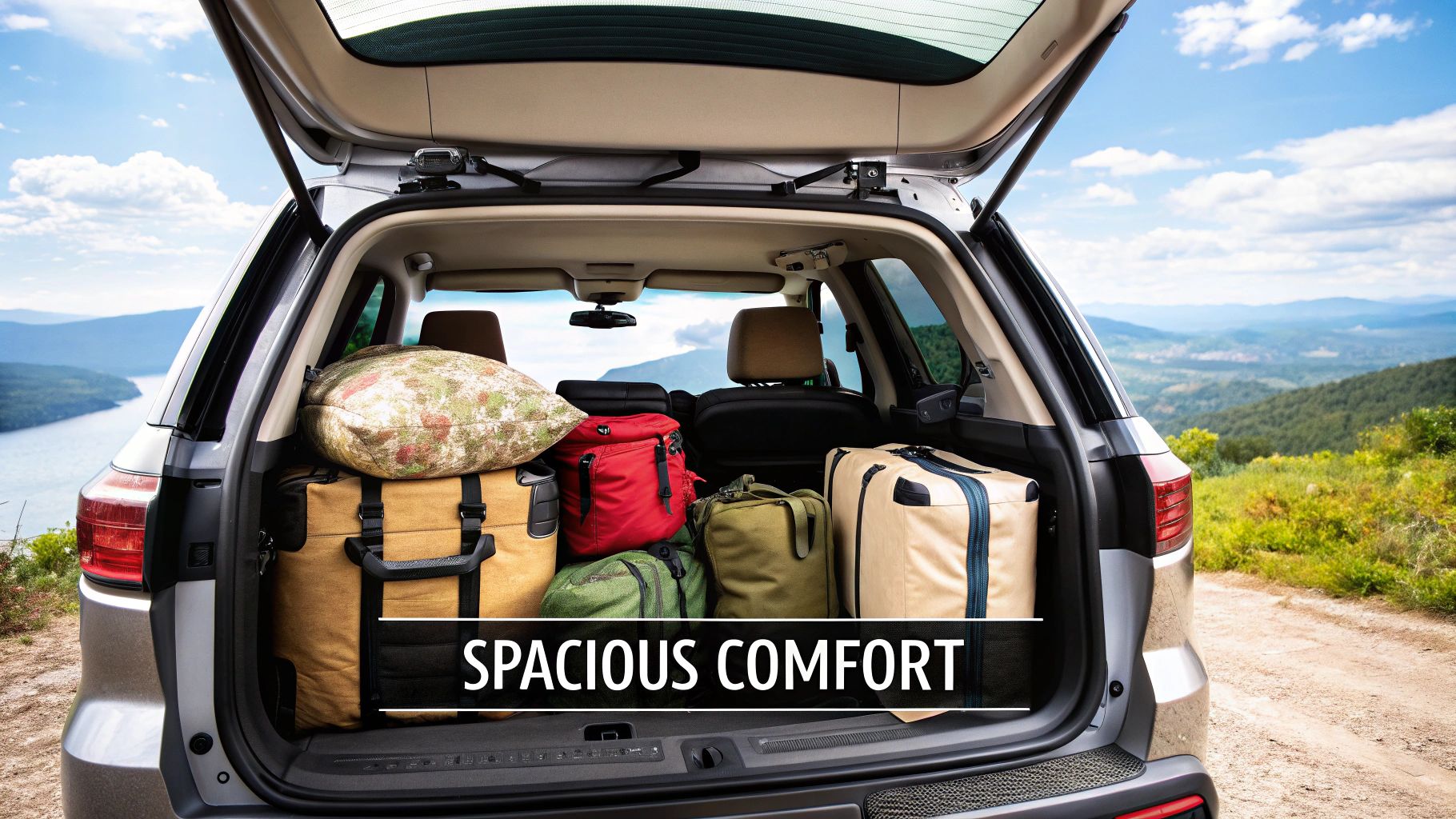
Dubai is a city of incredible contrasts. One minute you're surrounded by towering skyscrapers, the next you're gazing out at vast, golden dunes. To properly explore it all, you need a vehicle that can move between these two worlds without missing a beat. An SUV isn't just about getting from A to B; it’s about having an all-access pass to the city's incredible landscapes.
Think of it like this: a normal saloon car is great for the city's pristine highways, but it keeps your adventure glued to the tarmac. An SUV, on the other hand, is your key to unlocking both the urban jungle and the rugged natural beauty that lies just beyond. It’s the difference between just seeing Dubai and truly experiencing it.
The Ultimate Blend of Comfort and Capability
One of the biggest reasons people choose an SUV is for that unbeatable combination of luxury and sheer practicality. The high, commanding driving position gives you a fantastic view for navigating the city's famously busy traffic, while the spacious interiors mean everyone on board travels in total comfort. This is a game-changer for families or anyone travelling with a bit of luggage.
This blend gives you some serious advantages for your trip:
- Go-Anywhere Performance: You can glide from polished city streets to sandy desert tracks without ever sacrificing comfort or safety.
- Serious Space: With plenty of room for passengers and bags, it's perfect for family holidays, post-shopping-spree hauls, or packing gear for a round of golf.
- Feel Safer: The robust build and modern safety features just give you that extra peace of mind on Dubai's fast-paced roads.
- Arrive in Style: Pulling up in a premium SUV perfectly matches the glamorous vibe of Dubai’s five-star hotels, restaurants, and attractions.
An SUV in Dubai isn't just transport; it's a tool that adapts to whatever you have planned. It gives you the power to schedule a morning business meeting downtown, an afternoon at The Dubai Mall, and still catch the sunset from a desert dune—all in the same day.
At the end of the day, choosing an suv car rental is about giving yourself total freedom. You'll never have to wonder if your car can handle an impromptu trip to the mountains of Hatta or a scenic drive along the coast. Your vehicle is always ready for what's next, making sure your Dubai experience is only limited by your imagination, not your ride.
Choosing the Right SUV for Your Dubai Trip
Picking the perfect SUV for your Dubai adventure isn't as complicated as it might seem. The secret is simply matching the vehicle to your itinerary. Before you even look at models, ask yourself: what’s the plan? Will you be cruising the stylish boulevards of Downtown Dubai, shuttling the family between theme parks, or heading out for an authentic desert safari?
Answering that one question makes all the difference. An SUV car rental isn't a one-size-fits-all deal; it's about picking the right tool for the job. You wouldn't take a tiny city car off-roading, and you definitely don't need a massive 4×4 if you're just sticking to the city. Let’s break down the main categories to find your perfect ride.
Match the SUV to Your Mission
Figuring out your main activities will instantly narrow down your choices. Think about the three kinds of trips people usually take in Dubai: city exploration, family or group travel, and off-road adventures. Each one has a category of SUV that fits it perfectly.
Taking a moment to think this through ensures your vehicle is an asset, not a hassle. It stops you from overpaying for capabilities you'll never use or, even worse, ending up with a car that can't handle what you have planned.
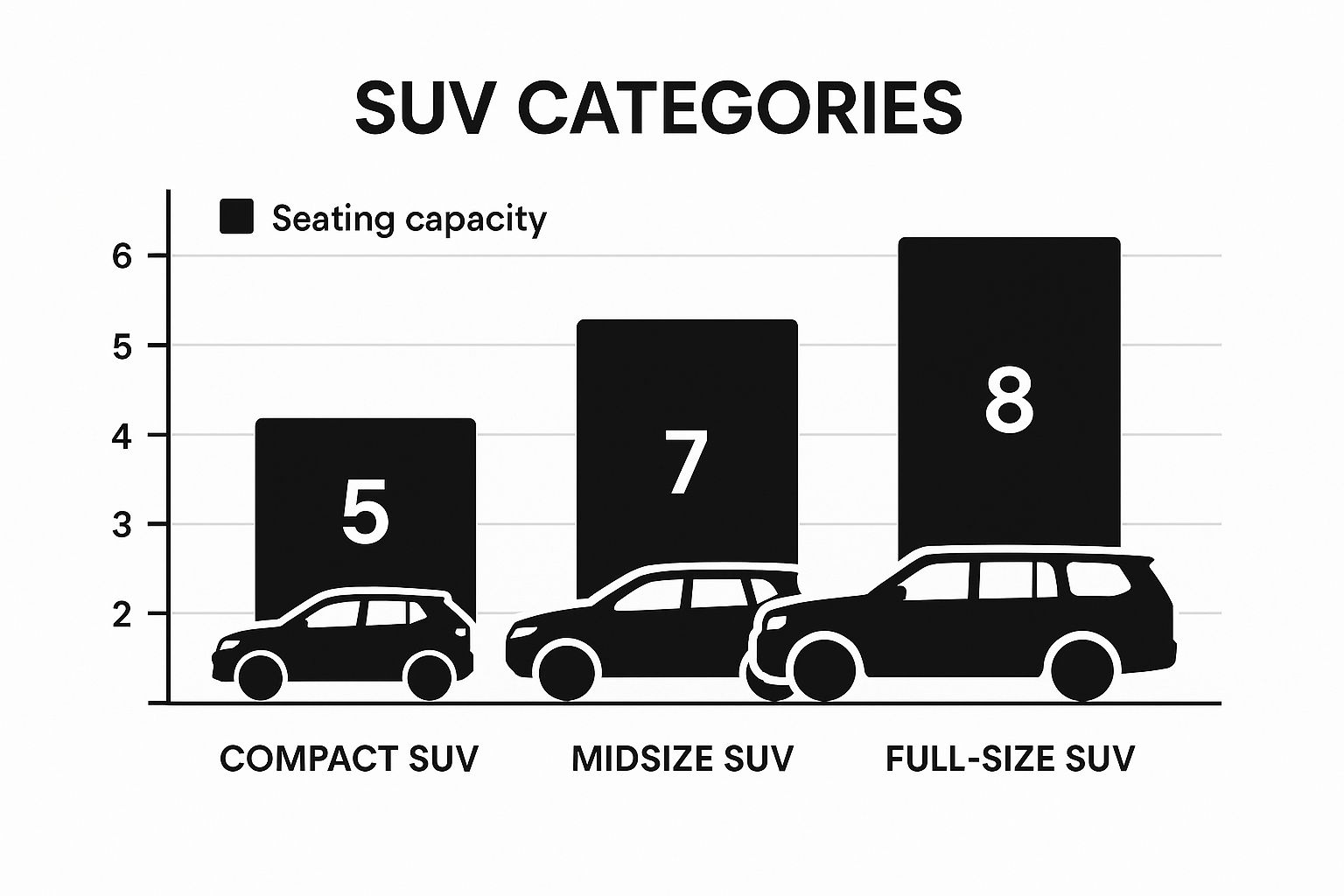
As you can see, jumping up a category brings a big increase in passenger space, which is obviously a game-changer for group travel.
Compact SUVs for Urban Agility
If your plans are all about exploring Dubai's urban jungle—think The Dubai Mall, Burj Khalifa, and the beaches of Jumeirah—a compact SUV is your best friend. Models like the Kia Seltos or Hyundai Creta are built for city driving. You get a higher driving position than a standard car, but they’re still nimble enough to handle busy streets and squeeze into tight parking spots with ease.
Their fuel efficiency is another huge plus, saving you a good bit of cash as you zip between attractions. While they can seat up to five, they’re really ideal for couples or small families travelling with light luggage.
Midsize and Full-Size SUVs for Family Comfort
For families or groups, space is everything. This is where midsize and full-size SUVs really come into their own. Midsize options, many with seven seats like the Mitsubishi Pajero, strike a great balance between having tons of interior room and still being manageable to drive.
But if you want to take comfort to the next level, look at full-size models like the Chevrolet Tahoe or the legendary Nissan Patrol. With room for up to eight people and a massive amount of luggage space, you can be sure everyone and everything fits without feeling cramped. These vehicles are the workhorses of family travel, making those trips to theme parks or beach clubs completely stress-free.
To help you visualise the options, here’s a quick rundown of some popular models and what they're best suited for.
Comparing Popular SUV Rentals for Dubai Travel
| SUV Model | Category | Best For | Passenger Capacity | Key Feature |
|---|---|---|---|---|
| Kia Seltos | Compact | City driving & couples | 5 | Fuel efficiency & easy parking |
| Hyundai Creta | Compact | Urban exploration | 5 | Nimble handling & modern tech |
| Mitsubishi Pajero | Mid-size | Families & mixed travel | 7 | Versatility & third-row seating |
| Chevrolet Tahoe | Full-size | Large groups & road trips | 8 | Massive interior & cargo space |
| Nissan Patrol | Full-size / 4×4 | Desert adventures & luxury | 8 | Unmatched off-road capability |
| Toyota Land Cruiser | Full-size / 4×4 | Off-roading & reliability | 7-8 | Legendary durability & power |
This table should give you a clearer idea of how different models cater to different needs, making your choice that much easier.
Rugged 4x4s for the Ultimate Desert Adventure
You can't come to Dubai and not experience the desert. For that, you need a proper 4×4. While plenty of SUVs have all-wheel drive, only certain models are truly built for serious off-roading. We’re talking about legends like the Nissan Patrol and Toyota Land Cruiser, engineered from the ground up to conquer the dunes with pure power and reliability.
Renting one of these beasts means you can join a guided safari convoy or, if you have the experience, explore designated off-road trails on your own. They come equipped with everything you need—high ground clearance, beefy suspension, and powerful engines—to ensure your desert adventure is both safe and absolutely unforgettable.
How to Navigate the SUV Rental Booking Process
Booking your SUV car rental in Dubai should be a quick and painless part of planning your trip, not a headache. Thanks to modern online platforms, locking in the perfect ride is easier than ever—you can go from browsing to booked in just a few clicks. The trick is simply knowing what to look for and understanding the steps.
Think of it like booking a flight. You start by comparing your options, pick your dates, check the final price with all the fees, and then confirm with your payment and documents. Approaching it with that clear, step-by-step mindset ensures nothing important gets missed.
Comparing Platforms: Direct vs. Aggregators
Your first big decision is where to actually book. Generally, you’ve got two main routes: booking directly with a local rental company like Uptown Rent A Car, or using a third-party aggregator site that pulls in options from dozens of different providers. Each has its own pros and cons.
- Booking Direct: Going straight to the source often gets you more personalised service and direct communication. You're talking to the people who own and service the cars, which makes it easier to confirm the exact vehicle you’re getting.
- Using Aggregators: These sites are great for quickly comparing prices across multiple companies at once. The downside? Customer service can feel a bit disconnected if problems pop up, since you're dealing with a middleman.
For high-end vehicles, we've found that booking direct usually gives you a better, more reliable experience, as you can confirm the exact model and specs you're after.
Decoding the Price: What’s Actually Included?
This is where you need to pay close attention. That attractive daily rate you see at first is just the starting point. Before you hit "confirm," you have to carefully check what's covered to avoid any nasty surprises at the rental desk. Any transparent rental company will lay this all out for you.
A classic pitfall for renters is missing the mileage limit. Many rentals include a daily cap, like 250 km per day. Go over that, and you'll face extra charges. Always make sure the allowance fits your travel plans.
Look for a clear summary of what's included. Typically, the price for an SUV car rental should cover basic insurance and a standard mileage allowance. Things like road tolls (Salik), delivery fees, or adding a second driver are usually extras. A reputable provider will show you these costs upfront, not hide them in the fine print.
Preparing Your Documents for a Smooth Handover
Once you've picked your vehicle and you’re happy with the price, it's time to get your documents sorted. Modern booking websites make this incredibly easy, usually letting you upload everything directly. Having these files ready to go will speed the whole process up.
Here’s what you'll almost always need to have on hand:
- Valid Driving Licence: Your licence from your home country is a must.
- International Driving Permit (IDP): Tourists from certain countries will need this, so always double-check if it applies to you.
- Passport and Visa: A copy of your passport and UAE entry stamp is standard procedure for visitors.
- Emirates ID (for residents): If you live in the UAE, you’ll use your Emirates ID instead of a passport.
The demand for SUVs in this part of the world is huge. The car rental market in the Middle East & Africa generated around USD 7.72 billion, and it's projected to grow 12.2% annually through 2030. While economy cars are popular, SUVs are a massive part of the fleet, especially here in the UAE, where the luxury subsegment alone hit USD 0.60 billion. This intense demand is exactly why you should book your preferred model well in advance. You can dive deeper into these car rental market trends and forecasts to see the full picture.
Understanding Rental Costs and Insurance Explained
Let’s be honest, figuring out the finances behind your SUV car rental can feel a bit overwhelming. But getting a clear picture of the costs is the secret to a totally stress-free experience. The price you pay isn’t just the number you see advertised per day; it’s a mix of a few different things. Once you understand them, you can budget perfectly and hit the road without a single worry.
Think of it like getting a bill at a nice restaurant. The daily rate is your main course, but then you have taxes, maybe a delivery fee, and tolls from your drive over. We’ll break down every part of the bill so you know exactly what goes into the final price.
The Anatomy of Your Rental Bill
That flashy daily rate is what gets your attention, but a few other items complete the financial picture. Knowing what they are from the get-go means you can compare different rental offers like a pro and avoid any nasty surprises when it's time to hand back the keys.
Here are the main components you'll find on your rental agreement:
- Daily Rental Rate: This is the baseline price for having the SUV for a 24-hour period.
- Security Deposit: A refundable hold on your credit card, just in case.
- Salik (Toll) Fees: Charges for cruising through Dubai's automated toll gates.
- Insurance Coverage: The level of protection you opt for, from basic to all-in.
- Additional Fees: Any extras you choose, like a GPS unit, adding another driver, or having the car delivered to your hotel.
What Is the Security Deposit For?
Pretty much any car rental company, especially when you’re hiring a luxury SUV, will ask for a security deposit. This isn't an extra charge you’re paying; it's simply a temporary hold on your credit card. Think of it as a safety net for the rental company to cover any unexpected costs that might pop up while the car is with you.
This deposit is there to handle things like:
- Any traffic fines you might get.
- Salik toll charges from your drives around the city.
- Damage to the SUV that isn't covered by your insurance (this is often called the 'excess').
- Returning the car with less fuel than agreed.
This deposit is typically refunded within 14-30 days after the car is returned. Why the wait? It gives enough time for any delayed traffic fines to show up in the system. As soon as they confirm there are no outstanding charges, the full amount is released back to your card. For a deeper dive into how this all works, our guide to seamless SUV car rent experiences has even more detail.
Making Sense of Car Rental Insurance
Insurance can feel like the most complicated piece of the puzzle, but it’s actually pretty straightforward. The type of insurance you pick simply decides how much you’d be financially responsible for if there’s an accident. In Dubai, you generally have two main choices.
Collision Damage Waiver (CDW): The Foundation of Your Protection
CDW is your basic safety net. It covers any major damage to the rental car if you're in an accident. However, it nearly always includes an "excess"—a set amount you're still on the hook for. For example, if the excess is AED 3,000, you would have to pay up to that amount for repairs, and the insurance company handles the rest.
For anyone wanting complete peace of mind, there’s a better option. It’s often called Super Collision Damage Waiver (SCDW) or Full Insurance. This upgrade drastically reduces your excess, sometimes down to zero. That means in case of an accident, you’d pay very little—or nothing at all—out of your own pocket for damages.
Ultimately, choosing between basic CDW and full insurance is about your own comfort level with risk. Full coverage costs a bit more each day, but it gives you total protection from unexpected bills. It lets you truly enjoy the power and luxury of your SUV with absolutely no financial stress.
Your Checklist For Renting An SUV In Dubai
Walking up to the rental counter prepared is the secret to a fast, smooth pickup. Whether you're a tourist hitting the dunes or a resident needing a weekend upgrade, having your documents in order makes all the difference.
This simple checklist breaks down exactly what you’ll need to have on hand. For our international visitors, for example, it’s a non-negotiable duo: a valid driving licence from your home country and your passport.
If you’re a UAE resident, life is even simpler. Just your Emirates ID and a valid UAE driving licence are all it takes to get you behind the wheel.
- Age Requirement: The standard minimum age to rent is 21, but keep in mind that for some of the higher-end luxury models, you’ll need to be at least 25.
- International Driving Permit: If you're visiting from a country whose licence isn't automatically accepted in the UAE, an International Driving Permit (IDP) is essential. You'll need to show it right alongside your original licence.
- Passport or Visa: For all non-residents, a copy of your passport with a valid UAE entry stamp is mandatory. No exceptions here.
It's also worth noting how the rental fleets are evolving. Electric SUVs are no longer a novelty; they're becoming a popular and common sight in rental lineups across Dubai.
The market reflects this shift. The Middle East and Africa's E-SUV market was recently valued at a cool USD 2.25 billion, with experts forecasting a massive 19.6% CAGR between 2025 and 2034.
Here in the UAE, the push for electric is strong. Projections show EVs making up 15% of all new car sales by 2030, climbing to 25% by 2035.
Document Presentation Tips
For a handpicked selection of offers and some of the best prices in the city, have a look at our guide: Discover the Best SUV On Rent Deals for Your Next Adventure.
And before you head out, whether you're cruising to the beach or planning a bigger trip, you'll want to be packed properly. This ultimate car camping packing list is a fantastic resource to make sure you don't leave any essentials behind.
My best advice? Always have both the physical documents and digital copies on your phone. A missing piece of paper can lead to frustrating delays or even extra fees.
- Have both the original documents and a digital backup ready to show. It just makes the verification process that much quicker.
- If your driving licence isn't in English or Arabic, you absolutely must bring a certified translation or a valid IDP.
- Double-check that every document is valid for your entire rental period. An expired licence can bring your trip to a halt before it even starts.
Insider Tip: Getting your documents organised and ready beforehand can genuinely cut your vehicle pickup time by over 50%.
Final Preparations
When you arrive at the counter, present your documents clearly to the agent. Before you sign anything, take a moment to confirm the rental terms match what you booked online.
Then, do a thorough walk-around of the SUV. Look for any pre-existing scratches or dings and make sure they're noted on the checkout form. Taking a few timestamped photos on your phone is a smart move to avoid any disputes later.
- Check the fuel level—it should be full.
- Confirm the Salik (toll) tag is active and properly installed.
- Glance at the tyres and the cleanliness of the interior.
- Ask about the timeframe for getting your security deposit refunded.
You'll almost always need a major credit card in the lead driver's name for the security deposit. While some companies might accept debit cards, they usually come with much larger security holds. Make sure your card has plenty of available credit to cover it.
Finally, keep your booking confirmations and the signed rental agreement saved on your phone. It’s always good to have them handy, just in case.
Expert Tips for Driving Your Rental SUV in Dubai
Alright, you've got the keys to your luxury SUV. Now it's time to actually get out there and enjoy the incredible roads Dubai has to offer. Driving here is a fantastic experience, but a little local knowledge goes a long way in making your trip smooth, safe, and genuinely fun.
Before you even pull out of the rental agency's car park, take five minutes for a crucial first step. Whip out your phone and do a quick walk-around video of the SUV. Get up close on any little scratches, dings, or scuffs you see. This simple act is your best friend if any questions about the vehicle's condition come up when you return it.
Navigating Dubai’s Roads Like a Pro
Dubai is famous for its massive, pristine highways, but they demand respect and your full attention. The pace is fast, and drivers expect you to know the unwritten rules. Stick to the right-hand lanes unless you're overtaking, and always signal your intentions early. People move quickly here, so being predictable is key.
And those speed limits? They’re not suggestions. The roads are monitored by a network of automated cameras, so keep a sharp eye on the posted signs.
A few other pointers for the road:
- Roundabouts: It's simple—give way to any traffic that's already in the circle or coming from your left.
- Speed Cameras: They are literally everywhere. While there's often a small buffer (around 20 km/h), your safest bet is to just stick to the limit.
- Parking: Most commercial areas have paid parking. Download the RTA Dubai app or just pay by SMS—it’s incredibly convenient.
If you’re still weighing your options, you can explore some of the best deals on SUVs for rent today to find a ride that perfectly matches your plans.
SUV-Specific Driving Advice
An SUV isn't just a big car; it handles differently and comes with features designed to take you further. Getting a feel for its size and capabilities is important, especially if you're thinking of venturing outside the city.
Crucial Pre-Adventure Check: If a desert drive is on the cards (and your rental agreement allows it!), checking your tyre pressure is an absolute must. Dropping the pressure is the secret to floating over sand instead of digging into it. Just don't forget to pump them back up to the recommended PSI before you hit the tarmac again.
Take a moment to understand the 4×4 system before you actually need it. Figure out how to engage four-wheel drive and what the different terrain modes (if available) are for. And while Dubai is known for sun, sudden rain showers can happen. Brushing up on essential tips for safe driving in rain can make a huge difference when the roads get slick.
This bit of prep work ensures you can confidently handle whatever your adventure throws at you, making the most of your SUV car rental from the city's sleek interchanges to more rugged terrain.
Common Questions About Renting an SUV in Dubai
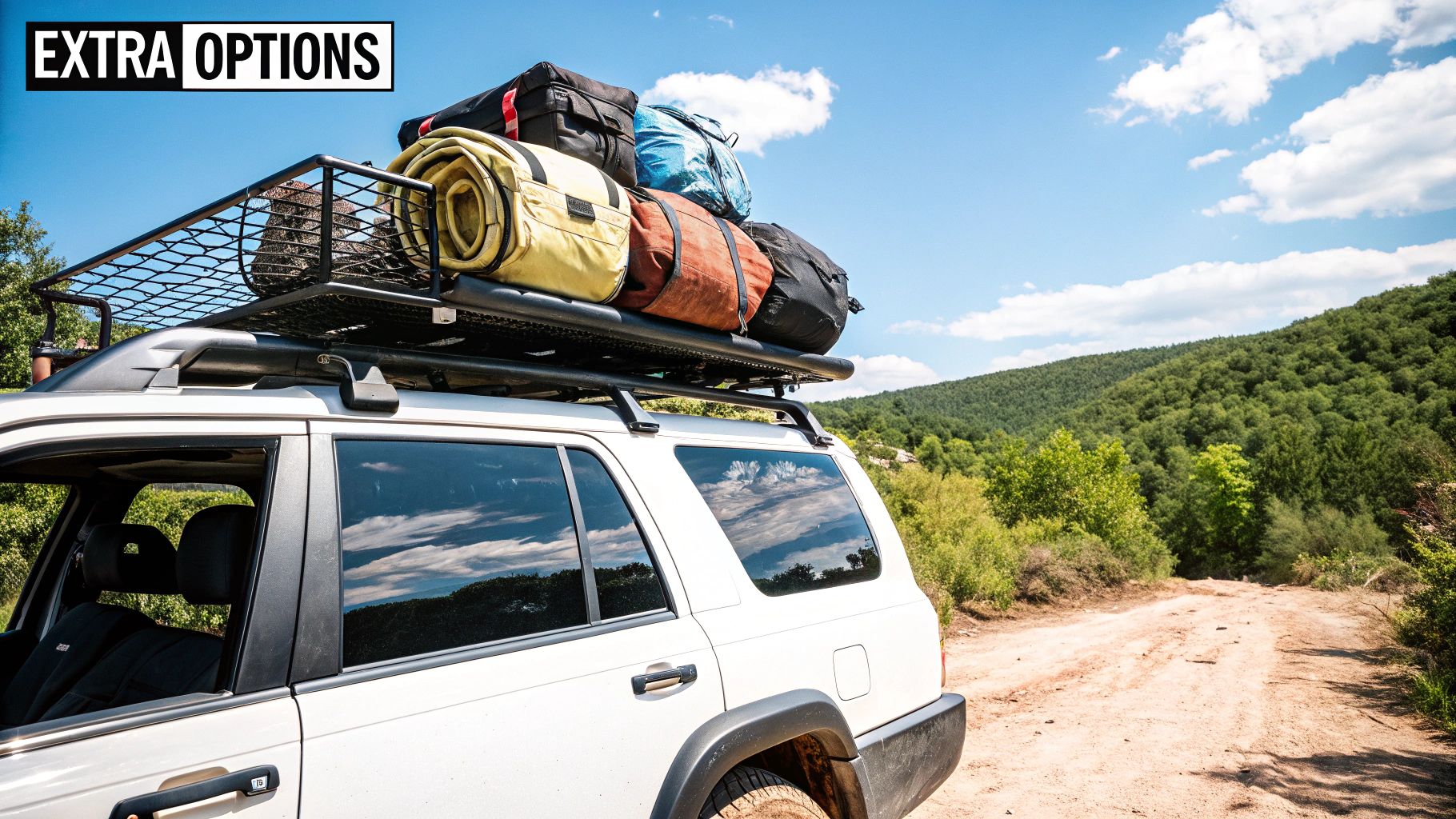
Even after you've done all your homework, a few last-minute questions always seem to surface right before you book an SUV car rental in a place as exciting as Dubai. Getting solid, straight-up answers to these common worries can give you the final shot of confidence you need for a trip that’s nothing short of perfect.
Consider this your go-to guide for those practical, "what if" scenarios. We’ve rounded up the questions we hear the most, reinforcing some key advice and offering quick solutions so you can drive with total peace of mind.
Can I Take My Rental SUV Off-Roading?
This is easily one of the most popular questions we get, and the answer needs your full attention. While many of the SUVs you can rent are beastly 4x4s practically begging for a dune adventure, taking them off-road is another matter entirely. The vast majority of standard rental agreements strictly prohibit any off-road driving.
So, why the firm no? It all comes down to risk. The desert terrain can be brutal on a vehicle, and the chances of mechanical damage skyrocket. Your standard insurance policy won’t even touch this kind of activity.
- Check First, Always: Before you even start dreaming of desert bashing, you absolutely must confirm the company's specific policy.
- Look for Specialised Packages: Some agencies do offer dedicated off-road packages. These come with the right insurance and vehicles that are properly kitted out, but this is a separate, specialised service.
- The Consequences: If you ignore the rules, you’re looking at losing your entire security deposit and potentially facing some eye-watering bills for any damage.
The bottom line is simple: unless you have explicit, written permission and the correct insurance coverage from the rental company, your SUV must stay on paved roads.
How Does the Salik Toll System Work?
Getting around Dubai is a breeze thanks to its world-class road network, which includes the slick Salik electronic toll system. Forget about stopping at booths or fumbling for cash—it’s completely automated.
Every single rental car in Dubai comes with a Salik tag, which is usually a small sticker on the windscreen. When you pass through a toll gate, it automatically scans your tag and logs the fee. As the renter, you don't have to do a thing.
The rental company keeps a running tab of all your toll charges. When you bring the car back, the total amount is simply charged to you, either deducted from your security deposit or billed to the credit card you have on file. It's incredibly seamless.
What Happens If I Get a Traffic Fine?
Dubai’s traffic laws are no joke, and they're enforced by an extensive network of cameras and radar systems. If you happen to get a fine for speeding, parking where you shouldn't, or any other violation, it's electronically tied to your car's licence plate.
The rental company gets the notification straight from the traffic authorities. To sidestep any late payment penalties, they usually pay the fine for you right away. After that, they’ll bill you for the full amount of the fine, plus a small administrative fee for their trouble. It’s a very straightforward process, but the best plan is always to drive carefully and follow the rules to avoid those extra costs in the first place.
Ready to find the perfect luxury SUV for your Dubai journey? At Uptown Rent A Car, we offer a premium fleet and a seamless booking experience. Explore our collection and reserve your vehicle today at https://www.uptowndxb.com.