

Picture this: you, behind the wheel of a beastly 4×4, with nothing but the golden dunes of Dubai stretching out before you. A self-drive desert safari in Dubai offers a raw, unfiltered sense of adventure that a standard packaged tour just can’t replicate. Think of this guide as your seasoned co-pilot, here to give you the practical, on-the-ground advice you need to confidently map out your own desert journey.
Charting Your Own Course Through Dubai's Dunes
Going for a self-drive safari puts you squarely in the driver's seat—literally and figuratively. It shifts the experience from a typical tourist outing to a genuine expedition.
Forget rigid schedules. You decide when to pull over for that perfect sunset shot, how long to just sit and soak in the vast, silent landscape, and which dunes look the most inviting. This is for the independent traveller, the one who craves a real connection with the environment, not just a quick look.
The real appeal is in the challenge and the massive payoff. You'll quickly learn how to read the sand, get a feel for what your vehicle can handle, and navigate a terrain that’s as demanding as it is beautiful. It's an active experience that fully engages you, a world away from just being a passenger.
The Rise of Independent Desert Exploration
This desire for personal adventure isn't just a niche feeling; it's part of a bigger shift in how people want to experience Dubai. More and more, travellers are looking for hands-on, personalised ways to engage with nature.
By 2024, Dubai’s desert safari scene had already adapted, with several curated self-drive options hitting the market. These typically feature powerhouse vehicles like the Toyota Land Cruiser or custom-built dune buggies, letting you navigate the dunes on your own terms, but with a safety net in place.
What This Guide Will Cover
Whether you're a seasoned off-roader or a curious first-timer, this guide is designed to be your go-to resource. We're going to walk you through every critical step, from planning to execution, making sure your self-drive safari is both a massive thrill and completely safe. The goal here is to give you the knowledge to leave the crowds behind and carve out your own adventure.
- Vehicle Selection: We'll dive into the best 4x4s for the job and give you the must-ask questions for your rental agency.
- Essential Preparations: From pre-drive mechanical checks to the absolute non-negotiable step of deflating your tyres, we've got you covered.
- Navigation and Routes: Find out about the most popular self-drive areas and get tips on using both standard maps and specialised GPS apps.
- Core Driving Skills: We’ll break down the fundamental techniques for climbing, descending, and traversing dunes like a pro—and how to avoid getting stuck.
A successful self-drive desert adventure isn't just about having a capable vehicle; it's about having the right knowledge. Preparation is the key that unlocks true freedom on the sand, turning potential problems into minor inconveniences.
Ultimately, this is about creating your own story. Of course, driving in a new country can feel a bit intimidating, which is why getting a handle on the local rules is so important. For a complete rundown, make sure to check out our guide on driving in Dubai for tourists before you even think about getting in the car.
With the right prep, you won't just be undertaking a journey—you'll truly own it, creating memories that will stick with you for a lifetime.
Choosing and Preparing Your Desert 4×4
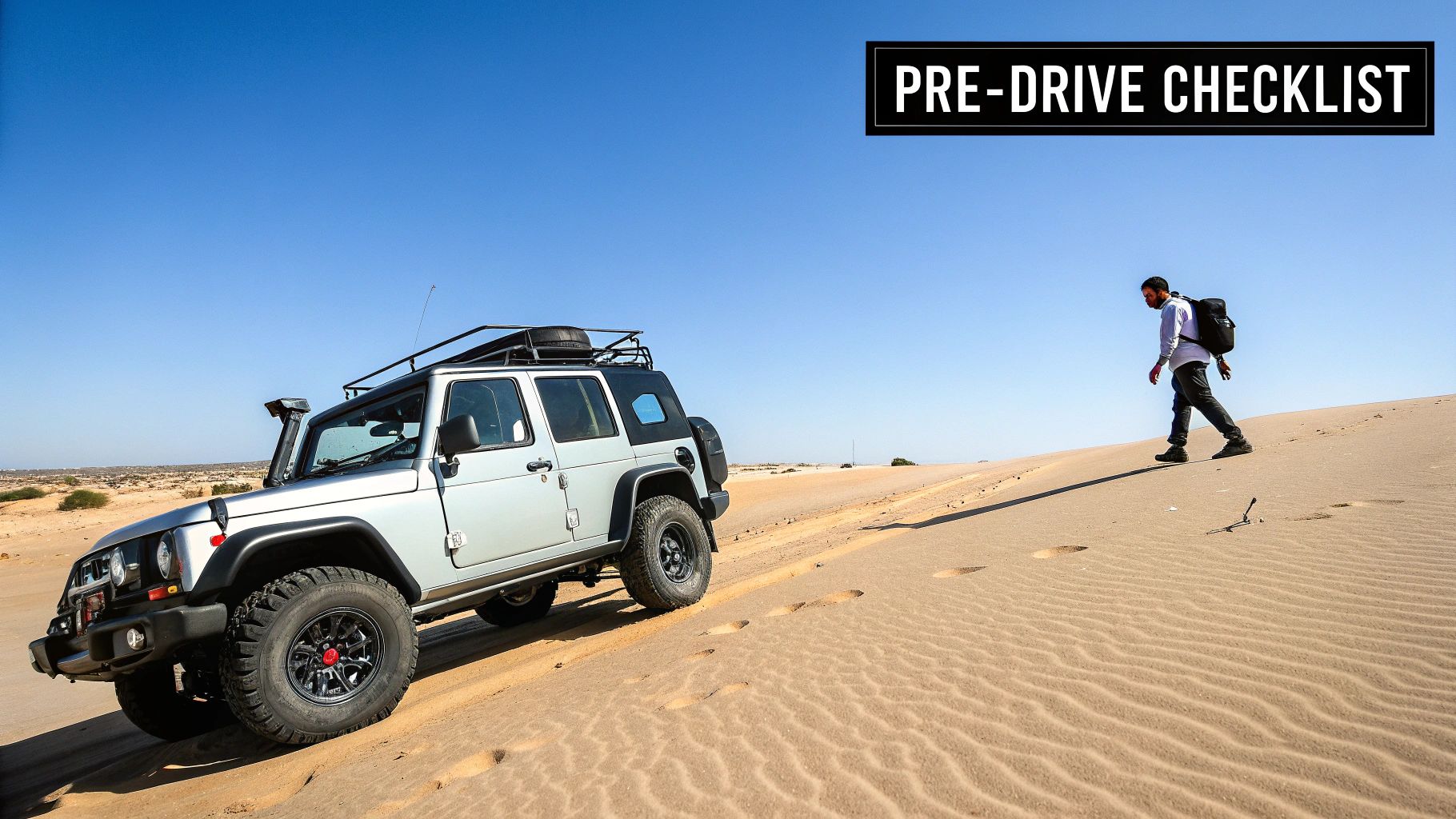
Let's be clear: your vehicle is the single most important part of your self-drive desert safari. Get this right, and you’re in for an incredible adventure. Get it wrong, and you’ll spend most of your day digging sand. This is more than just booking an SUV; it’s about choosing a capable off-road machine and knowing exactly how to prep it for the unique challenge of the dunes.
When you start browsing rental options, a couple of names will pop up again and again: the Toyota Land Cruiser and the Nissan Patrol. These aren't just popular by chance—they are legends in the Arabian desert for a reason. They're purpose-built for this terrain, with fantastic ground clearance, tough four-wheel-drive systems, and a rock-solid reputation for reliability that gives you real peace of mind out there.
But the vehicle is only half the equation. The rental company you choose is just as crucial. Before you even think about putting down a deposit, you need to have a very direct conversation about their off-road rules. This is the one step that trips up so many first-timers.
Asking the Right Questions at the Rental Agency
Never, ever assume that a standard rental agreement allows for off-roading. Most strictly forbid it. You have to ask specific, direct questions to make sure you're covered and properly equipped for where you're going.
Here’s what you absolutely must clarify with them:
- Off-Road Insurance Coverage: Ask plainly, "Does this insurance policy explicitly cover damage that happens during off-road desert driving?" If you can, get this confirmation in writing.
- Recovery Services: Find out what happens if you get stuck. "If I can't get the vehicle out myself, what's your desert recovery process, and what are the costs involved?"
- Included Gear: Any decent company offering off-road rentals should provide some basic recovery equipment. Ask, "Does the 4×4 come with a shovel, recovery tracks, a tyre pressure gauge, and an air compressor?"
Never take a rental vehicle into the desert without explicit permission and the correct insurance. An accident or breakdown off-road without proper coverage could result in staggering financial liability. Clarity upfront is your best protection.
While workhorses like the Patrol are desert staples, maybe you're looking for a bit more luxury. A Range Rover hire in Dubai can be a superb choice, offering sophisticated terrain response systems and premium comfort. But the same rules apply—always confirm the specific off-road permissions with the rental agency first.
To help you decide, let's break down some of the most popular choices for a self-drive safari.
Comparing Popular 4x4s for a Dubai Desert Safari
Choosing the right 4×4 can feel overwhelming, but it really comes down to a few key players known for their desert prowess. Each has its own strengths, whether it's raw power, reliability, or advanced tech. This table compares the top contenders to help you match a vehicle to your adventure style.
| Vehicle Model | Key Desert Advantage | Best For | Typical Rental Cost (per day) |
|---|---|---|---|
| Toyota Land Cruiser | Legendary reliability and simple, robust 4WD system. | First-timers and reliability-focused drivers. | AED 450 – 700 |
| Nissan Patrol | Powerful V8 engine and excellent dune-climbing ability. | Those wanting performance and capability. | AED 500 – 800 |
| Jeep Wrangler | Exceptional agility and short wheelbase for tight spots. | Adventurous drivers tackling technical terrain. | AED 400 – 650 |
| Range Rover Sport | Advanced Terrain Response system and superior comfort. | A blend of luxury and off-road intelligence. | AED 800 – 1,500 |
Ultimately, you can't go wrong with a Land Cruiser or Patrol. They are the gold standard for a reason. However, a Wrangler offers a more raw, connected feel, while a Range Rover brings a level of comfort that makes the entire experience feel effortless.
Your Pre-Drive Vehicle Checklist
Okay, you’ve got the keys. Now it’s time to get properly acquainted with your 4×4 before you even think about hitting the sand. Don't just give it a quick glance; do a proper, systematic check to make sure you're ready.
- Thorough Walk-Around: Start with the tyres. Look for any obvious damage or signs of low pressure. Glance underneath the vehicle for any hanging parts or fluid leaks.
- Locate Recovery Points: Find the solid tow hooks on the front and back of the 4×4. You need to know exactly where these are before you get stuck, not while you're scrambling in the sand.
- Get to Know the 4WD Controls: Get in the driver's seat and figure out how to engage the four-wheel-drive system. Practice shifting from two-wheel drive (2H) into four-wheel drive high (4H) and, crucially, into four-wheel drive low (4L). You'll be grateful you did when you hit a soft patch.
The Single Most Important Preparation Step
If you take only one piece of technical advice away from this guide, make it this one: you must lower your tyre pressure. Seriously. Driving onto the sand with road-pressure tyres is the number one rookie mistake and the fastest ticket to getting stuck.
Lowering the pressure, or "airing down," increases the surface area of the tyre that touches the sand. This helps the vehicle "float" over the top instead of digging in. Think of it like wearing snowshoes instead of boots to walk on deep snow—same principle.
For the soft sands around Dubai, the sweet spot for most 4x4s is between 15 and 20 PSI.
This one adjustment makes a world of difference, boosting your traction and dramatically reducing your chances of getting bogged down. Make sure you have a reliable tyre pressure gauge and a portable air compressor to air back up before you hit the tarmac again. This isn't just a suggestion; it’s fundamental to a safe and successful desert drive.
Planning Your Route and Navigating the Sands
The Dubai desert is a stunning sea of golden waves, but don't let its beauty fool you—it can be unforgiving if you're not prepared. A great self-drive desert safari isn't about just pointing your 4×4 into the dunes and hoping for the best. It’s all about smart planning, knowing your route, and understanding the terrain before your tyres even touch the sand. A solid plan is what turns a potentially risky trip into a memorable, confident adventure.
Your first big decision is figuring out where you’re actually going. Not all desert areas are the same, especially when you factor in your own driving skills. For most people doing a self-drive, it comes down to two main spots: the Lehbab Desert and the Al Qudra area.
Choosing Your Desert Playground
Think of Al Qudra as the perfect starting point if you're new to this. The landscape here is generally flatter, with smaller, more forgiving dunes. It’s the ideal place to get a feel for how your vehicle handles on sand, practice some basic moves, and build up your confidence without staring down a monster dune. Plus, it’s home to the famous Al Qudra Lakes, giving you a cool opportunity to spot some wildlife.
Now, if you’ve got some off-roading under your belt and are looking for more of a challenge, Lehbab is where you want to be. It’s famous for its incredible, deep-red sand and much, much bigger dunes. This is where you get that classic "dune bashing" experience. The terrain is more technical and demands a higher skill level to get through safely.
Lehbab, about 50 kilometres southeast of central Dubai, is a major hub for self-drive buggy trips and 4×4 enthusiasts who want to do their own thing. It's so popular that TripAdvisor's Travelers’ Choice awards often feature self-drive tours here, which really speaks to the freedom people feel exploring at their own pace. You can see what people are saying about these celebrated self-drive adventures on TripAdvisor.
Your Two-Part Navigation Strategy
Forget everything you know about city driving. Your usual GPS is going to be pretty much useless once you leave the tarmac. A reliable navigation plan needs to be broken down into two simple phases.
-
Phase 1: The Approach: Getting to the desert is the easy part. Use a familiar app like Google Maps or Waze to guide you from your hotel or home right to the edge of the sand. Set your destination to a specific entry point, like the Last Exit Al Qudra or a known deflation point near Lehbab.
-
Phase 2: On the Sand: The moment you're off-road, it's time to switch to a specialised GPS app built for tracking routes where there are no roads. Apps like Gaia GPS or Wikiloc are fantastic for this. They let you record your own track—so you can always find your way back—and download offline maps, which is an absolute must since phone signals can be sketchy out there.
Never, ever rely on a single phone for navigation. A dedicated GPS device is a smart backup, and you should always carry a fully charged power bank. Your phone is your lifeline in an emergency, so don't kill its battery just trying to find your way.
Reading the Dunes and Convoy Etiquette
Getting through the dunes safely is about more than just following a GPS dot on a screen; you have to learn how to "read" the sand. The wind is always sculpting the desert, creating a gentle slope on one side and a steep, sharp drop on the other, known as a slip face. Driving up a dune without knowing what’s on the other side is a recipe for disaster. Always climb at a slight angle so you can peek over the crest before you commit to going over.
Driving with friends in other vehicles—a convoy—adds a massive layer of safety and makes the whole trip more fun. But it requires good communication and a bit of discipline.
Here are the non-negotiables for a safe desert convoy:
- Maintain a Safe Following Distance: You want to stay far enough behind the car in front to have time to react, but close enough that you don't lose sight of them. A key rule is to never drive directly in their dust cloud; your visibility will drop to zero.
- Follow the Leader's Line: The lead driver picks the safest path. Everyone else should follow in their tracks. That sand has already been tested and is slightly compacted, making it an easier and safer line to take.
- Use Radios to Communicate: Two-way radios (walkie-talkies) are an absolute must for any convoy. They give you instant communication to warn others about obstacles, point out a hazard, or let everyone know you need to stop. You can't rely on phone signals out there.
Mastering Essential Desert Driving Techniques
Forget everything you know about driving on tarmac. Driving on sand is a completely different ball game. It’s less about aggressive power and more about finesse, about feeling the terrain beneath your tyres and reacting smoothly. Getting these fundamentals right is your ticket to an incredible self-drive desert safari in Dubai.
The main goal? Keep moving forward without spinning your wheels. That's the fastest way to get yourself stuck, turning a fun drive into a digging session. Think of your throttle and steering as delicate instruments, not blunt tools. Smooth, gradual inputs are your best friends here. Slamming the accelerator will just make you dig in, and jerky steering can easily unsettle the 4×4, especially when you're on a slope. You want to glide over the sand, not plough through it.
The Art of Momentum and Control
Maintaining a steady pace is absolutely crucial out here. If you go too slow, you’ll bog down in the really soft patches. Too fast, and you risk losing control or, worse, cresting a dune and finding a sharp drop-off on the other side.
You need to find that sweet spot—a comfortable speed where the engine isn’t screaming and the vehicle feels like it's almost floating. This consistent momentum is what will carry you up and over the smaller dunes without you ever needing to floor it.
It’s a common rookie mistake to panic and slam the brakes when the vehicle starts to slide. Don't do it. Instead, just ease off the throttle gently and make tiny steering corrections to get back on track. The soft sand actually does a great job of slowing you down naturally.
The second you feel your tyres losing grip and digging in, stop. Immediately. Do not keep spinning the wheels. The more you spin, the deeper you sink. Your best move is to simply stop, back up a few metres in your own tracks, and try again with a slightly different line and a bit more momentum.
This process flow gives you a good idea of the journey from city roads to the deep desert, a key part of any self-drive safari.
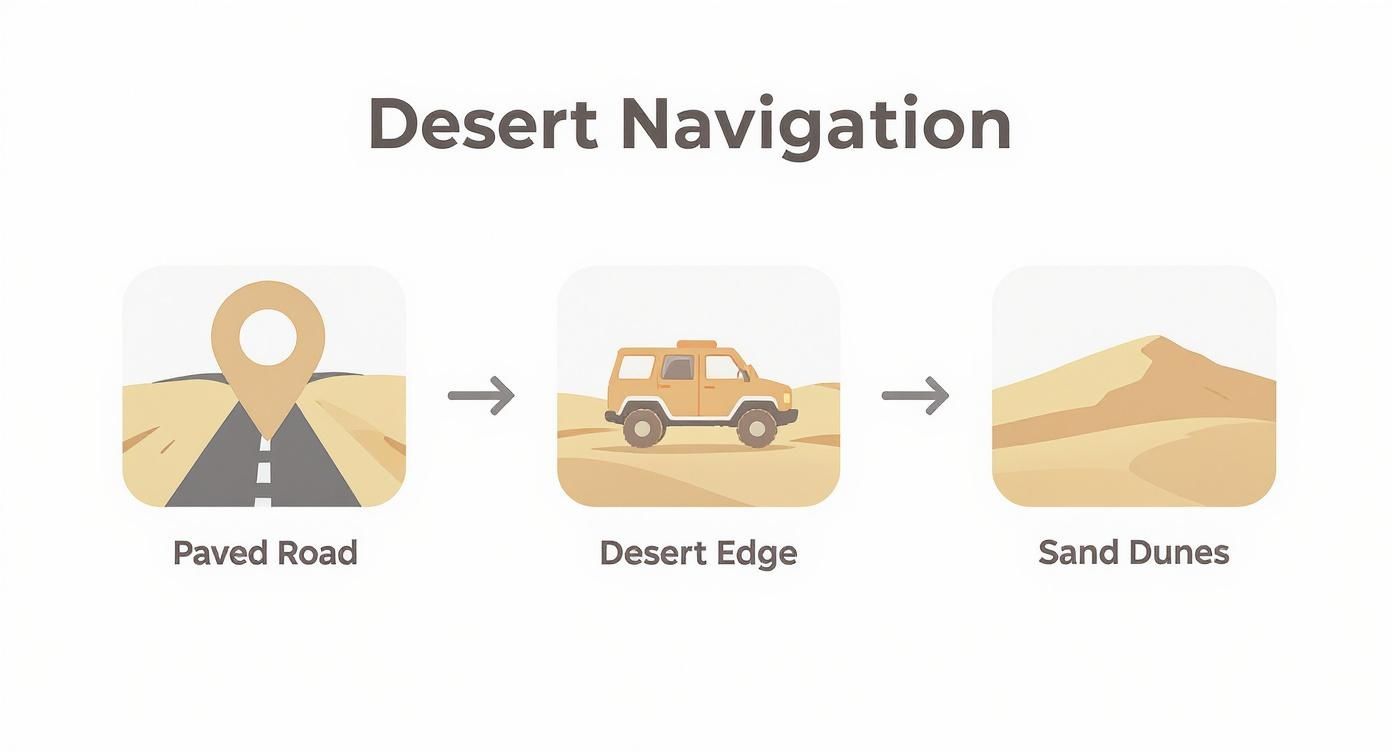
As you can see, the journey happens in distinct phases, and each one demands a different approach to your driving.
Conquering the Dunes Safely
Let's be honest, climbing and descending the big dunes is the most thrilling part of the adventure. It's also where things can go wrong if you're not careful. The right approach is everything.
When you're climbing a dune, always approach it straight on. Trying to climb at an angle puts the vehicle in a dangerous position and seriously increases the risk of a rollover. Keep your momentum steady on the way up, but remember to ease off the power just before you hit the very top. This stops you from flying over the crest into whatever is waiting on the other side.
For the descent, the rule is exactly the same: always go straight down.
- Pop the vehicle into a low gear (4L) and let the engine do most of the braking for you.
- Keep your hands off the brakes unless you absolutely have to. Braking can cause the 4×4 to slide sideways.
- Make sure your front wheels are pointed directly down the slope the entire time.
Whatever you do, never try to turn or drive across the face of a steep dune. It’s the number one cause of rollovers in the desert. If you get into a tricky spot, it's always safer to just back down carefully and find an easier route.
Your Essential Self-Recovery Toolkit
Even the pros get stuck sometimes; it’s just part of the off-roading experience. Being prepared with some basic recovery gear can be the difference between a five-minute inconvenience and a long wait for an expensive recovery truck. Your rental should have some basics, but it's always best to double-check before you leave.
Basic Recovery Steps
- Grab the Shovel: Your shovel is your best friend. Start by clearing sand away from in front of, behind, and underneath all four tyres. You'll also want to clear any sand built up under the vehicle's chassis.
- Use Traction Boards: If you have them, wedge your traction boards firmly under the tyres, pointing in the direction you want to go.
- Gentle Throttle: With a clear path, use a very gentle and steady throttle to ease the vehicle out. The last thing you want to do is spin your wheels on the boards.
This simple process works in over 90% of situations where a vehicle gets bogged down in the sand.
Non-Negotiable Safety Gear
Beyond the recovery tools, a few items are simply non-negotiable for any desert trip, no matter how short. Your safety has to be the top priority.
- Plenty of Water: Pack way more than you think you’ll need. A minimum of 4-5 litres per person is a solid starting point.
- First-Aid Kit: A well-stocked kit to handle any minor cuts, scrapes, or other injuries is a must.
- Tyre Pressure Gauge & Air Compressor: You have to deflate your tyres for the sand and re-inflate them for the road home. A reliable gauge and a portable compressor are essential.
- Fully Charged Power Bank: Your phone is your lifeline. Make sure you have a way to keep it charged up.
Nailing these skills and having the right gear is the foundation for a safe, confident, and totally unforgettable day making your own tracks through the Dubai dunes.
Making the Most of Your Desert Experience
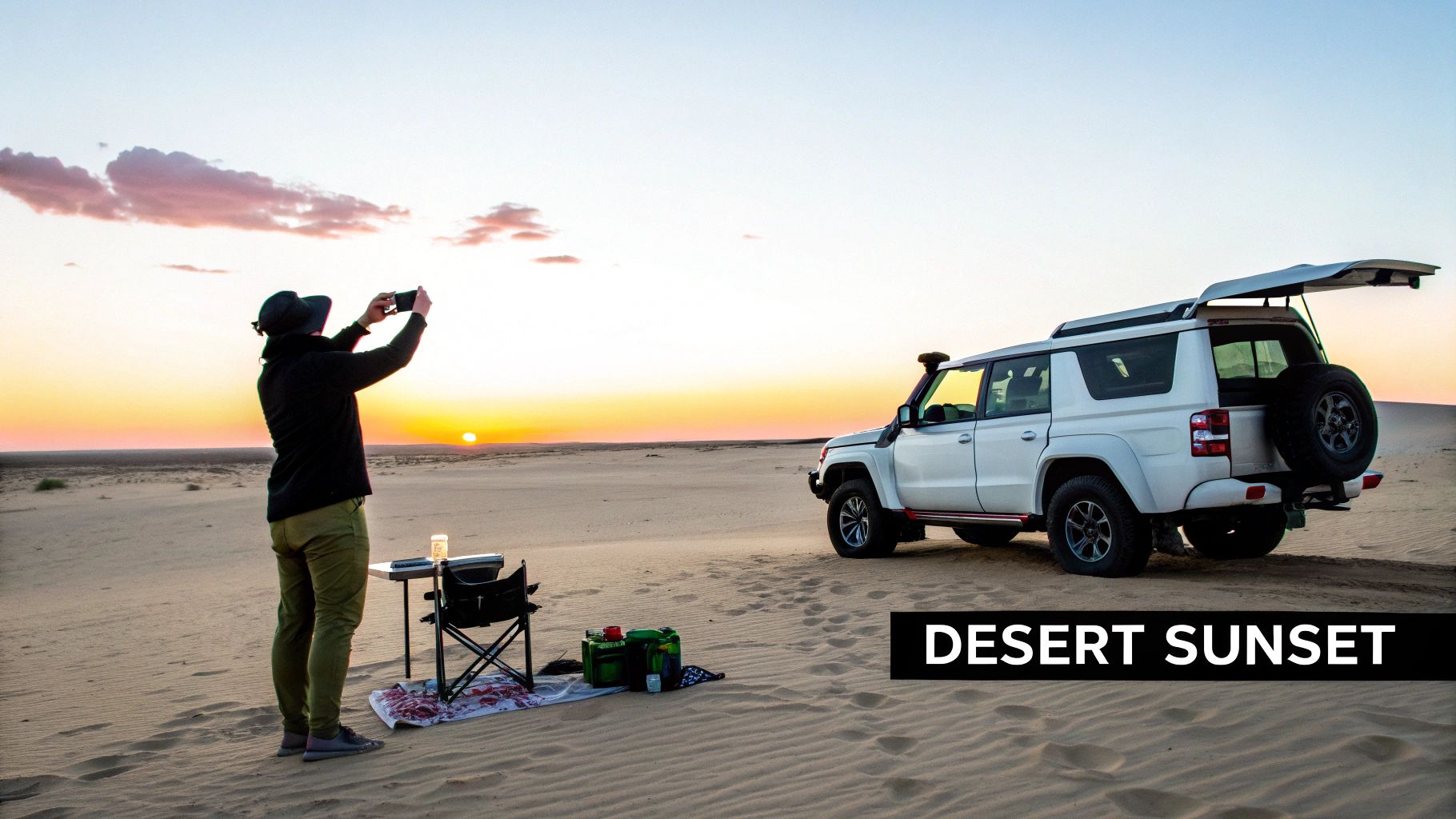
A self-drive desert safari is so much more than just the drive. The real magic happens when you kill the engine, step out of the 4×4, and just take a moment to connect with the immense, quiet beauty all around you. It's about immersing yourself in that serene environment, and planning for these quiet moments is just as crucial as mapping your route.
The adventure really peaks as the sun starts to dip, painting the sky in fiery shades of orange, pink, and purple. Finding the perfect spot to watch this daily show can turn your trip from a fun drive into a core memory.
Look for a high dune with a clear, unobstructed view to the west. Make sure you get there at least 30-45 minutes before sunset. This gives you plenty of time to park up safely, get settled, and just soak in the changing light as it happens.
Capturing the Golden Hour
For anyone with a camera, this is the main event. That "golden hour"—the short window of time just after sunrise or before sunset—is when the light gets soft and diffused, making the red dunes absolutely glow. You don’t need pro gear to get amazing shots, just a few key tricks.
- Look for the Shadows: The low sun creates long, dramatic shadows that really define the shape and texture of the dunes. Use them to give your photos some depth and drama.
- Play with Silhouettes: Try positioning your vehicle or a person against the bright, colourful sky. This creates incredibly powerful silhouette shots that always look fantastic.
- Zoom in on the Details: Don't forget to get low to the ground and capture the intricate patterns the wind has carved into the sand. It’s a unique perspective that many people miss.
A quick tip from experience: The best desert photos often convey a sense of scale and solitude. Try framing your 4×4 in the shot to highlight just how vast the landscape is. It's a great way to show how small we are in this incredible environment.
Spotting Wildlife with Respect
The desert is far from empty; it’s a delicate ecosystem buzzing with life. If you're near areas like the Al Qudra Lakes or the Dubai Desert Conservation Reserve, you have a great chance to spot native wildlife. Keep your eyes peeled for the majestic Arabian Oryx, graceful gazelles, or different kinds of desert birds.
When you do spot them, remember you're a visitor in their home. Always keep a good distance, never try to feed the animals, and use binoculars or a zoom lens to get a closer look. Drive slowly and quietly in these areas so you don’t startle them.
Your Desert Picnic and the Leave No Trace Rule
Packing a picnic or planning a small barbecue is the perfect way to wrap up the day. As you gather your supplies, make a commitment to the Leave No Trace principle. It's absolutely essential for keeping the desert beautiful for everyone who comes after you.
Here’s a quick checklist for the perfect desert picnic:
- Cooler Box: An obvious one, but essential. Pack it with plenty of water, drinks, and fresh food.
- Comfortable Seating: A few blankets or foldable chairs make all the difference.
- Good Lighting: Once that sun is gone, it gets dark fast. Pack a lantern or a couple of headlamps.
- Rubbish Bags: This one is non-negotiable. You must pack out everything you pack in—and that includes food scraps.
For navigation, emergencies, and of course, sharing your adventure, reliable mobile data is a must. It's worth looking into convenient UAE travel eSIM options before you head out. Ultimately, a self-drive safari is your chance to forge a personal connection with the Arabian desert. By planning for these quiet moments and respecting the environment, you'll come away with memories that go far beyond the thrill of the drive.
Common Questions About Self Drive Safaris
Even with the most meticulous planning, heading out into the desert on your own for the first time is bound to stir up some last-minute questions. Taking on a self-drive desert safari in Dubai is a massive thrill, but it's totally normal to have a few nagging concerns.
Here, we'll tackle the most common queries we hear from adventurers gearing up for their first solo trip into the dunes. Think of this as your final briefing before you hit the sand, designed to give you the confidence to lock in your plans and have an unforgettable, safe journey.
Do I Need a Special Permit for a Self-Drive Desert Safari in Dubai?
This is easily one of the most common questions, and the short answer is: probably not, but you absolutely need to know the exceptions.
For most of the popular, publicly accessible desert spots—think the vast, open spaces around Al Qudra or the iconic red dunes of Lehbab (Fossil Rock)—you don't need a specific permit for a day of recreational off-roading. These areas are open for personal use.
However, this isn't a free-for-all. Certain zones are strictly protected, with the Dubai Desert Conservation Reserve (DDCR) being the prime example. Access here is tightly controlled to protect the fragile ecosystem, and you can only enter with a licensed, official tour operator.
If you’re not 100% sure an area is a public off-road zone, assume it’s off-limits. Never cross fences, enter private property, or venture into marked conservation areas. A good rental company will always give you the latest advice on where you can and can't go.
What Happens If My Rental 4×4 Gets Stuck in the Sand?
First off, getting stuck is practically a rite of passage. It happens to everyone, from first-timers to seasoned pros. The most important thing is not to panic. Your gut reaction might be to floor the accelerator, but that’s the single worst thing you can do—it will just dig you in deeper.
Instead, grab your shovel and start clearing sand away from the front and back of all four tyres. If your 4×4 came with recovery tracks (also called traction boards), now’s their time to shine. Wedge them firmly under the tyres to give them something to grip. Sometimes, dropping your tyre pressure by another 2-3 PSI is all it takes to get the flotation you need to ease your way out.
If you’ve tried all that and you’re still not moving, it’s time to call for backup.
- Most reputable 4×4 rental agencies in Dubai offer a dedicated desert recovery service.
- You must confirm this service—and any potential costs—before you sign the rental papers.
- This is precisely why we always hammer home the golden rule of desert driving: never go alone. Always travel with at least one other capable vehicle.
Is a Self-Drive Desert Safari Safe for Beginners?
With the right preparation and a healthy dose of caution, it absolutely can be. But let’s be honest: if you have zero off-roading experience, going completely solo on your first trip isn't the smartest move.
For true beginners, we strongly recommend a guided self-drive convoy for your first outing. It's the perfect middle ground. You get the freedom of driving your own vehicle, but with the safety net of a lead car and an expert guide giving you real-time tips over a two-way radio.
If you do decide to go it alone, be smart. Stick to smaller, flatter dunes and stay far away from steep drops or technical bowls. Before locking in that rental, make sure you're legally good to go. You can get up to speed by reading our guide on international driving permit requirements to ensure there are no surprises.
Every trip into the sand is a chance to learn, and your confidence will build from there.
Ready to conquer the dunes in a vehicle that’s as adventurous as you are? Uptown Rent A Car has a premium fleet of desert-ready 4x4s and luxury SUVs perfect for your self-drive safari. Book your dream ride online and start planning your unforgettable Dubai desert experience today at https://www.uptowndxb.com.