
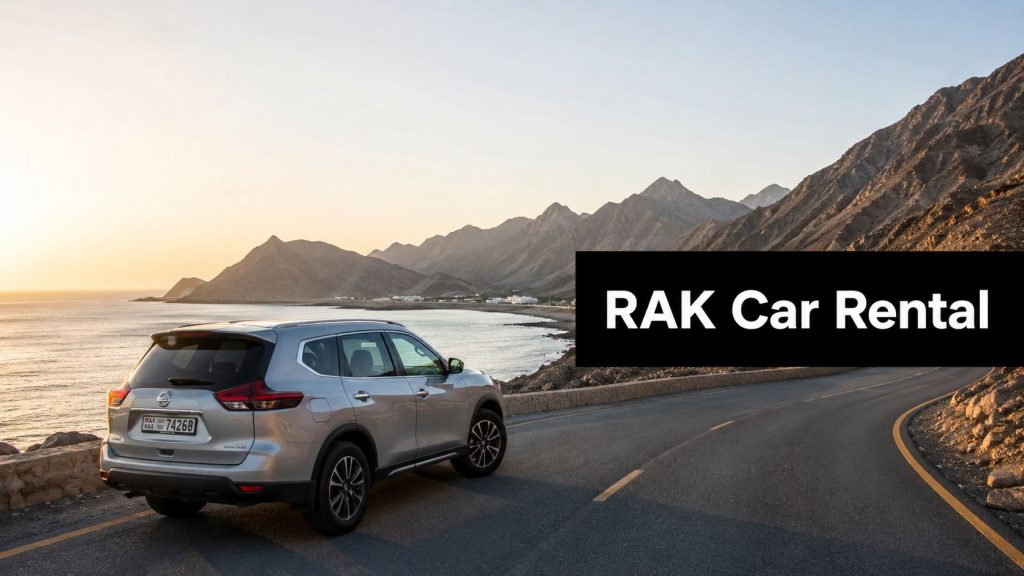
You've landed in Ras Al Khaimah, the hotel transfer is easy enough, and then the main question arrives. How are you going to move around once you're here?
That matters more in RAK than many visitors expect. A beach morning, a mountain drive, dinner at a resort, a detour to a historic site, all of it feels simple when you have your own car and awkward when you don't. Most travellers don't struggle with the idea of renting. They struggle with the details that websites often leave vague: who can legally rent, what gets blocked on the card, whether airport pickup is worth it, and how not to end up paying for convenience twice.
A good Ras Al Khaimah car rental isn't just about the daily rate. It's about matching the car to the trip, understanding the local rules, and avoiding the common friction points before you reach the counter.
Why Renting a Car is the Best Way to See Ras Al Khaimah
Ras Al Khaimah rewards travellers who can move on their own schedule. One day you may want a slow coastal route with resort stops. The next, you may want an early start towards Jebel Jais before the roads get busier. If you rely on point-to-point taxis for every leg, the itinerary becomes less flexible and far more reactive.

What makes RAK different is the spread. The emirate isn't a single compact urban district where everything sits around one walkable centre. The appeal is in the contrast between mountain roads, long coastal stretches, resort areas, and older cultural sites. A rental car turns those contrasts into an easy day. Without one, the gaps between places become the story.
What works best in practice
Visitors usually do best when they treat the car as part of the trip design, not as an afterthought. That means choosing a pickup plan, vehicle type, and budget strategy before arrival.
A practical RAK itinerary often includes:
- A mountain segment: Jebel Jais is the obvious example, and the drive itself is part of the experience.
- A coastal segment: beach clubs, hotels, marina areas, or a quieter shoreline run.
- A flexible middle: lunch stops, viewpoint detours, or a short stop that wasn't on the original plan.
Practical rule: In Ras Al Khaimah, the value of a rental car comes less from “getting from A to B” and more from keeping the day fluid.
That's why travellers who initially plan to “see how it goes” often end up renting anyway. Once you realise how much of the emirate sits beyond a single hotel zone, a car stops feeling like an optional upgrade and starts feeling like the sensible base layer of the trip.
Essential Requirements for Your RAK Car Rental
Before comparing rates or browsing SUVs, check eligibility first. In Ras Al Khaimah, the most important filters are age, licence status, and whether you're renting as a visitor or resident.
Drivers must be at least 21 years old, and luxury or sports models may require a minimum age of 25, according to the Visit Ras Al Khaimah car rental guide. The same source notes that foreign visitors typically need a valid home-country driving licence along with an International Driving Permit.

What tourists should prepare
If you're visiting the UAE, keep your documents together before pickup. Counter delays usually happen because one item is missing or because the name format doesn't match cleanly across documents.
Bring these as your working checklist:
- Passport and entry status: Your passport should be valid, and your visa or entry status should be in order.
- Driving licence from your home country: It should be current and clearly readable.
- International Driving Permit if required: Many foreign visitors will need one alongside their home licence, as noted in the earlier source.
- Payment card in the driver's name: This requirement frequently causes handovers to slow down, especially if the booking and payment names differ.
What residents should prepare
Residents usually have a simpler process, but that doesn't mean it's informal. Expect the agency to check identity and licence validity carefully.
In practical terms, residents should have:
- Emirates ID
- Valid UAE driving licence
- A payment card accepted by the rental company
If you're unsure whether your licence status is current or recognised for a specific use case, it helps to review UAE driving licence validity before booking.
Where people get caught out
The biggest mistake isn't forgetting a passport. It's assuming eligibility for every vehicle class. Many visitors can rent a standard saloon or SUV without issue but hit a wall when they switch to a premium or performance model and discover the age threshold is higher.
Bring the documents you think you'll need, then add one more layer of proof. Rental counters are far easier when everything matches cleanly on the first check.
Another common issue is booking a trip around a specific car category before confirming IDP requirements. If your paperwork isn't accepted at handover, the problem isn't the reservation. It's legal eligibility.
Decoding Car Rental Costs and Vehicle Types
You land in Ras Al Khaimah, collect the keys, and the rate on the booking looks fine. Then the desk agent explains the card hold, the insurance excess, and the deposit release timeline. That is the moment many renters realise the cheapest headline price was only part of the cost.
RAK is usually straightforward for driving, but rental pricing is not. Rates shift by season, vehicle type, and supplier policy. The decision is rarely “What is the lowest daily rate?” It is “Which car gives me the right balance of comfort, deposit exposure, and running costs for this trip?”
The daily rate is only one part of the bill
If your dates fall in a busy period, book earlier and compare terms, not just price. In quieter months, there is usually more flexibility to move between categories without paying a large premium, which can make an SUV or mid-size saloon a better value than it first appears.
The bigger friction point is often the deposit.
The Visit Ras Al Khaimah guide on where to rent a car notes that many companies may block around AED 1,500 as a deposit. The same guide also highlights that some listings show much wider deposit ranges and that refunds can take weeks in certain cases. That matters if you are travelling with one primary card and still need available credit for hotels, dining, or incidental spends.
A low base rate can still be expensive in practice if it freezes too much of your card limit.
What to budget for, beyond the advertised rate
A sensible RAK rental budget usually includes four separate cost layers:
- Base rental charge: The visible daily or weekly rate.
- Deposit hold: Money blocked on your card until the supplier releases it.
- Insurance decision: The cheapest package may leave you with a high excess.
- Fuel use: Larger SUVs are useful for family trips and Jebel Jais runs, but they cost more to run. Check current fuel prices in the UAE before committing to a bigger engine.
Travellers make better decisions by thinking in totals. Saving a small amount per day is not especially helpful if the supplier's deposit policy is slow, strict, or unclear.
Choosing the right car for your actual trip
Vehicle choice in Ras Al Khaimah is less about style and more about route planning.
| Vehicle Category | Best For | Example Models | Pricing Note |
|---|---|---|---|
| Economy | Short stays, city driving, solo travellers, couples with light luggage | Toyota Yaris, Nissan Sunny | Usually the cheapest to book and the least expensive to fuel |
| SUV | Families, resort transfers, beach gear, mountain roads, longer day trips | Nissan X-Trail, Toyota Fortuner | Often worth the extra spend for luggage space, ride height, and comfort |
| Luxury | Executive travel, premium resorts, special occasions | Mercedes-Benz, BMW, Range Rover | Usually comes with stricter age rules, higher deposits, and tighter card requirements |
For a beach resort stay with one or two short drives, an economy car is often enough. For a family holiday split between a hotel, restaurants, and a mountain day out, I would usually point renters toward a mid-size SUV. The extra room and easier cabin comfort are often worth more than the savings on a smaller car.
Luxury rentals need more scrutiny. The issue is not only the rate. Premium categories often come with higher excess exposure, larger deposits, and stricter eligibility checks that can slow down pickup if anything on the booking does not match cleanly.
Where renters misjudge value
Renters usually overspend in one of two ways. They either book too small and end up uncomfortable once luggage and passengers are loaded in, or they book premium without checking the full deposit and insurance terms first.
The stronger approach is simple. Match the car to your real driving plan, then read the payment and deposit policy line by line before you confirm. In Ras Al Khaimah, that is usually the difference between a rental that feels well priced and one that becomes a nuisance halfway through the trip.
Choosing Your Pickup and Drop-Off Location
You land in Ras Al Khaimah after a late flight, bags in hand, and the rental decision suddenly stops being theoretical. Do you collect at the airport and pay for speed, take a hotel transfer and pick up in town later, or have the car brought to you and avoid the desk altogether? That choice affects more than convenience. It often changes the first day's cost, the hold placed on your card, and how much time you lose to admin.

Airport pickup
Airport collection works best for travellers who want to leave on their own schedule the moment they land. If you are arriving late, travelling with children, or heading straight to a resort outside the centre, it is usually the least complicated option.
The trade-off is narrower choice and less room to recover if the desk is busy or your documents do not match the booking exactly. Airport rentals also tempt people to accept the first workable car after a flight, even if the fuel policy, deposit terms, or insurance excess are weaker than what they would choose with a clear head.
In-city offices
A city branch often makes better financial sense if your hotel transfer is already arranged. You can check in, settle down, and collect the car the next morning without paying for a vehicle that sits parked while you recover from travel.
This option also gives you more breathing room during handover. If there is a card issue, a licence question, or a disagreement over the booked category, it is easier to sort out at 10 a.m. in town than at an airport counter after a delayed arrival.
The drawback is obvious. You need an extra transfer to the branch, and the first pickup can take a real chunk out of the day.
Delivery to hotel or residence
For many leisure travellers, delivery is the most practical middle ground. The car comes to you, the paperwork is handled where you are staying, and the trip starts without a detour to an office.
It is rarely the cheapest option once delivery fees are added, and it usually needs advance coordination. That said, I often find it offers the best value for couples, families, and resort guests because it cuts out the least pleasant part of the rental process: queueing, locating an office, and adjusting plans around branch hours.
Drop-off matters as much as pickup
Travellers often focus on collection and give back the car wherever seems easiest at the end. That is where avoidable charges appear.
If your departure is early, confirm whether the return point accepts after-hours drop-off and how condition checks are handled when staff are not present. If you are dropping in a different part of the emirate, or at the airport after collecting in town, check the one-way terms before booking. A low daily rate can stop looking cheap once relocation fees and extra admin are added.
A practical way to choose
Use the location strategy that fits the shape of the trip, not just the headline rate.
- Choose airport pickup if you want to drive straight out, especially after a late arrival or with a lot of luggage.
- Choose an in-city branch if you already have transfers arranged and want more control over timing and paperwork.
- Choose delivery if you are staying at a hotel or villa and care more about reducing friction than shaving every dirham off the bill.
For short stays, the wrong pickup point can be more expensive in time and hassle than in rental fees. The better choice is the one that keeps the first and last day simple, with clear drop-off rules and no surprises on the final invoice.
Navigating Ras Al Khaimah Roads and Rules
Leave a resort after breakfast, point the car toward Jebel Jais, and Ras Al Khaimah starts to make sense quickly. The roads are well kept and easy to follow, but the driving style that works on a coastal stretch does not always suit a mountain road, a resort entrance, or a fast dual carriageway with active speed enforcement.

How to drive well in RAK
RAK rewards tidy, unhurried driving. Visitors usually settle in fastest when they watch lane discipline, anticipate roundabouts properly, and treat changing speed zones with respect instead of assuming the last limit still applies.
A few habits save money as much as stress:
- Watch for speed changes and camera-controlled roads: One relaxed stretch can turn into a lower-speed zone without much warning.
- Use navigation as a guide, not as your only decision-maker: In mountain sections and around resort turnoffs, the correct lane matters.
- Document the car before you move it: Photograph existing scratches, wheels, bumpers, and the windscreen so there is no debate later.
- Keep receipts and parking records: They help if a toll, parking fee, or minor charge appears after return.
- Secure loose items in the cabin: Beach bags and shopping shift around more than people expect on bends and roundabouts.
Calm drivers usually have the better trip.
Jebel Jais needs the right car, not the cheapest car
Jebel Jais is fully paved, so this is not an off-road question. It is a vehicle suitability question. A very small economy car can get up the mountain, but it may feel strained on climbs and less settled through repeated bends, especially with passengers and luggage on board.
For that route, an SUV or a properly powered saloon usually makes better financial sense than the absolute lowest daily rate. You pay more upfront, but you get a calmer drive, better cabin comfort, and less chance of regretting the booking halfway through the ascent. If mountain driving is one of the main reasons for renting, review a few UAE road trip ideas that include strong driving routes and choose the car around the route, not just the headline price.
Uptown Rent A Car is one UAE provider travellers may compare for premium SUVs and higher-spec vehicles when a standard category feels too basic for this kind of drive.
Coastal roads are easy. Rental terms are not always forgiving.
The coastal side of RAK is simpler to drive, but it creates a different mistake. Travellers see sand at the edge of a road, an open patch near a beach, or a rough access track to a viewpoint and assume a rental car can be taken there without issue.
Rental agreements often say otherwise. If the surface is not paved or clearly graded for normal road use, get written confirmation before taking the car there. Damage underneath the car, tyre damage, and recovery costs are exactly the kind of charges that create deposit disputes later.
Local rule mindset
The safest approach is straightforward. Drive conservatively, do not drink and drive at all, and assume traffic enforcement is active even when the road feels open.
That mindset matters because the cost of getting a rule wrong is rarely just the fine. It can also mean admin fees from the rental company, time spent disputing charges, and a delayed deposit release after the trip.
Sample RAK Itineraries by Car
A car changes Ras Al Khaimah from a hotel-based stay into a proper self-directed trip. The best itinerary depends on what kind of day you want, not on what category is cheapest.
The adventure day
Start early and head towards Jebel Jais while the morning still feels open. Stop for viewpoints, take your time on the ascent, and keep the afternoon flexible for a slower return through the lower roads.
An SUV suits this plan best. The higher seating position and extra luggage space make a difference if you're carrying walking shoes, jackets, water, and camera gear.
The coastal luxury loop
This day is about ease. Think resort breakfast, shoreline driving, a stop around Al Marjan Island, then a polished dinner booking later on. You're not trying to cover maximum distance. You're trying to keep the day elegant and unhurried.
A premium saloon or luxury SUV works well here. Comfort matters more than utility, and the car should feel appropriate when you pull into a beach resort or evening venue.
The most satisfying RAK itineraries usually include one planned stop fewer than you first imagined. The extra space is what makes the day feel expensive.
The cultural route
Use the car to join the heritage side of the emirate properly. A cultural day works well when you link older landmarks, museums, and quieter corners that don't fit neatly into a taxi-dependent plan.
For this style of trip, a compact saloon or standard SUV is usually enough. You want easy parking, simple manoeuvring, and enough flexibility to change direction without overthinking it.
If you enjoy longer self-drive routes beyond Ras Al Khaimah, this pairs well with broader inspiration from these best road trips in the UAE.
Booking Tips and Frequently Asked Questions
You feel the friction at the counter, not on the booking page. The rate looked fine online, then the deposit is higher than expected, the insurance terms are vague, and the extra driver you assumed was included turns out to be chargeable. In Ras Al Khaimah, the smartest booking decisions are usually the small operational ones.
Start with the parts that affect cost and convenience after you land, not just the headline daily rate. A cheaper booking can become expensive once you add a second driver, stricter fuel terms, a larger hold on your card, or a pickup location that adds time and taxi cost.
Before you confirm, check these points:
- Match the car to the actual plan: A low daily rate is poor value if you end up cramped with family luggage, underpowered on longer mountain runs, or uncomfortable arriving at resort valet with a car that does not suit the trip.
- Check the security deposit process: Ask how much will be blocked, on which card types, and how long release usually takes after return. This is one of the biggest sources of post-rental frustration.
- Read the insurance wording, not just the package name: Focus on excess, tyre and windscreen exclusions, underbody damage, and what the company treats as chargeable wear.
- Confirm the fuel policy in plain language: Full-to-full is usually the cleanest option. Prepaid fuel only makes sense if you know you will return nearly empty.
- Ask about extra-driver terms before arrival: Approval, documents, notice period, and fees vary by provider.
- Photograph the car properly at pickup and return: Capture body panels, wheels, glass, interior, mileage, and fuel level in good light.
- Ask about pets in advance: If you're travelling with an animal, verify the agency's cleaning rules and written policy first. This guide to dog-friendly car rental companies is a useful starting point, but confirm the final answer with your rental provider.
Common questions
What is insurance excess?
It is the amount you may still have to pay in a damage claim before the insurer or cover package applies. Many travellers focus on whether insurance is included and skip the excess figure, which is often the number that matters most.
Can I drive to other Emirates?
Often yes, but only if the rental agreement allows it. If your plans include Dubai, Abu Dhabi, or long-distance driving beyond RAK, get that permission confirmed before pickup rather than assuming standard UAE use is covered.
How are fines and Salik-style road charges handled?
They are normally passed to the renter under the contract, sometimes with an admin fee on top. Ask how charges are reported and when they are billed, especially if you are using a credit card that you plan to replace or freeze after travel.
What causes the most booking friction?
Security deposit holds, unclear insurance exclusions, and add-ons agreed verbally but not written into the contract. Good agencies explain these cleanly. Average ones leave you to discover them at the desk.
Should I book airport or city pickup if the rate is lower in town?
Use the total trip cost, not the rental price alone. A city booking can still be the better deal, but only if the transfer cost, timing, luggage hassle, and deposit terms make sense for your arrival.
What else should I confirm at booking?
Ask for the final payable structure in one message: rental charge, deposit hold, insurance selection, extra driver fee, fuel policy, mileage limit if any, and roadside assistance terms. That single step prevents most misunderstandings.
If you want a more polished UAE rental experience with premium vehicle options, Uptown Rent A Car is worth considering for trips that call for a luxury SUV, executive saloon, or special-occasion car rather than a basic runabout.