

If you're planning a longer stay in Dubai—think a month or more—a long term rent a car dubai option isn't just a convenience; it's often the smartest move you can make. Think of it less like a traditional rental and more like a flexible vehicle subscription, perfectly designed for the city's fast-paced, ever-changing lifestyle.
Why a Long Term Car Rental in Dubai Just Makes Sense
Let's be honest, buying a car comes with a lot of baggage. You've got the huge down payment, the nagging worry about its value dropping like a stone, and the inevitable surprise repair bill that always seems to pop up at the worst time. A long-term rental neatly sidesteps all of that.
This approach is a lifesaver for expats on fixed-term contracts, families enjoying an extended vacation, or even residents who want the freedom of a car without the chains of ownership.
It's really the best of both worlds. You get all the perks of having your own set of wheels, but none of the headaches. Forget about wrestling with annual registration renewals, deciphering complicated insurance policies, or hunting for a trustworthy garage. The rental company handles all of that, so all you have to do is drive. That sheer convenience is a huge reason why so many people in Dubai are choosing this route.
The Financial and Practical Perks
When you break down the numbers, the logic is hard to argue with. A long-term rental gives you one, predictable monthly payment that covers pretty much everything. Budgeting becomes incredibly simple.
Here’s a quick rundown of the major wins:
- No Depreciation Worries: A new car's value can plummet in its first year. When you're renting, that's someone else's problem, not yours.
- Maintenance and Servicing Included: Regular check-ups, new tyres, and even those unexpected fixes are all rolled into your monthly fee. No more surprise costs.
- Comprehensive Insurance Covered: Basic insurance is always part of the deal. You don't have to waste time shopping for policies or forking out for a big annual premium.
- Freedom to Switch Cars: Life changes. Maybe the family is coming to visit and you need to swap your sedan for an SUV for a month. A long-term rental gives you the flexibility to upgrade or downgrade as your needs shift—something you just can't do when you own the car.
At its core, a long-term rental is about freedom. It’s freedom from big financial commitments, freedom from the stress of maintenance, and the freedom to drive a car that fits your life, right now.
This isn't just a niche trend; it's a major shift in how people approach mobility here. The UAE's car rental market is booming, and experts predict it could swell to USD 1.18 billion by 2030. A huge chunk of that growth is coming from the long-term lease segment, proving that people and businesses are seeing the massive benefits. If you want to dive deeper, you can explore more data on the UAE car rental market's growth.
Breaking Down the True Cost of Monthly Car Rentals
When you start exploring a long term rent a car Dubai plan, the price you see upfront is really just the starting point. The real cost gets shaped by a few key things, kind of like how a flight ticket changes depending on when you book and where you want to sit. Getting a handle on these variables is the secret to finding a deal that actually works for your wallet.
The biggest factor, unsurprisingly, is the car itself. A sensible, fuel-sipping economy car will obviously have a much friendlier monthly rate than a high-performance luxury SUV. It's a classic trade-off: practical daily driver versus premium comfort and head-turning style.
How long you commit also makes a huge difference. Renting a car for just one month is flexible, sure, but stretching that to three, six, or even twelve months can unlock some serious discounts. Rental companies love loyalty, and a longer agreement usually means a much lower cost per day, making it the smarter economic choice if you're staying a while.
How Timing and Duration Influence Your Rate
Seasonal demand is another big piece of the puzzle. During Dubai's peak tourist season, which runs from roughly November to March, you'll see rental prices climb because everyone wants a car. On the flip side, if you book during the quieter summer months, you're much more likely to find competitive rates.
Think of it like this:
- Vehicle Class: Swapping a luxury convertible for a compact sedan is the fastest way to slash your costs.
- Rental Duration: Committing to a 6-month rental instead of just renewing month-to-month can dramatically lower your total spend.
- Seasonal Booking: Grabbing your long-term rental in August might save you a good chunk of change compared to waiting until December.
The market is booming, which reflects just how popular this option is becoming. The UAE's car rental industry was valued at around USD 2.46 billion and is on a steady upward climb. You can see this play out in Dubai's pricing; a basic economy car might start around AED 1,400 a month, while a premium ride can easily go for AED 23,000 or more.
This chart really drives home the projected growth in the UAE's car rental market, showing a clear trend of people choosing flexible rentals.
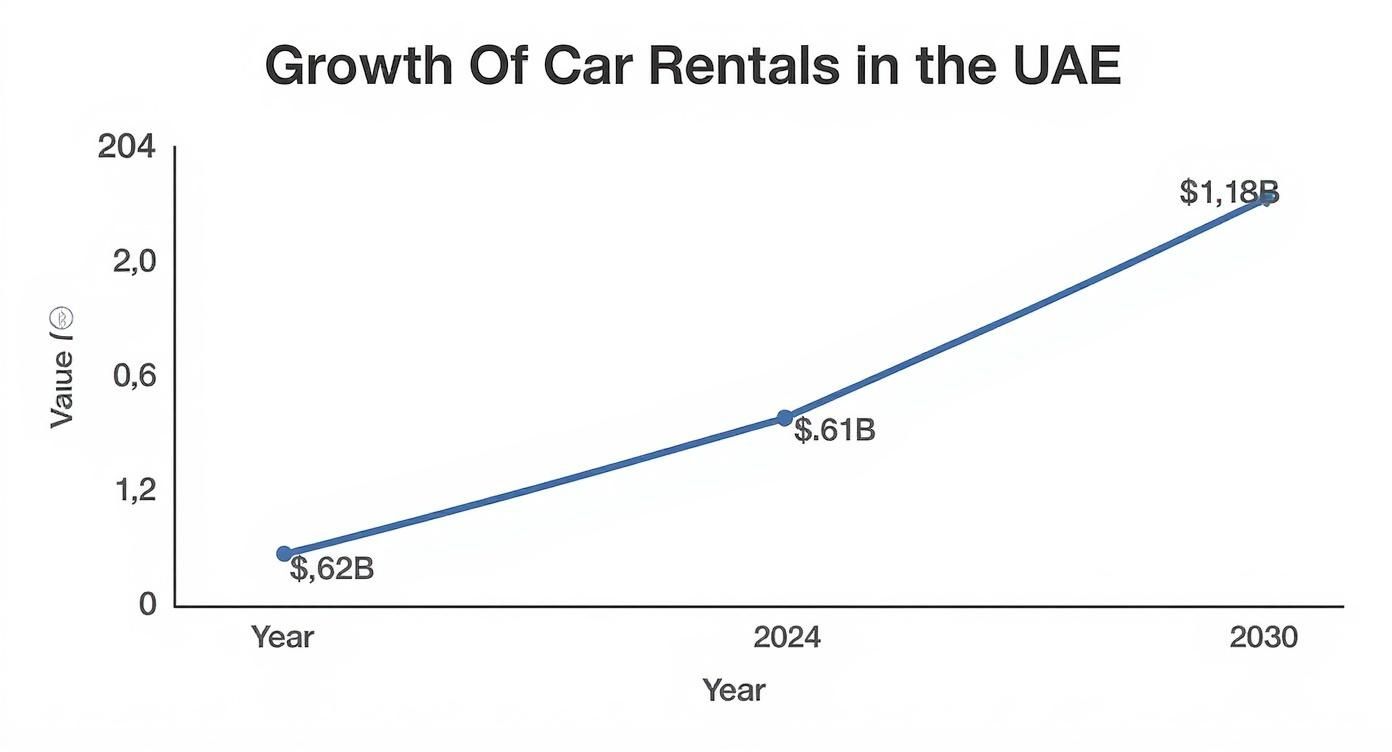
The data points to a market that's set to nearly double by 2030, highlighting that more and more people are ditching the hassles of ownership for something more convenient.
Rental vs. Ownership: A Clear Financial Comparison
To really see the value, you have to put the costs of a long-term rental side-by-side with all the hidden expenses of actually owning a car in Dubai. A monthly car payment might look similar at first glance, but ownership brings a whole list of extra, often unexpected, bills.
The true financial win with renting isn't just the monthly rate. It's about completely sidestepping surprise maintenance bills, hefty annual insurance premiums, and the quiet but constant financial drain of depreciation.
Let's break down the typical monthly costs for a standard mid-size sedan to see exactly how the numbers compare. This shows just how simple and predictable renting can be, taking all the financial guesswork out of the equation. For a deeper dive into specific models and prices, check out the options for a monthly car rental.
Monthly Car Rental vs Ownership Cost Comparison in Dubai
Here's a straightforward look at the estimated monthly expenses of renting a mid-size sedan versus buying the same car in Dubai.
| Expense Category | Long-Term Rental (Estimated Monthly Cost) | Car Ownership (Estimated Monthly Cost) |
|---|---|---|
| Vehicle Payment | AED 2,200 (All-Inclusive Fee) | AED 1,800 (Loan Instalment) |
| Depreciation | AED 0 (Covered by Rental Company) | AED 750 (Value Loss) |
| Insurance | AED 0 (Included in Rental) | AED 350 (Annual Premium / 12) |
| Maintenance & Servicing | AED 0 (Included in Rental) | AED 200 (Routine & Unexpected) |
| Registration Renewal | AED 0 (Included in Rental) | AED 60 (Annual Fee / 12) |
| Salik Tolls | Billed as used | Billed as used |
| Total Estimated Cost | ~AED 2,200 + Salik | ~AED 3,160 + Salik |
As you can see, the all-in-one nature of a long-term car rental in Dubai often makes it the more sensible and predictable choice. You pay one flat fee and get to cruise past all the financial headaches that come with owning a car.
The Essential Documents for Your Car Rental
Before the keys to your rental car are handed over, you'll need to get your paperwork in order. Think of it like a pre-flight check; having everything ready to go ensures you get on your way quickly and smoothly. What you'll need for a long term rent a car Dubai agreement really just depends on your residency status.
To keep things simple, we've broken it down into two groups: one for UAE residents and another for tourists just visiting the city. Get these documents sorted out ahead of time, and you'll turn a potentially slow process into a quick, easy transaction.
For UAE Residents
If you’ve got a UAE residence visa, the process couldn't be easier. The rental company just needs to see a couple of key items to confirm who you are and that you're legally allowed to drive here.
Here’s what you need to have on hand:
- A valid Emirates ID: This is your main form of identification in the UAE. It's an absolute must.
- A valid UAE Driving Licence: Make sure your licence is current and not expired. Most rental agencies will also want to see that you've held it for at least six months, sometimes up to a year.
And that's pretty much it. For residents, the system is designed to be fast and efficient, getting you behind the wheel with very little fuss.
For Tourists and Visitors
Visiting Dubai on a tourist visa? The document list is a little different but still very straightforward. The main thing is making sure you have the right kind of driving permit that's accepted in the UAE.
Here’s your checklist:
- A valid Passport: Your passport will be your primary form of ID.
- A valid Visit Visa: A copy of your visa stamp or your e-visa is needed to show your legal status in the country.
- An International Driving Permit (IDP): For most nationalities, an IDP is essential. It serves as an official translation of your licence from back home.
- Your Home Country’s Driving Licence: You’ll need to show your original, valid driving licence along with your IDP.
It's worth noting that drivers from certain countries—like the GCC nations, the US, UK, Canada, and many European countries—might be able to rent a car using just their home country's licence. Still, rules can change, so it's always best to check with the rental agency first. To be absolutely sure, you can learn more about the specific international driving permit requirements in our detailed guide.
Key Policies You Need to Know
Beyond the documents, there are a few standard rules that apply to pretty much every car rental in Dubai, whether you're a resident or a tourist. Knowing these will save you from any unexpected hiccups at the rental desk.
The big one is the minimum age, which is usually 21 years old for most standard cars. If you've got your eye on a high-performance sports car or a luxury model, that age requirement often jumps to 23 or even 25.
Also, expect to pay a security deposit. This is a standard practice where a refundable amount is held on your credit card. It’s there to cover any potential costs down the line, like traffic fines, Salik tolls, or accidental damage. The exact amount depends on the car, but it's typically returned within 14-30 days after you bring the vehicle back, once all charges are cleared.
Choosing the Right Car for Your Dubai Lifestyle
The car you drive should feel like a natural part of your life in Dubai, not another daily hassle. When you sign up for a long term rent a car Dubai plan, you're not just getting a vehicle; you're getting access to a whole fleet of possibilities. The trick is to pick the one that genuinely fits your routine.
Think of it this way: you wouldn't use a sledgehammer for a finishing nail. A small, zippy car is your best friend for navigating the tight streets of Deira or finding a precious parking spot in Bur Dubai. But if you're planning a family trip to the Hatta mountains or loading up for a day at Kite Beach, you'll want the space and power of a big SUV.
Making the right choice from the start means your car works for you, making every drive smoother and more enjoyable.
Matching a Vehicle to Your Daily Routine
Let's break down the common car types to help you find that perfect fit. Each category is built for a specific purpose and a different kind of Dubai lifestyle.
- Economy Cars: These are the smart, practical workhorses of the road. Think Kia Picanto or Mitsubishi Attrage. They're ideal for solo commuters or couples, a breeze to park, and their fantastic fuel efficiency keeps your running costs way down. A truly budget-savvy choice.
- Sedans: A step up in comfort and class, sedans like the Toyota Camry or Nissan Altima are a favourite for business professionals. They deliver a smooth ride for those daily drives down Sheikh Zayed Road and have enough space and polish to comfortably pick up clients or colleagues.
- SUVs and Crossovers: For families or anyone with an adventurous streak, an SUV is usually the answer. Models like the Mitsubishi Pajero or Kia Seltos offer tons of room for school runs, weekly grocery hauls, and packing everything you need for a weekend getaway. Plus, that higher driving position gives you a great view of the road, which is a real bonus in Dubai's traffic.
The Rise of Greener and More Luxurious Options
The rental market in Dubai is constantly evolving, moving beyond just the standard options. Two big trends are shaping the choices available: a growing demand for sustainability and the city's unending love for high-end luxury.
This means you have more specialised options than ever. If you're looking to lower your carbon footprint, you'll find more hybrid and electric vehicles on offer. These cars don't just align with Dubai's green initiatives; they can also lead to serious savings at the petrol pump. For a deeper dive, check out our guide on electric car rental in Dubai.
On the other end of the scale, there's Dubai's famous appetite for the finer things. The city's reputation for opulence is perfectly reflected in its rental fleets, with luxury and exotic cars forming a booming part of the market. Companies have expanded their high-end collections to include names like Ferrari, Lamborghini, and Rolls-Royce, serving everyone from wealthy visitors to residents who want a taste of the high life.
Your car choice is a lifestyle choice. Whether you prioritise fuel economy for your daily commute or need the space of an SUV for family outings, the right vehicle is waiting for you.
Ultimately, it all comes down to being honest about what your life in Dubai really looks like. Are you zipping through city streets, cruising down highways, or planning escapes into the desert? Answering that question is the first and most crucial step to finding a long-term rental car that genuinely improves your time here.
How to Navigate the Rental Process Like a Pro
Getting a long term rent a car Dubai deal should feel exciting, not like you're wading through complicated paperwork. Think of this as your playbook for a smooth ride, from the first Google search to finally getting the keys in your hand, with no nasty surprises along the way.
Your journey starts online. You've really got two paths here: heading straight to a rental agency’s website or using an aggregator site that pulls together offers from dozens of companies. Going direct is great for getting the nitty-gritty details, while aggregators give you a quick snapshot of the market rates.
Once you’ve got a shortlist, it’s time to put on your detective hat. The next step is digging into the rental agreement, which is where a lot of people make costly mistakes.
Scrutinising the Rental Agreement
That rental agreement is more than just a piece of paper; it's the complete rulebook for your time with the car. It’s absolutely vital to read it from top to bottom before you even think about signing. Pay extra close attention to the fine print—that’s where you’ll find the hidden details that can really affect your final bill.
Here’s what to look for:
- Mileage Limits: Most long-term deals come with a monthly kilometre cap, typically somewhere between 2,500 km and 5,000 km. Find out exactly what that limit is and, more importantly, what the charge is for every kilometre you go over. Those fees can sneak up on you.
- Insurance Coverage: Every rental includes standard insurance, but you need to understand the excess amount. This is the slice of the bill you’re responsible for if you're in an accident that's your fault. For extra peace of mind, ask about the Super Collision Damage Waiver (SCDW), which can lower or even eliminate that excess.
- Salik Toll Policy: Get clarity on how Salik tolls are handled. Most companies charge the standard AED 4 for each crossing, plus a small admin fee. Just make sure the process is straightforward and you know what to expect on your invoice.
A rental agreement isn't just a formality; it's a contract that protects both you and the rental company. Taking ten extra minutes to read it carefully can save you from weeks of headaches and unexpected bills later on.
Nailing these details means you’re signing on the dotted line with your eyes wide open, avoiding any financial shocks down the road.
The Vehicle Handover Checklist
The last step before you drive off is the vehicle inspection. This is your chance to document the car's current state and make sure you don't get blamed for scratches and dings that were already there. Don't let anyone rush you through this part.
Whip out your phone and take a slow walk-around video. Get photos of everything—any scratches, dents, or scuffs on the paint, wheels, and even the windscreen. Make sure the rental agent notes every single imperfection on the official handover report before you sign it.
Here’s a quick checklist to run through:
- Exterior Inspection: Check every single panel for pre-existing damage. Be methodical.
- Interior Check: Make sure the inside is clean and test all the electronics. That means the AC, radio, windows—everything.
- Tyre Condition: Glance at the tyres for obvious wear and tear, and double-check that the spare tyre and toolkit are actually in the boot.
- Fuel Policy: Take a photo of the fuel gauge. Most cars are handed over with a full tank and need to be returned the same way to dodge hefty refuelling fees.
By following this simple, structured approach, you turn what seems like a complicated task into an easy checklist. A little prep work makes all the difference, setting you up to manage your long term rent a car Dubai experience like a seasoned pro.
Insider Tips for a Smooth Rental Experience in Dubai
Getting the keys to your long term rent a car Dubai is one thing, but driving it like you've lived here for years is another. Nailing the day-to-day stuff—like tolls, parking, and knowing what to do when things go wrong—is what really makes the experience seamless. With a little local knowledge, you'll be navigating the city like a pro in no time, saving yourself a few headaches and dirhams along the way.
The first system you'll get to know is Salik, Dubai's automatic toll system. Just think of it as an electronic gatekeeper for the city's main arteries. Every time you drive under a Salik gate, which you'll find on major roads like Sheikh Zayed Road, your car gets clocked, and a small fee of AED 4 is charged. There's no fumbling for cash or stopping at a booth; it's all handled by a small tag on the windscreen.
The rental company settles these toll charges directly and then adds them to your monthly invoice. It's common practice for them to include a small admin fee on top of each crossing, so it’s a good idea to ask about their specific policy when you book. That way, there are no surprises when the bill comes.
Navigating Dubai Parking Rules
Parking in Dubai is mostly straightforward, but it has its own rhythm. The Roads and Transport Authority (RTA) manages the public parking bays, which are split into different zones with their own rates. You can pay at the meter, but the easiest ways are through the RTA Dubai app or by sending an SMS if you have a local SIM.
A few key things to remember:
- Know Your Zone: Always check the code on the parking signs. This tells you the rate and how long you're allowed to stay.
- Free Parking Days: Public parking is typically free on Sundays and public holidays, which can add up to some nice savings over a long rental.
- Mall Parking: Most of the big shopping malls give you a few hours of free parking, but they will start charging if you stay longer.
Getting the parking rules wrong can lead to fines. Just like with Salik tolls, the fine goes to the rental company first, and they'll pass the cost on to you—usually with their own service charge. A quick look at the signs is always worth the effort.
And while you're getting settled, remember that a smooth experience in Dubai extends beyond the roads. Having reliable internet is key, so it might be worth looking into the best VPNs for UAE to make sure you stay connected without any restrictions.
Handling Unexpected Roadside Issues
Even with a perfectly maintained car, life happens. If you find yourself with a breakdown, your first move should be to call the 24/7 roadside assistance number from the rental agency. This service is almost always included in a long-term package and covers the usual suspects like flat tyres or a dead battery.
If you're involved in an accident, even a minor fender-bender, the rule is simple: do not move the vehicle. Your next step is to call Dubai Police on 999 to report it. They will create a police report, which is non-negotiable for any insurance claim or repair work. Without that report, you could find yourself responsible for the entire repair bill.
By getting a handle on how tolls and parking work and knowing exactly what to do in an emergency, you'll feel less like a visitor and more like a confident local, ready for whatever Dubai's roads have in store.
Got Questions About Long-Term Car Rentals? We've Got Answers
Stepping into a long-term car rental in Dubai can bring up a few things you might be wondering about. Getting the facts straight from the start means you can sign on the dotted line with total confidence, knowing exactly what’s what.
We’ve pulled together the most common questions we hear to give you clear, straightforward answers.
Is Insurance Included in the Rental Cost?
Yes, absolutely. Basic comprehensive insurance comes standard with pretty much every long-term rental contract here in Dubai. This is your safety net, covering you for collision damage and third-party liability, giving you a solid layer of protection.
But there's a key term you need to know: the "excess" (you might know it as a deductible). This is the amount you’re on the hook for if you're at fault in an accident. Many rental companies offer an optional Super Collision Damage Waiver (SCDW) for an extra daily or monthly fee. It's often worth considering, as it can drastically reduce or even completely wipe out that excess amount, saving you a potential headache later.
What Is the Typical Mileage Limit?
When you rent a car for a month or more in Dubai, you'll almost always have a mileage cap. This usually lands somewhere between 2,500 and 5,000 kilometres per month, though the exact number really depends on the rental company and the car you’ve picked out.
Make sure you confirm this limit before you sign anything. If you drive more than your allowance, you'll be charged for every extra kilometre. While it might seem like a small amount per km, it can really add up over a few months and lead to a surprise on your final bill. If you know you'll be doing a lot of driving, it’s smart to ask about a higher mileage package right from the get-go.
Keeping an eye on your mileage is a huge part of smart budgeting. That small per-kilometre fee doesn't feel like much, but it can turn into a serious extra cost over a multi-month rental if you're not careful.
Can I Drive the Car to Other Emirates?
Of course! That's one of the best parts of having your own set of wheels in Dubai—the freedom to explore. You can take your rental car to any of the other six emirates, whether it's a work trip to Abu Dhabi or a weekend getaway to Ras Al Khaimah, with no special permission needed.
The main thing to remember is you can't take the car outside the UAE, like on a road trip to Oman. Driving across the border requires getting explicit written permission from the rental company first, plus you'll need to buy additional cross-border insurance. Always, always check their policy before you even think about planning an international drive.
What Happens If I Get a Traffic Fine?
If you get a traffic fine, the authorities will notify the rental company directly, since the car is registered in their name. To avoid any late payment penalties, the company will typically pay the fine right away on your behalf.
They'll then bill that amount back to you, often with a small administrative fee tacked on for handling the paperwork. This is usually taken from the security deposit you paid when you first picked up the car, or it's charged to the credit card they have on file for you.
Ready to find the perfect ride for your extended stay in Dubai? At Uptown Rent A Car, we offer a premium fleet and a booking process that gets you on the road in style and comfort, hassle-free. Explore our collection and book your luxury long-term rental today.