
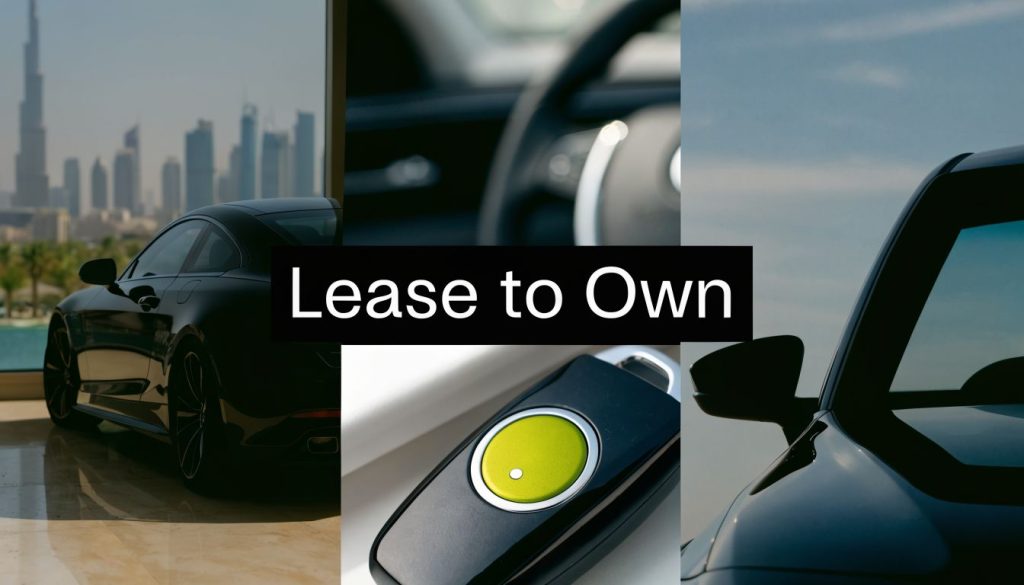
You’re in Dubai for longer than a holiday but not long enough to want the full burden of buying. Maybe it’s a one-year contract, a regional role that keeps extending, or a long-stay visit that started as “temporary” and now looks anything but. You want a proper car, not a compromise. Something that suits client meetings, weekend drives, hotel arrivals, and the general standards of life here.
That’s where the usual options start to feel incomplete. Daily or weekly rental gives you flexibility, but the money never turns into an asset. Buying gives you control, but it also brings paperwork, registration, resale risk, and a bigger upfront commitment than many expats or business travellers want. Lease to own vehicles sit in the middle. They’re a practical third route for people who need access now and want the possibility of ownership later.
In Dubai’s luxury segment, that middle ground matters more than most articles admit. The people considering a Mercedes-Benz G-Class, Range Rover, Porsche, Tesla, or executive saloon often aren’t choosing between “cheap” and “expensive”. They’re choosing between mobility, capital preservation, and optionality. That’s a different decision.
Beyond Renting Your Dream Car in Dubai
A common Dubai scenario looks like this. You’ve landed on a professional assignment, secured your accommodation, and realised that relying on ride-hailing for every meeting, dinner, or airport run is inefficient. Renting a luxury car feels right for the first weeks, but after that, many people start asking a sharper question. Should I keep renting, buy outright, or structure this in a way that leaves me with something at the end?

Luxury markets have already shown why leasing-style arrangements remain attractive. As a benchmark for markets like Dubai, leasing accounted for 23.62% of new vehicle transactions in Q2 2025 according to Experian’s leasing benchmark data. That matters because the same logic carries into Dubai’s premium segment. Lower upfront cost, easier access to newer models, and more flexibility than an outright purchase.
Why short-term rental stops making sense
Short-term luxury rental is excellent when your horizon is genuinely short. A few days. A week. A month while you settle in. It gives you speed and convenience, which is why many visitors start by renting luxury cars in Dubai.
But once your stay becomes open-ended, the weakness is obvious. Your payments buy use, not progress. You enjoy the car, then hand it back with no residual position, no buyout path, and no pricing certainty beyond the rental term.
The third path that suits Dubai better
Lease to own works well when your life in Dubai has momentum but not finality. You may stay one year. You may stay three. You may decide to leave after a project closes. That uncertainty is exactly why a hybrid structure can be useful.
Practical rule: If your timeline is unclear but your car standards aren’t, a hybrid contract usually deserves a closer look than either pure rental or immediate purchase.
For luxury drivers, this isn’t just about affordability. It’s about avoiding the wrong commitment. Buying too early can lock you into a vehicle that no longer fits your residency, business, or travel pattern. Renting too long can become expensive without creating any ownership path. A well-structured lease-to-own agreement tries to solve both problems.
What Exactly Is a Lease to Own Agreement
The simplest way to understand a lease-to-own car agreement is to compare it to renting a premium villa with the right to buy it later. You pay for use now, but the contract is built around a possible transfer of ownership later. That’s the key difference. It isn’t just temporary access. It’s access with a built-in ownership route.
A standard lease usually ends with a return, renewal, or separate buyout decision. A direct purchase starts with ownership in mind from day one, often with a heavier upfront burden. Lease to own vehicles blend those two ideas. You take possession and make scheduled payments, and the contract sets out how those payments relate to eventual ownership.
What makes it different from ordinary leasing
With a normal lease, you’re largely paying for time, usage, and depreciation. When the term ends, you may have the option to buy, but the structure doesn’t usually focus on building your route towards title in the same way.
Lease-to-own agreements are more ownership-oriented from the start. The provider typically retains title until the final obligations are met, but the client enters the arrangement with a clear understanding that the car may become theirs if they complete the contract or exercise the buyout option under the agreed terms.
What makes it different from buying now
Buying is clean in one sense. You choose the vehicle, fund it, insure it, register it, and it’s yours subject to any lender’s claim. The problem in Dubai is that many high-value clients don’t want to tie up cash or handle every financing hurdle immediately, especially if they’re newly arrived or still organising residency and banking.
Lease to own softens that starting point. The contract can create room to test the vehicle in your real life before you fully commit. That matters with luxury assets because suitability isn’t abstract. A car may look perfect in a showroom and feel wrong after a month of DIFC parking, school runs, or weekend drives out of the city.
A strong lease-to-own contract should tell you three things clearly: who holds title today, how you earn the right to own later, and what happens if you want out early.
The core principle to focus on
The important question isn’t whether a provider calls it “lease to own”, “lease purchase”, or “rent to own”. Labels vary. The substance is what matters.
Look for these elements:
- Defined ownership path: The agreement should explain exactly how title can pass to you.
- Clear payment treatment: You need to know what portion of your payments is for use-of-vehicle cost and what supports the ownership route.
- End-of-term clarity: Return, buyout, extension, and early exit terms must be written in plain language.
- Vehicle condition standards: Luxury cars require tight standards on wear, servicing, and inspections.
In practice, the best agreements feel boring on paper. That’s a compliment. If the contract is simple to explain, the economics are usually easier to trust.
How the Lease to Own Process Works
The mechanics matter more than the marketing. Many clients hear “lease to own” and assume it’s just a rental with a hopeful ending. It shouldn’t be. A proper agreement has a sequence, and each stage affects the total value you get from the car.

Step one chooses the right car and the right contract
Start with the vehicle, but don’t stop there. A Porsche Cayenne, BMW 7 Series, Tesla Model 3, or Range Rover may all fit your image and use case, yet the contract structure can make one far better value than another.
Before you sign anything, inspect the car’s background. Luxury cars move through fleets, dealers, and private hands, and history matters. If you want to understand car history reports properly before entering a long commitment, use that process to verify accident records, ownership patterns, and service signals that could affect the car’s future value and reliability.
Step two usually involves approval by income, not just credit
Lease-to-own often opens doors for expats. According to CarsDirect’s explanation of lease-to-own programmes, these arrangements often use in-house financing and may rely on income documentation rather than traditional credit scores. For Dubai residents and newcomers who don’t yet have a deep local credit profile, that can be a major practical advantage.
That doesn’t mean approval is casual. Providers still assess risk. They’ll usually want to see that your income is stable, your identity and residency position are clear, and your payment capacity matches the car you want.
Step three sets the opening payment and monthly obligations
Most agreements begin with an initial payment. After that, the monthly instalments are set according to the vehicle, term, and ownership structure. At this point, clients need patience. The headline monthly figure matters less than the underlying logic.
Review these points carefully:
- Initial payment size: A lower upfront amount may feel attractive, but it can leave you with a less favourable end structure.
- Monthly split: Ask how the provider allocates the payment between use, fees, and ownership progression.
- Servicing obligations: High-end vehicles can become expensive quickly if the agreement leaves maintenance vague.
- Insurance requirements: The title holder’s insurance expectations may be stricter than you expect.
A short explainer can help frame the process visually:
Step four is where many people make mistakes
The middle of the contract is less glamorous than delivery day, but it’s where the economics are won or lost. Missed servicing, undocumented wear, and mileage assumptions can all complicate the buyout path.
Don’t treat a lease-to-own luxury car like a disposable rental. The way you maintain it affects the quality of your own purchase option later.
Step five is the final decision point
At the end of the term, you usually face one of a few outcomes. You complete the final obligations and take title. You exercise a defined buyout option. Or you exit under the return terms set out in the contract.
What works best is simple. Decide early whether you’re moving towards ownership or preserving flexibility. Clients get into trouble when they behave as if they’ll buy the car, then discover they’ve used it as if they were returning it, or the other way around.
Leasing vs Buying vs Lease to Own Compared
Most bad decisions happen because people compare only the monthly payment. That’s too narrow, especially with luxury cars. You need to compare cash commitment, control, exit flexibility, and what you own at the end.

Side by side decision view
| Option | Best for | Main strength | Main drawback | End result |
|---|---|---|---|---|
| Leasing | Drivers who want newer cars and a defined term | Predictable access and lower initial commitment | You may return the car with no ownership outcome | Usually no title transfer |
| Buying | Long-term residents who want full control | Complete ownership and freedom to keep or modify | Higher upfront and resale exposure | You own the vehicle |
| Lease to own | Expats and long-stay clients who want flexibility with a path to ownership | Middle ground between access and asset-building | Contract quality varies widely | Possible title transfer if terms are met |
For many Dubai clients, the right comparison isn’t emotional. It’s operational. How long will you stay, how much do you drive, how much capital do you want tied up, and how certain are you that this exact car still fits your life next year?
Where leasing wins
Leasing works best when you value convenience over asset accumulation. You want a current model, lower initial strain, and a cleaner handover at the end. If you relocate often or your employer changes your package regularly, that can be sensible.
For clients exploring premium options in the city, there’s useful context around how people lease a car in Dubai when they want more structure than rental but less permanence than buying.
Where buying wins
Buying is strongest when you know you’ll keep the car long enough for ownership to matter more than flexibility. It also suits drivers who dislike contractual mileage expectations, want freedom over the vehicle, or prefer asset control.
The trade-off is straightforward. You carry resale risk, you commit more cash or financing capacity, and you lose some agility if your residency or business plans change.
Where lease to own is strongest
Lease to own works well for a narrower, but very real, group of people:
- New expats: They have income but limited local borrowing history.
- Business travellers on extended assignments: They need a premium car now, but don’t want to buy on day one.
- Long-stay tourists or seasonal residents: They want continuity and a possible ownership route if plans extend.
- Luxury upgraders: They want to test a model in daily Dubai use before committing fully.
If you’re uncertain about your timeline but confident about your need for a high-standard vehicle, lease to own often gives better optionality than either pure lease or outright purchase.
The comparison that matters most
Ask these five questions before choosing:
- How long will I realistically keep this car?
- Do I need lower upfront commitment, or the lowest total long-run cost?
- Will I drive heavily across Dubai and the wider UAE?
- Do I care about owning the asset, or only accessing it?
- If my residency status changes, how painful will exit be?
Most luxury drivers already know the answer after that. They just need permission to ignore the model that looks prestigious on paper but doesn’t fit their actual life.
Key Advantages and Disadvantages for Luxury Drivers
Luxury vehicles change the equation because the financial considerations become more significant. The payment difference is more noticeable, the depreciation risk matters more, and mistakes in contract structure cost more. That’s why the benefits of lease to own can be real, but only if you’re honest about the downsides too.
A useful benchmark comes from US proxy data for luxury-oriented markets. In 2025, lease payments were often 20 to 30% cheaper monthly than financing the same vehicle, and millennials with income under $75K were twice as likely to lease, according to this market proxy on leasing behaviour. The exact UAE contract won’t mirror that structure, but the practical lesson is clear. Many clients choose leasing-style arrangements because monthly cash flow matters.
Where lease to own helps luxury clients
The first advantage is access. You can drive a better vehicle sooner, without taking on the full immediate burden of purchase. In the luxury segment, that can mean stepping into a higher-spec car that better matches your business image or lifestyle.
The second advantage is lived testing. A luxury car is not just an object. It’s part of how you move through the city. Lease to own lets you assess the car's everyday experience in valet lanes, towers, highway driving, and weekend use before final ownership.
Other strengths are practical:
- Cash-flow preservation: You may keep more capital available for business, relocation, or investment.
- Path to ownership: Unlike pure rental, there’s a route towards title if the car proves right.
- Useful for imperfect credit files: Some clients need alternatives while rebuilding their profile. If that applies to you, understanding a specialist option like the R2o credit repair program can help you see how some markets support drivers who aren’t yet ideal traditional borrowers.
Where it can disappoint
The biggest drawback is usually total cost. Flexibility has a price. If you compare a clean cash purchase against a layered contract with provider margin, administration, insurance conditions, and possible buyout terms, the hybrid route often costs more over time.
The second weakness is control. Luxury buyers often want the freedom to customise, travel heavily, or use the car exactly as they wish. Lease-to-own contracts can limit that. The more premium the car, the more carefully providers protect condition, servicing, and residual value.
What tends to work and what doesn’t
What works:
- Clear ownership intent with some uncertainty on timing
- Stable income
- Respect for servicing and condition standards
- Realistic annual driving habits
What doesn’t work:
- Choosing by monthly price alone
- Assuming every payment builds ownership in the same way
- Ignoring exit clauses
- Taking an ultra-high-performance car if your usage pattern doesn’t support the economics
A lease-to-own luxury car makes sense when you’re buying flexibility on purpose. It makes less sense when you’re using flexibility to avoid doing the maths.
Navigating Lease to Own Rules in Dubai
Dubai is where many generic guides fall apart. They explain the concept but ignore the local mechanics that decide whether the arrangement is smooth or frustrating. In practice, lease to own vehicles here sit at the intersection of provider policy, insurance terms, registration processes, and the client’s residency status.

The market signal is there. In the UAE, a 2025 auto finance report showed luxury vehicle leasing grew 18% year on year to AED 12.5 billion, while lease-to-own uptake remained below 2%, partly because expat eligibility is still unclear, even though expats make up 70% of Dubai’s population, according to this UAE lease-to-own market note. That tells you two things. Demand exists, and the structure is still underdeveloped.
What to check before signing
Start with documents, not enthusiasm. A luxury car contract in Dubai should make the following points plain:
- Title holder during the term: You need to know who legally owns the vehicle until completion.
- Registration responsibility: Clarify who handles registration steps and what happens at transfer.
- Insurance standard: Leased and ownership-transition vehicles often carry stricter cover requirements.
- VAT treatment: Rental and transition arrangements can create different cost implications than a simple purchase.
- Exit rights: If your visa status or employer changes, the contract should already tell you what that means.
For practical local conduct, it also helps to review driving and rental rules in Dubai so you don’t confuse general road-use obligations with ownership-transfer obligations.
The expat issue matters more than most providers admit
Expats often have the income needed for a luxury car but not the local financial track record that conventional lenders prefer. That’s why lease-to-own can be compelling in Dubai. It can bridge the gap between earning capacity and formal credit depth.
Still, don’t assume “expat-friendly” means frictionless. Ask direct questions about residency documentation, visa validity, Emirates ID timing, and whether title can transfer smoothly if your status changes during the term.
The local mindset to adopt
Treat the arrangement as both a finance decision and a compliance decision. A stylish car won’t rescue a weak contract.
Check who is responsible for:
- Scheduled servicing
- Accident reporting and repair authorisation
- Salik, fines, and toll reconciliation
- Ownership transfer paperwork at the end
The best Dubai agreements are transparent long before handover day. If the provider can’t explain the transfer process in simple terms, pause there.
Frequently Asked Questions
Can I use lease to own if I’m an expat with limited local credit history
Often, yes. Many lease-to-own structures rely more heavily on income documents and provider-level assessment than on a deep conventional credit profile. You still need to verify residency, identity, and payment capacity clearly.
Who handles maintenance on a luxury car
That depends entirely on the contract. For high-end cars, insist on exact wording around servicing intervals, approved workshops, tyre replacement, and cosmetic damage standards. Vague maintenance language becomes expensive later.
Can I drive the car outside Dubai
Usually you can drive across the UAE if the contract and insurance allow it, but don’t assume broad permission. Ask specifically about Abu Dhabi, long-distance use, event use, and any limitations tied to mileage or location.
Is lease to own a good idea for electric luxury cars
It can be, but the EV details matter more. According to this note on EV negative equity and battery risk, battery wear in the UAE’s hot climate may be 20 to 30% faster, which is critical for long-term ownership value, especially as Dubai pushes towards 50,000 EVs by 2030. For a Tesla or Porsche Taycan, ask how the contract handles battery condition, warranty status, charging equipment, and end-of-term valuation.
Can I customise the vehicle during the agreement
Usually only within strict limits, if at all. Luxury providers protect residual value closely. Any tint, wrap, wheels, body kit, or performance modification should be approved in writing first.
What should I ask before I sign
Ask for the full payment logic, title-transfer process, maintenance obligations, insurance standard, and early-exit terms. If any of those answers are vague, the contract isn’t ready.
If you want a premium vehicle in Dubai without rushing into the wrong ownership decision, Uptown Rent A Car offers a strong starting point. Explore the fleet, compare your options, and choose the structure that fits how long you’ll stay, how you’ll drive, and how much flexibility you want to keep.