
Imagine this: you’re cruising down Sheikh Zayed Road, the city's futuristic skyline stretching out on either side. Renting a car in Dubai gives you that kind of freedom, but getting started can feel a bit overwhelming. This guide is here to cut through the confusion and walk you through every step, making sure you’re ready to hit the road with confidence.
Why Rent a Car in Dubai?
Sure, Dubai has a fantastic public transport system, but nothing quite compares to the sheer convenience of having your own set of wheels. You can decide on a whim to explore the historic Al Fahidi neighbourhood, take a stunning scenic drive out to Jebel Hafeet, or simply zip between business meetings without ever checking a timetable.
The real win is the ability to build your own itinerary. Forget being locked into tour schedules or metro lines. With a rental car, you can discover those hidden gems that make a trip truly memorable, all at your own pace. This is a game-changer for families or anyone returning from a serious shopping session at the Dubai Mall. Suddenly, getting around becomes part of the adventure itself.
The Rise of Luxury Rentals
Dubai and luxury go hand-in-hand, and the car rental scene is no exception. The market for high-end vehicles is absolutely booming. It’s never been easier to get behind the wheel of a premium car, with companies like Uptown Rent A Car offering models starting from just AED 250 per day.
Last year alone, rental providers saw demand for luxury cars jump by over 30%. This surge is largely driven by the 15 million+ tourists who visit each year, many looking to add a touch of extravagance to their stay.
Takeaway: Renting a car in Dubai isn't just about getting from A to B. It’s about diving headfirst into the city's high-energy, luxurious lifestyle. A premium vehicle doesn't just get you there; it elevates the entire experience.
Here’s a simple look at the process.
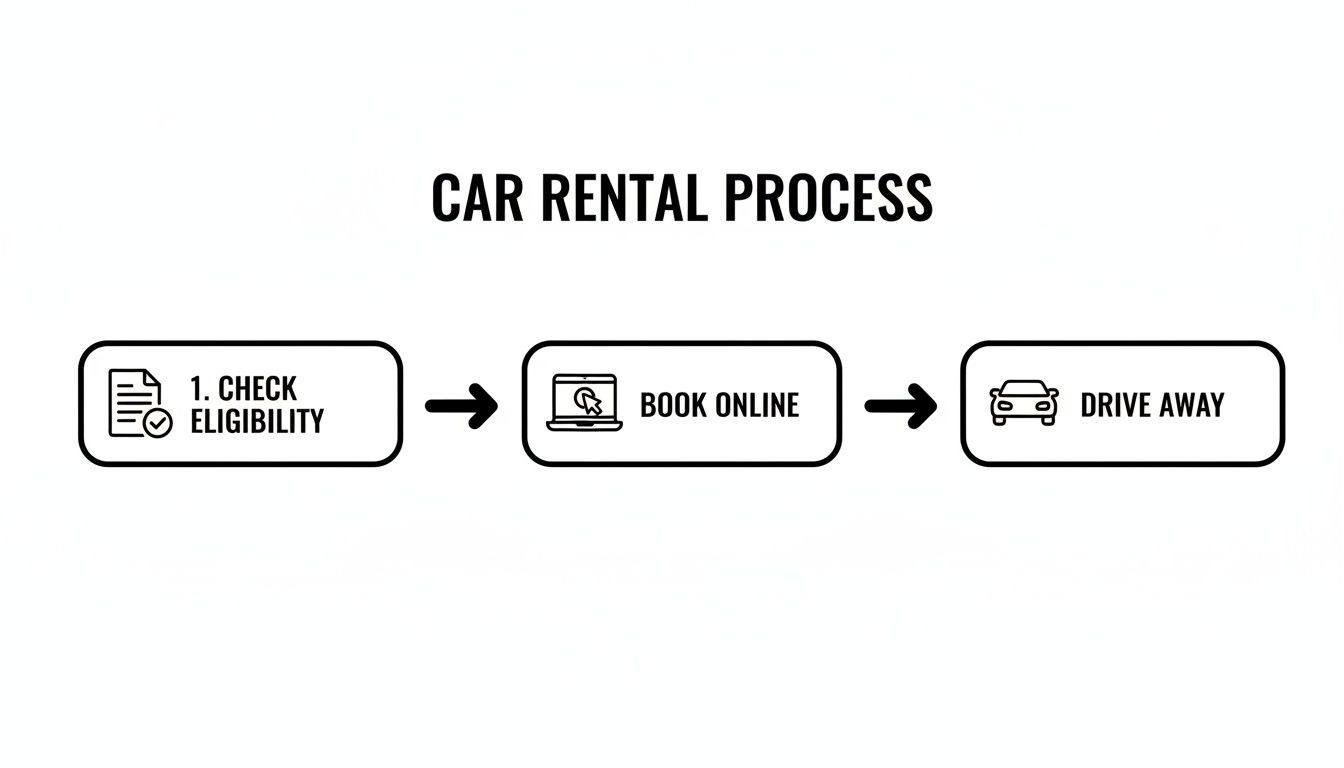
It really comes down to three main phases: checking you're eligible, booking your car online, and then simply driving away.
Planning for a Seamless Trip
A great rental experience begins long before you touch down at DXB. Getting your documents and digital toolkit in order is just as crucial as packing your bags. This means having all your paperwork ready to go and ensuring you have reliable internet for navigation and staying in touch. For a truly smooth digital experience, it's wise to look into resources like Your Ultimate Dubai VPN Guide for Travelers and Expats to avoid any connectivity issues during your stay.
Now, let's get into the nitty-gritty of what you'll need.
Gathering Your Documents: What You Really Need
Before you even start dreaming about cruising down Sheikh Zayed Road, let’s get the paperwork sorted. This part of renting a car in Dubai trips a lot of people up, but it’s actually pretty simple once you know which rules apply to you. The requirements are completely different depending on whether you're a tourist or a UAE resident.
For residents, it couldn't be easier. Just have your valid Emirates ID and your UAE driving licence ready. With those two things, you’re good to go.
For tourists, however, it’s a bit more involved. Everything comes down to where your driving licence was issued.
Tourist Documentation: What to Bring
If you're visiting Dubai, the main thing to figure out is whether your home country’s licence is accepted on its own, or if you'll need an International Driving Permit (IDP) to go with it. An IDP isn't a licence itself—think of it as an official, multi-language translation that confirms your original licence is legit.
For visitors from many countries, the process is incredibly smooth. You’ll just need your original driving licence, your passport, and your valid visit visa. That's it. This applies to drivers from:
- GCC Countries (Saudi Arabia, Bahrain, Oman, Kuwait, Qatar)
- Most European Nations (including the UK, Germany, France, Italy, Spain)
- North America (USA, Canada)
- Other key regions like Australia, New Zealand, Singapore, and South Korea.
Now, if your licence is from a country not on that approved list—like India, Pakistan, the Philippines, or Russia, for instance—then you must have an IDP. You'll need to show both your original licence and the IDP together. This is non-negotiable; any rental agency will have to turn you away without it. To be certain, it's always a good idea to check the full international driving permit requirements in Dubai before you travel.
Understanding Age and Deposit Rules
Beyond the paperwork, two other things are crucial: your age and the security deposit. The minimum age to rent a car in Dubai is generally 21 years old. But—and this is a big but—that rule often changes when you start looking at high-performance or luxury cars.
For top-tier vehicles like sports cars, powerful SUVs, or premium saloons, most rental companies (including us) raise the minimum age to 25. This is standard industry practice, simply because these cars are more powerful and valuable. Always, always double-check the age requirement for the specific car you want to book.
Expert Tip: Don't just assume the standard age limit applies to your dream car. If you're under 25 and have your heart set on a specific luxury model, contact the rental company directly. Some might have different policies for certain categories.
The security deposit is another key part of the process. It’s a temporary hold—not a charge—placed on your credit card to cover any potential post-rental costs. The amount can range from AED 1,000 to AED 5,000 or more, depending entirely on the value of the car.
This deposit is there to cover things like:
- Traffic fines you might get during the rental.
- Salik (toll) charges from driving on Dubai's main roads.
- Any damage not covered by the standard insurance.
- Extra mileage fees if you go over your allowance.
The hold is usually released 14-21 days after you return the car. This window gives enough time for any fines or tolls to register in the system. Just make sure your credit card has enough available credit to cover the deposit, as it’s a required step before they’ll hand over the keys.
How to Book Your Car and Understand the Costs
Gone are the days of tedious paperwork. Booking your dream car in Dubai is now a straightforward online process you can complete from anywhere in the world. Modern platforms, like the one we've built at Uptown Rent A Car, are all about clarity, giving you instant confirmations without any of the old guesswork. This digital-first approach isn't just a trend; it's the new standard.
The entire UAE car rental scene is shifting gears online, with experts predicting a massive 13.1% CAGR growth between 2025 and 2030. That's a jump from a USD 2,456 million market in 2024 to an incredible USD 5,243.8 million by 2030, fuelled by a huge comeback in tourism and business travel. Dubai and Abu Dhabi are leading the charge, making up over 80% of this market. Things like contactless handovers and e-agreements, which took off post-pandemic, are now just how things are done.
Decoding the Rental Agreement
Before you hit that "confirm" button, take a minute to actually read the rental agreement. It’s not just a formality—it’s the contract that spells out everything from what you’re paying for to your responsibilities behind the wheel. You want to see a clear, transparent breakdown of all the costs.
A solid rental quote will always specify what's included. Typically, you can expect:
- Basic Insurance: This is your standard Collision Damage Waiver (CDW), which covers damage to the rental car if you're in an accident.
- VAT: The standard 5% Value Added Tax is almost always baked into the final price.
- Mileage Allowance: You'll usually get a daily limit, often around 250 km, which is more than enough for cruising around the city.
Knowing these basics helps you compare different offers like a pro and sidestep any nasty hidden fees. This is where a fully online car rental in Dubai really shines, as the best ones lay everything out for you upfront.
What Is Not Included in the Price
Just as crucial is understanding what isn't covered in that initial price. These are the costs that usually get sorted out after you return the car, often by being deducted from your security deposit. A quick heads-up on these potential extras means no sticker shock on your final bill.
Here are the usual suspects for additional costs:
- Salik (Tolls): Every time you drive through a Salik toll gate on Dubai's main highways, a small fee is logged. The rental company pays this upfront and then bills you for the total at the end.
- Traffic Fines: Any speeding tickets or parking fines you pick up are sent directly to the rental agency. They'll then pass the cost on to you, sometimes with a small admin fee.
- Fuel: Most agencies use a "full-to-full" policy. You get the car with a full tank, and you're expected to return it the same way. If you don't, they'll refuel it for you, but at a premium rate.
- Extra Mileage: If you go over your daily kilometre limit, you'll be charged a fee for each additional kilometre.
Pro Tip: Before you sign anything, just ask for a clear explanation of all potential extra charges. A reputable company will happily walk you through their policies on tolls, fines, and fuel, giving you total peace of mind.
Payment Methods and the Security Deposit
You'll find most companies are flexible when it comes to paying for the rental itself, but there's one non-negotiable: the security deposit requires a credit card. While you might be able to pay the main rental fee with a debit card or cash, the deposit must be a pre-authorisation hold on a valid credit card.
This isn't an actual charge; it's just a temporary block on the funds. The company needs this guarantee to cover any potential post-rental costs like fines or tolls. Debit cards don't work for this because the banking system here doesn't support pre-authorisation on them in the same way. So, make sure your credit card has enough of a limit to cover the deposit for the car you've got your eye on.
Your Pre-Drive Checklist for a Smooth Pickup

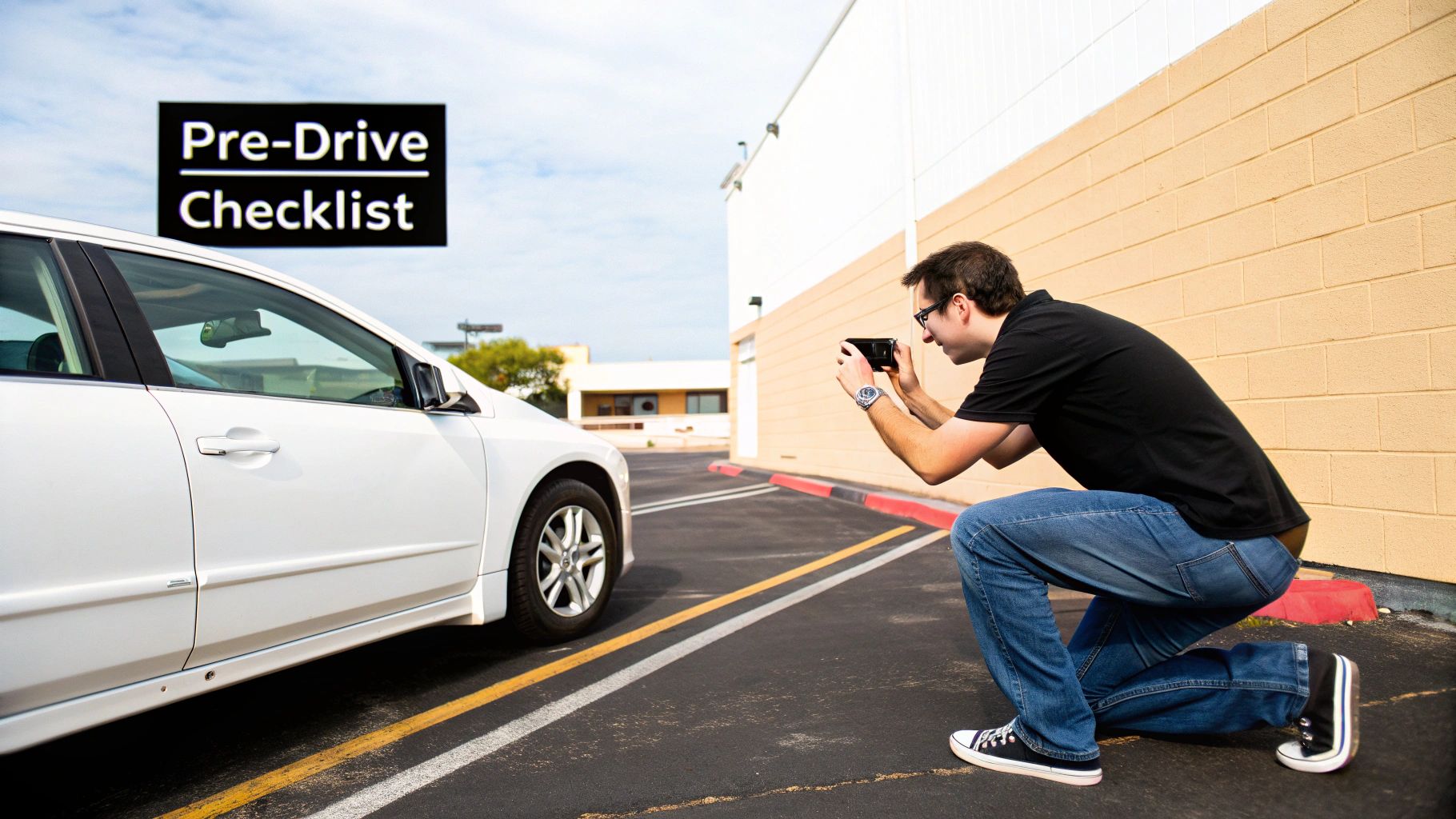
That moment the rental agent hands over the keys is pure excitement. You’re ready to hit Sheikh Zayed Road. But hold on for just a moment. Taking five to ten minutes for a quick but thorough inspection can be the single most important thing you do, saving you from serious headaches when it’s time to return the car.
Think of it as setting a baseline. Any dings, scratches, or issues you spot now get officially noted, ensuring you aren't on the hook for someone else's carelessness. It's a simple step, but it's a critical part of a hassle-free Dubai rental experience.
The Essential Walk-Around Inspection
First things first, let's look at the car's exterior. Always try to do this in good light. If you're picking it up from a dim underground car park, don't be shy about asking to move it somewhere brighter.
Your goal here is simple: find and document every single imperfection, no matter how tiny it seems. A small scuff on a bumper that you ignore now could easily turn into a charge against your deposit later.
- Bodywork: Do a slow lap around the car. Check every panel for dents, paint chips, and scratches. Pay extra attention to the corners of the bumpers and the edges of the doors – these are the usual suspects for minor damage.
- Windscreen and Windows: Scan all the glass for any chips or cracks. Even a tiny star-shaped chip can spread, so make sure it's documented.
- Tyres and Wheels: Eyeball the tyres. Do they look properly inflated? Are there any visible gouges? Also, check the alloy wheels for scrapes and curb rash.
- Lights and Mirrors: Have the agent help you test the lights. Make sure the headlights, indicators, and brake lights all work. Check that the side mirrors are intact and adjust correctly.
Pro Tip: This is where your smartphone is your best friend. Take a slow, detailed walk-around video of the entire car. Speak out loud as you film, pointing out any damage you see and zooming in on it. This video, along with clear photos, acts as timestamped proof if any disputes come up later.
Checking the Interior and Vitals
Once you're happy with the outside, hop in. The car's interior is just as important, and a few quick checks will ensure you're set up for a comfortable drive.
This is also your chance to match the car’s vitals—like fuel and mileage—to what’s on your rental contract. Mismatches here can lead to surprise charges, so it pays to be diligent.
- Upholstery: Give the seats a good look-over for any stains, tears, or burn marks.
- Dashboard and Electronics: Turn the key. Are there any warning lights on the dash? Test the air conditioning (an absolute non-negotiable in Dubai!) and play with the infotainment system to make sure it works.
- Cleanliness: Is the car actually clean? There shouldn't be any rubbish left over from the last driver.
- Emergency Gear: Pop the boot and check for a spare tyre, a jack, and a basic tool kit. You hope you’ll never need them, but you absolutely need to know they’re there.
To keep things organised, here's a quick checklist you can mentally run through or even pull up on your phone.
Your Vehicle Inspection Checklist
Before you sign that final paper and drive off, use this table as a final guide. It covers everything you need to inspect and what action to take if you find an issue. Documenting everything is your best protection.
| Area of Inspection | What to Check For | Action to Take |
|---|---|---|
| Exterior Body | Scratches, dents, paint chips on all panels, bumpers, and doors. | Take clear photos and a video. Ensure every mark is noted on the vehicle condition report by the agent. |
| Glass | Cracks or chips on the windscreen and all windows. | Point out even the smallest chips. Get them documented on the report. |
| Wheels & Tyres | Scuffs on alloy wheels, visible tyre damage, or low pressure. | Photograph any curb rash. If a tyre looks low, ask the agent to check the pressure. |
| Lights & Mirrors | All lights (head, brake, indicators) are functional. Mirrors are intact. | Ask the agent to confirm all lights are working as you test them from the driver's seat. |
| Interior Upholstery | Stains, tears, or burns on seats and carpets. | Note any significant blemishes on the report. A clean interior is part of what you're paying for. |
| Dashboard | Any warning lights illuminated after starting the engine. | Do not accept the car if there are critical warning lights (e.g., engine, oil, brakes). |
| Electronics | Air conditioning blows cold, infotainment system works. | In Dubai's climate, a weak AC is a deal-breaker. Test it thoroughly before leaving. |
| Fuel Gauge | The tank is full (or matches the level stated in the contract). | If not full, have the agent record the exact level on your contract and sign it. |
| Odometer | The mileage on the dashboard matches the starting mileage in the agreement. | If there's a discrepancy, have it corrected on the paperwork immediately. |
| Emergency Kit | Spare tyre, jack, and basic tools are present in the boot. | Confirm all components are there. You don't want to discover they're missing during an emergency. |
Taking the time to go through this list might feel tedious, but it gives you total peace of mind. Once everything is documented and signed off, you're officially ready to start your Dubai driving adventure.
Driving in Dubai: Rules, Tolls, and Other Costs
Alright, you've got the keys. Now you’re ready to experience the pure freedom of driving on Dubai’s incredible road network. Driving here is generally a fantastic experience, thanks to pristine highways and clear signage in both Arabic and English. Still, getting a handle on the local rules, costs, and the general flow of traffic is key to a smooth journey.
Think of it as learning the local rhythm. Dubai's roads are fast-paced and the drivers are confident. The best way to blend in is to stay aware, leave a safe distance between you and the car ahead, and always signal your intentions clearly. Your GPS will be your best friend, so have a reliable navigation app like Waze or Google Maps fired up and ready to go.
Navigating Dubai Tolls with Salik
One of the first things you'll notice on major arteries like Sheikh Zayed Road is the Salik toll system. This is Dubai's brilliant, barrier-free automatic toll network. Every rental car comes fitted with a small Salik tag on the windscreen that pings every time you pass under a toll gate.
There’s nothing for you to do in the moment—no slowing down, no fumbling for cash, no credit cards. The system just logs the charge against your vehicle. Simple.
- How it Works: Each time you pass through a Salik gate, a charge of AED 4 is registered.
- Billing: The rental company keeps a running tab of all your Salik charges during your rental.
- Settlement: When you return the car, the total Salik bill is calculated and typically taken from your security deposit.
This system is incredibly efficient, letting you focus on the drive without sweating the small stuff. Just remember that these charges are an extra cost on top of your daily rental fee.
Understanding Common Traffic Fines
Dubai takes road safety seriously and has a zero-tolerance approach to major driving offences. The city’s roads are blanketed with an advanced network of speed cameras and sensors, and the fines can be hefty. Driving responsibly isn't just safer—it’s much cheaper.
The most common mistake rental drivers make is speeding. Speed limits are always clearly posted but they do change depending on the road. On major highways, you're often looking at 100-120 km/h, while urban roads are usually around 60-80 km/h. A well-known local secret is that many cameras have a buffer and only flash at 20 km/h over the limit, but playing that game is a risk you don't want to take.
Other common ways to get a fine include:
- Parking improperly.
- Using your mobile phone while driving.
- Forgetting to wear a seatbelt.
- Swerving between lanes without signalling.
If you do get a fine, the alert goes straight to the rental company. They’ll then bill you for the fine, often with a small admin fee tacked on, and deduct the total from your security deposit. For a deeper dive into the unwritten rules of the road, check out our guide on essential Dubai driving tips.
Real-World Scenario: You're running late and push it to 125 km/h in a 100 km/h zone. A camera flashes. A few weeks after you're back home, you notice a deduction from your deposit for the fine (say, AED 600) plus the rental company’s service fee (maybe AED 50). Sticking to the speed limit saves you both money and a headache.
Fuel Policies and Other Practicalities
Almost every car rental in Dubai uses a "full-to-full" fuel policy. It's straightforward: you pick up the car with a full tank of petrol, and you're expected to return it the same way. Just make a quick stop at a petrol station near the drop-off point to top it up.
If you bring the car back with less than a full tank, the rental company will fill it up for you. Be warned, though—they charge a premium rate per litre that's always much higher than what you'd pay at the pump. It’s a small detail that can add a surprisingly big chunk to your final bill if you forget.
Finally, if you’re travelling with kids, knowing the local child safety laws is non-negotiable. The UAE has strict rules requiring proper child restraints. It's a good idea to review what age for booster seat is required in Dubai to make sure your family is travelling safely and legally.
Returning Your Rental Car and Finalizing the Bill
Wrapping up your Dubai car rental experience should be just as smooth as picking up the keys. The trick is to be organised and a little proactive to make sure there are no nasty surprises waiting on your final bill. A clean, easy return process not only gets your security deposit back faster but also lets you end your trip on a high note.
The first thing to remember? Punctuality is everything. Rental contracts are almost always based on a strict 24-hour cycle. This means that bringing the car back even an hour late can, and often will, trigger a charge for a full extra day. Plan your last day with this in mind, leaving a generous buffer for Dubai's infamous traffic, especially if you need to stop and refuel on the way.
The Final Inspection and Handover
Just like when you collected the car, the drop-off involves a final walk-around inspection with a company representative. This is your last chance to square everything away and confirm the car's condition matches the initial report you signed. The agent will check for any new scuffs, dents, or damage that wasn't there when you started.
This is exactly why taking your own photos and a quick video at pickup is so important. If there's any debate over a scratch that you know was already there, your timestamped evidence is your best friend. Once the inspection is done and everyone's in agreement, you'll sign the final handover documents, officially closing out your rental period.
Expert Tip: Before you hand over the keys for good, do one last sweep of the entire car. Check the glove box, under the seats, in the door pockets, and of course, the boot. It's incredibly easy to leave behind sunglasses, a phone charger, or a souvenir in the rush to get to the airport.
Settling Your Final Bill
Your final invoice will be more than just the daily rental fee. It’s where all the variable costs from your trip get tallied up, and they are typically deducted straight from your security deposit. This is where you'll see the charges for all the Salik tolls you passed through and any traffic fines that have been registered against the car.
The rental company should provide you with an itemised statement detailing every single charge. Now, getting the remainder of your security deposit back isn't instant. You should expect to wait anywhere from 14 to 30 days after returning the car for the hold on your credit card to be released. This window gives the system enough time for any last-minute traffic fines to show up. Always, always ask for a printed or emailed copy of the final invoice for your records before you walk away.
Your Top Questions About Renting a Car in Dubai, Answered
Even after you've picked your dream car, a few last-minute questions always seem to pop up. It's completely normal. Let's clear up some of the most common queries we get from clients, so you can finalise your booking with total confidence.
Do I Really Need an International Driving Permit?
This is probably the most frequent question we hear, and the answer is simple: it all comes down to where your driving licence was issued.
Good news if you hold a licence from the UK, USA, Canada, Australia, or most other European and GCC countries – your home country licence is all you need.
For drivers from many other parts of the world, though, an International Driving Permit (IDP) is mandatory. You’ll have to show it right alongside your original licence, no exceptions. If you're even slightly unsure, the best thing to do is check with us or your rental company before you travel. A quick call can save a lot of hassle later.
What Happens if I Get a Traffic Fine?
It happens. You might miss a speed camera or misread a parking sign. When it does, the Dubai Police will inform the rental company directly. The company pays the fine initially and then passes the cost on to you, usually with a small admin fee for their trouble. This amount is then taken from the security deposit you paid.
It's crucial to get this sorted out. Any unpaid fines are tied to your records in the UAE, which can cause real problems if you plan on visiting again.
Can I Take My Rental Car to Oman?
Planning a quick road trip to Oman? Unfortunately, driving a rental car outside the UAE is almost always off-limits. The vast majority of rental agreements, especially for high-end or performance cars, strictly forbid cross-border travel.
If a trip to Oman is an absolute must, you need to get clear, written permission from the rental agency well ahead of time. It's a complicated process involving special insurance and extra paperwork, and it always comes with additional costs. Be sure to factor this into your plans from the very beginning.
How Do Mileage Limits Work?
Most car rentals in Dubai include a daily mileage cap, typically around 250 kilometres. Honestly, for most people just exploring the city and nearby spots like Jebel Hafeet or Abu Dhabi, this is plenty.
If you do go over this allowance, you'll be charged for every extra kilometre. The rate varies depending on the type of car you’ve rented – a luxury SUV will have a higher per-kilometre charge than a standard saloon. It’s always a good idea to confirm this rate before you sign the paperwork, especially if you’re planning a more ambitious tour across the Emirates.
Ready to experience Dubai with the ultimate freedom and style? At Uptown Rent A Car, we make booking your dream luxury vehicle simple and transparent. Explore our exclusive fleet and secure your car online in minutes. Visit us at https://www.uptowndxb.com to start your journey.