

Taking a road trip from Dubai to Oman is an incredible experience, but a smooth journey really begins before you even put the key in the ignition. To get across the Dubai to Oman border without any headaches, you'll need the right documents for everyone in the car, the vehicle itself, and mandatory Omani car insurance. Trust me, getting these things sorted out in advance is non-negotiable if you want a hassle-free crossing.
Your Pre-Trip Checklist for Driving to Oman

Before your tyres hit the tarmac, a little prep work can be the difference between a seamless border crossing and a seriously frustrating delay. Think of this as your pre-flight check, but for the open road. Getting your paperwork in order is the most important first step.
Essential Documents for Passengers and Vehicles
For every single person in your vehicle, a passport with at least six months of validity is an absolute must. If you're a UAE resident, you'll also need to have your Emirates ID handy, making sure your residency visa on it has at least three months of validity left. It’s a small detail, but it's crucial for getting back into the UAE without a hitch.
For your car, the golden ticket is its registration card, what we call the Mulkiya. You have to bring the original card—photocopies are almost never accepted at the border. The car also needs to be registered in the name of the person driving it.
Pro Tip: Keep all your documents—passports, Emirates IDs, and the Mulkiya—tucked away in a single, easy-to-reach folder. Fumbling for papers at the border window is a stress you can easily avoid with just a bit of organisation.
And what if you're driving a car that isn't yours, like a friend's or a company vehicle? You absolutely need a No-Objection Certificate (NOC) from the registered owner. This is just a formal letter that clearly states you have their permission to take the car across the border to Oman.
To make things crystal clear, here’s a quick rundown of the paperwork you'll need.
Required Documents at a Glance
| Document | Required For | Key Details |
|---|---|---|
| Passport | All Passengers | Must have at least 6 months of validity. |
| Emirates ID | UAE Residents | Residency visa must have at least 3 months of validity. |
| Original Vehicle Registration (Mulkiya) | The Vehicle | Must be the original card. Photocopies are not accepted. |
| No-Objection Certificate (NOC) | If driving a non-owned car | A formal letter from the registered owner granting permission. |
Having these organised and ready to go will make your life infinitely easier when you pull up to the immigration counter.
Understanding Omani Car Insurance: The Orange Card
One of the most common points of confusion for first-timers is car insurance. Your standard UAE car insurance policy probably doesn't cover you in Oman. To drive legally in the Sultanate, you need specific coverage, which comes in the form of a document called the Orange Card.
This card is your proof that you have a valid third-party liability insurance policy recognised in other GAIF (General Arab Insurance Federation) countries, including Oman. Driving without it is a big risk you don't want to take.
Here's how to get it sorted:
- Check Your Existing Policy: Some comprehensive insurance plans in the UAE already include coverage for Oman. The first thing you should do is call your provider to confirm. If it's included, just ask them to issue your Orange Card—it's often free.
- Purchase an Add-On: If your policy doesn't cover Oman, you can usually get it as an add-on from your insurer for a small fee. Make sure to do this a few days before your trip to give them time to process it.
- Buy at the Border: This should be your last resort. You can buy temporary Omani insurance right at the border, but it often provides only the most basic third-party coverage and can be more expensive than arranging it beforehand.
This route from Dubai to Oman isn't just for holidaymakers; it’s a vital economic lifeline. In 2023 alone, the UAE's exports to Oman were valued at a staggering $10.1 billion, which shows you the incredible volume of trade that depends on these crossings. You can dig into more data on this significant trade relationship on the OEC.world website.
Choosing the Best Border Crossing Route From Dubai

Picking your route from Dubai to Oman isn't just about getting from A to B; it's the first real step of your road trip adventure. While a few crossings dot the border, they aren't all created equal, especially for tourists and expats. Your choice directly impacts your travel time and overall stress levels, so a little planning goes a long way.
For nearly everyone driving from Dubai towards Muscat or Oman's east coast, the Hatta-Al Wajajah border is the way to go. It's the most popular and reliable option for non-GCC nationals for a reason.
This crossing is specifically set up to handle tourists and residents, which makes the whole process much smoother. From most parts of Dubai, you're looking at about a one hour and forty-minute drive just to reach the border post.
The Go-To Route: Hatta Al Wajajah
Hatta is the default choice for most travellers. Why? Because the facilities on both the UAE and Omani sides are well-organised, and the border officials see tourist visas and rental car papers all day long. They know the drill.
The downside of this popularity is that it can get pretty busy, particularly during public holidays and on weekends.
A pro tip from experience: try to avoid crossing on a Thursday evening or Friday morning. That's peak weekend rush hour. If you can, aim for a weekday morning for a much faster, more relaxed crossing. Plus, the drive through the Hajar mountains just after you enter Oman is absolutely spectacular—far more scenic than the other coastal routes.
Navigation Warning: This is a big one. When you punch "Hatta Border" into your GPS, make sure it’s taking you via the Sharjah-Kalba Road (E102). Some navigation apps love to suggest a "shortcut" through the E44 via Al Madam. This route leads to a different crossing that is often restricted to GCC nationals only. Double-checking your map can save you from a major, time-wasting detour.
Are There Other Options?
While Hatta is the main event, it's good to know what the other crossings are for, even if it's just to know which ones to avoid.
- Khatmat Malaha (Kalba): You'll find this crossing on the eastern coast, near Fujairah. While it’s technically open to residents, countless travellers (especially those in rental cars) have been turned away and told to go to Hatta. It's best not to risk it as a tourist.
- Mezyad-Hafeet (Al Ain): This is your best bet if you're heading further south in Oman to places like Nizwa or Salalah. It's about a two-hour drive from Dubai to get there and is typically far less congested than Hatta.
- Musandam Crossings: If you're planning a trip to the stunning Musandam peninsula, you'll use a different border entirely. The Al Dhara border post is for Khasab, while the Dibba checkpoint serves the eastern side. These are specific to that region and won't get you to mainland Oman.
Bottom line? For the vast majority of Dubai-to-Oman road trippers, sticking to the Hatta-Al Wajajah border is the safest and most reliable play for a hassle-free journey.
Navigating the Border Crossing Process with Confidence
Pulling up to the Dubai-Oman border for the first time can feel a bit daunting, but don't worry—it’s a surprisingly well-oiled machine. The whole process is split into two main parts: checking out of the UAE, then officially checking into Oman. As long as you have your documents handy, you'll find it's a pretty smooth ride.
Your journey starts on the UAE side. As you get closer to the border post, you'll be guided into lanes with drive-through counters. This is where you'll handle the exit paperwork for everyone in your car.
Finalising Your UAE Exit
Your first stop is to settle the UAE exit fee, which is currently AED 35 per person. They'll give you a receipt for this payment, and you absolutely need to hang onto it for the next window. It’s always smart to have some cash in AED ready, though they usually take cards.
With that receipt, you’ll roll up to the passport control window. An immigration officer will take a look at your passports and the exit fee receipt before giving each person a UAE exit stamp. That stamp is your official "see you later" from the United Arab Emirates.
A Quick Tip on Vehicle Inspections: It’s not a guaranteed thing on the way out, but be ready for a possible vehicle inspection. Customs officers sometimes do random checks, so make sure you aren't carrying anything you shouldn't be to keep things moving.
This graphic really breaks down the main stages you’ll go through at the checkpoint.
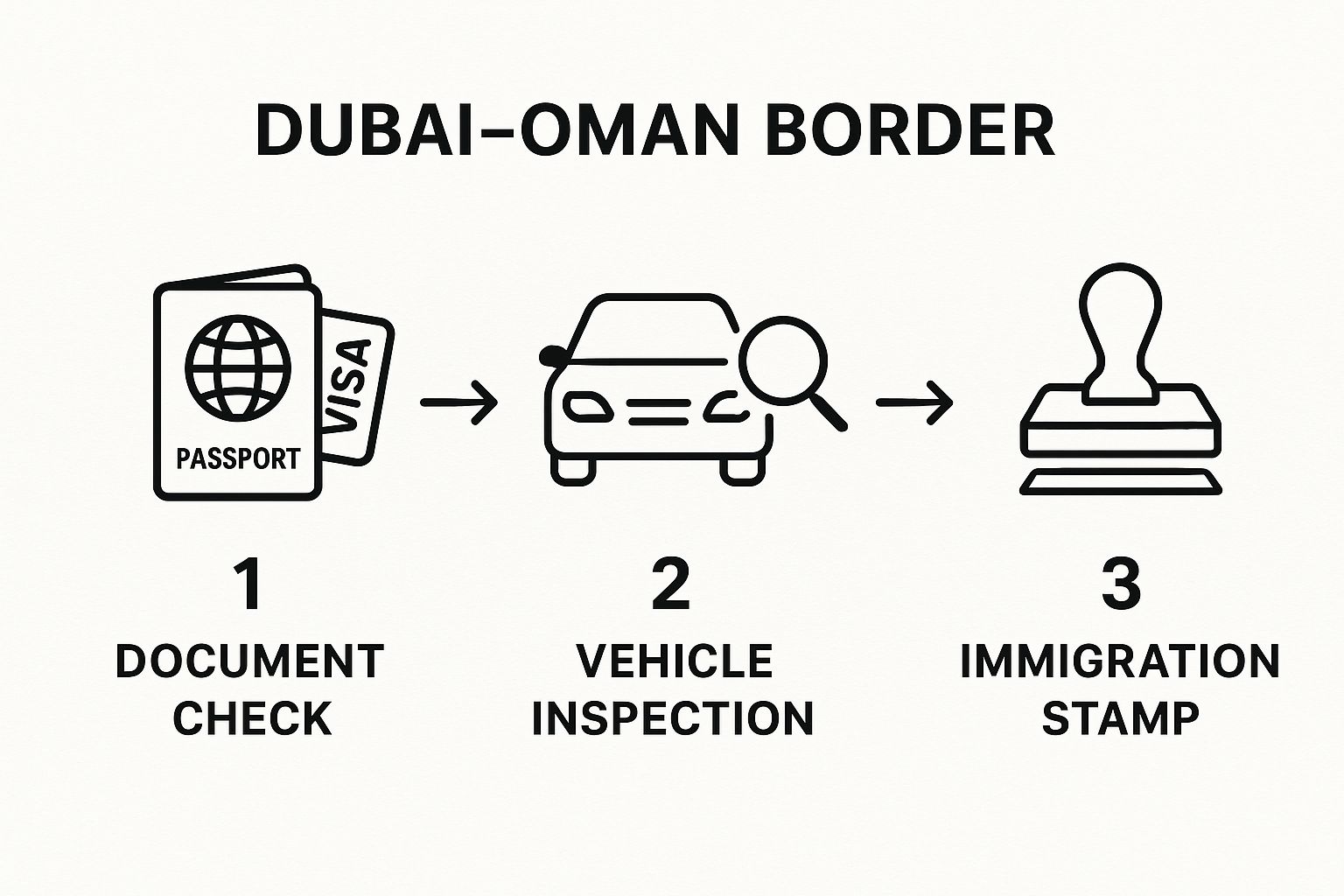
As you can see, it’s a sequential flow. You’ll clear your personal immigration first, then the vehicle, before you can drive on.
Entering the Sultanate of Oman
Once you’ve got your UAE exit stamp, you’ll drive a short stretch through a sort of "no man's land" to the Omani border post. This is where you’ll need to park your car and go inside the main immigration building to officially enter Oman.
Inside the building, you’ll tackle a few things:
- Visa Processing: If you didn't sort out an e-visa beforehand, this is your chance to get a visa on arrival. You'll need to fill out a quick form and pay the visa fee.
- Document Checks: Omani officials will need to see your passports, the car's Mulkiya (registration card), and your proof of Omani car insurance (the Orange Card).
- Entry Stamp: After a quick check to make sure everything is in order, they'll stamp your passports with an Omani entry visa.
After your passports are stamped, the officer will hand you a small slip of paper. This little piece of paper notes the number of people in your car—don't lose it! You’ll need it for the final checks. For a more detailed look at what you need before you even leave home, check out our full guide on the drive to Oman from Dubai.
Now, head back to your car and drive over to the vehicle inspection area. An officer will probably ask you to pop the boot and might give the car's interior a quick glance. Once they're satisfied, they'll stamp that little paper slip you got from the immigration desk.
The final step is just ahead. Drive up to the last checkpoint and hand that stamped slip to the officer on duty. Once they give you the wave, that’s it—you're officially in Oman. Welcome to the Sultanate
Taking a Rental Car Across the Border to Oman
So, you're dreaming of an Oman road trip but don't have your own wheels? Good news: driving a rental car from Dubai is definitely an option. But—and this is a big but—it’s not something you can decide to do on the fly. This requires a bit of pre-planning with your rental agency well before you even think about packing the car.
The single most important document you'll need is the No-Objection Certificate (NOC). Think of it as a golden ticket from the rental company, officially giving you permission to take their vehicle into Oman. Show up at the Dubai to Oman border without it, and you'll be making a U-turn. No ifs, ands, or buts. This NOC almost always comes packaged with Omani insurance, which the rental company arranges for you.
Important Note: Forget about buying third-party insurance at the border for a rental. It's not an option. The entire permission and insurance package must be sorted out directly with your rental agency before your trip starts.
Finding a Rental Company That Allows Border Crossing
Here's the first hurdle: not every car hire company in Dubai will let their vehicles leave the UAE. You absolutely have to confirm this is allowed before you make a booking. While many of the big international and local names are set up for this, it always comes with an extra fee.
A few well-known agencies that usually play ball with cross-border travel include:
- Avis
- Sixt
- Dollar
- Hertz
- Europcar
Once you get in touch, expect the process to take a few days. They’ll need copies of your passport and driver's license to get the NOC and insurance paperwork in order. For businesses that need vehicles for regular cross-border work, looking into specialised corporate car rental in Dubai can streamline this process, offering packages built for these specific needs.
Understanding the Costs and What to Ask
Taking a rental to Oman isn't a budget move; the fees are on top of your daily rental rate. The cost for the NOC and the mandatory Omani insurance are usually bundled, and the price can swing quite a bit between companies.
As a rough guide, you can probably expect to pay around AED 450 for a permit lasting 1-3 days. If you're going for a full week, the cost might be closer to AED 750.
Before you hand over your credit card, get clear answers to these questions:
- What’s the total, all-in cost for the NOC and Omani insurance for my specific travel dates?
- How far in advance do I need to request the documents?
- Are there any cars I can't take to Oman? (They often restrict high-end luxury or sports cars from crossing the border).
- What’s the daily mileage limit, and what are the fees if I go over? This is a big one. The drive to Oman and back, plus exploring, racks up the kilometres fast.
Getting these details sorted upfront saves a world of headaches and unexpected charges. The last thing you want is a surprise at the rental desk—or worse, at the border—that throws your entire trip off course.
A Realistic Breakdown of Border Crossing Costs
Any good road trip starts with a solid budget, and the drive from Dubai to Oman is no different. You'll need to account for a few mandatory fees at the border to avoid any last-minute surprises. Getting these sorted in your head beforehand means you can focus on the adventure, not your wallet.
First up, there's a fee on the UAE side. Before you officially get your exit stamp, you’ll need to pay the UAE exit fee, which is currently AED 35 per person. This isn't per car—it's for every single passenger in the vehicle.
Once you’ve cleared the UAE checkpoint and driven into the no-man's-land, your next stop is Omani immigration. Here, you'll handle the entry fees. For most visitors, this will be the Omani visa fee, which costs around 20 OMR. Keep in mind that some nationalities and certain UAE residents might be eligible for visa-free entry, so check your status before you go.
Navigating Payments and Insurance Costs
Here’s a pro tip that can save you a world of trouble: carry cash. And not just one currency, but both. While the Omani visa counter usually takes credit cards, the kiosk for the UAE exit fee can often be cash-only. Having a decent mix of AED and OMR on hand is just smart planning.
Key Takeaway: Don't get caught out. We recommend carrying at least 50 AED and 30 OMR per person. This should easily cover the exit fee, potential visa costs, and any small snacks or drinks you might want to grab. Relying completely on cards at a land border is a gamble you don't want to take.
What about insurance? If you didn’t sort out an Orange Card (which is your Omani insurance) with your provider in the UAE, you’ll have to buy a temporary policy right at the border. This is really a last-resort option as it’s always more expensive. You can expect to pay roughly 105 AED for a basic five-day policy.
Let's do a quick recap of the main costs you'll face:
- UAE Exit Fee: 35 AED per person (it's wise to have this in cash).
- Oman Visa Fee: Around 20 OMR per person (card is often an option, but cash is a safer bet).
- Border Insurance (if you need it): Approximately 105 AED for basic 5-day coverage.
It's also interesting to note that the Dubai-Oman border is more than just a tourist crossing; it’s a crucial economic channel. Recent trade figures show Oman's non-oil exports grew by 8.6% in early 2024, with the UAE being the top destination for 18% of these goods. This highlights just how vital this route is for the region's evolving economy. You can read more about these trade patterns on Arab News.
Common Questions About the Dubai to Oman Drive
Even the most seasoned road-trippers have a few last-minute questions before heading out. Driving from Dubai to the Oman border is a pretty straightforward journey, but it’s completely normal to have some nagging uncertainties. We’ve pulled together the most common questions we get from travellers, so you can have clear, simple answers.
Think of this as your final pre-trip briefing. It’s designed to help you iron out any lingering doubts and finalize your plans with total confidence.
Can I Get an Oman Visa at the Land Border?
For most nationalities, the answer is a simple and reassuring yes. You can usually get a visa on arrival right at the border crossing. That said, visa rules can change with little warning, so it’s always a good idea to double-check the latest requirements on the official Royal Oman Police (ROP) e-visa portal before you set off.
The process itself is quite easy. You’ll just need to fill out a form and pay the fee, which is typically around 20 OMR. While they usually accept credit cards at the visa counter, carrying the exact amount in Omani Rials is a great way to speed things along.
What Is the Best Time of Day to Cross the Border?
Your timing can be the difference between a quick crossing and a frustratingly long wait. For the smoothest possible experience, your best bet is to aim for a weekday morning. Arriving between 8 AM and 11 AM from Sunday to Wednesday almost always means you'll breeze through.
Avoid the weekends if you can. Thursday evenings and Friday mornings are absolute peak times and the queues at the Dubai to Oman border can get incredibly long. The same goes for any public holidays in either the UAE or Oman—expect major delays.
Expert Insight: A well-timed crossing isn't just about dodging traffic. An early start gives you more daylight to soak in those incredible Omani landscapes on the other side. It turns the drive itself into a memorable part of your adventure.
Are There Items I Cannot Bring into Oman?
Absolutely. Like any country, Oman has strict customs rules and a list of restricted items. Knowing what not to pack is key to avoiding fines or delays at the border. Prohibited items include:
- Pork products of any kind.
- Large quantities of alcohol.
- All narcotics and illicit drugs.
- Drones, as these require special permits that you must get in advance.
Be prepared for a routine inspection of your vehicle by customs officials. To keep your crossing hassle-free, it's smart to just leave any questionable items at home. If you're in doubt about something, the best policy is always to declare it to the officials.
Do I Need an International Driving Permit?
This really depends on where your driving licence was issued. If you have a valid licence from a GCC country, such as the UAE, you won't need an International Driving Permit (IDP) to drive in Oman. For more helpful info, check out our guide on essential Dubai driving tips.
For licences from most other countries, an IDP is strongly recommended and should be carried with your original licence. What's crucial to remember is that some rental car companies might insist on an IDP regardless of your nationality, so always confirm their specific cross-border policies before you book.
Planning your own luxurious road trip from Dubai? At Uptown Rent A Car, we offer a fleet of premium vehicles perfect for your adventure, with many eligible for the journey to Oman. Find your perfect ride and book your next escape at https://www.uptowndxb.com.