

A smooth road trip from Dubai to Oman really begins before you even put the keys in the ignition. Getting your documents and your car sorted out is hands-down the most important part of the process. Nail this, and you’re setting yourself up for a stress-free border crossing without any nasty surprises.
Your Essential Pre-Trip Checklist
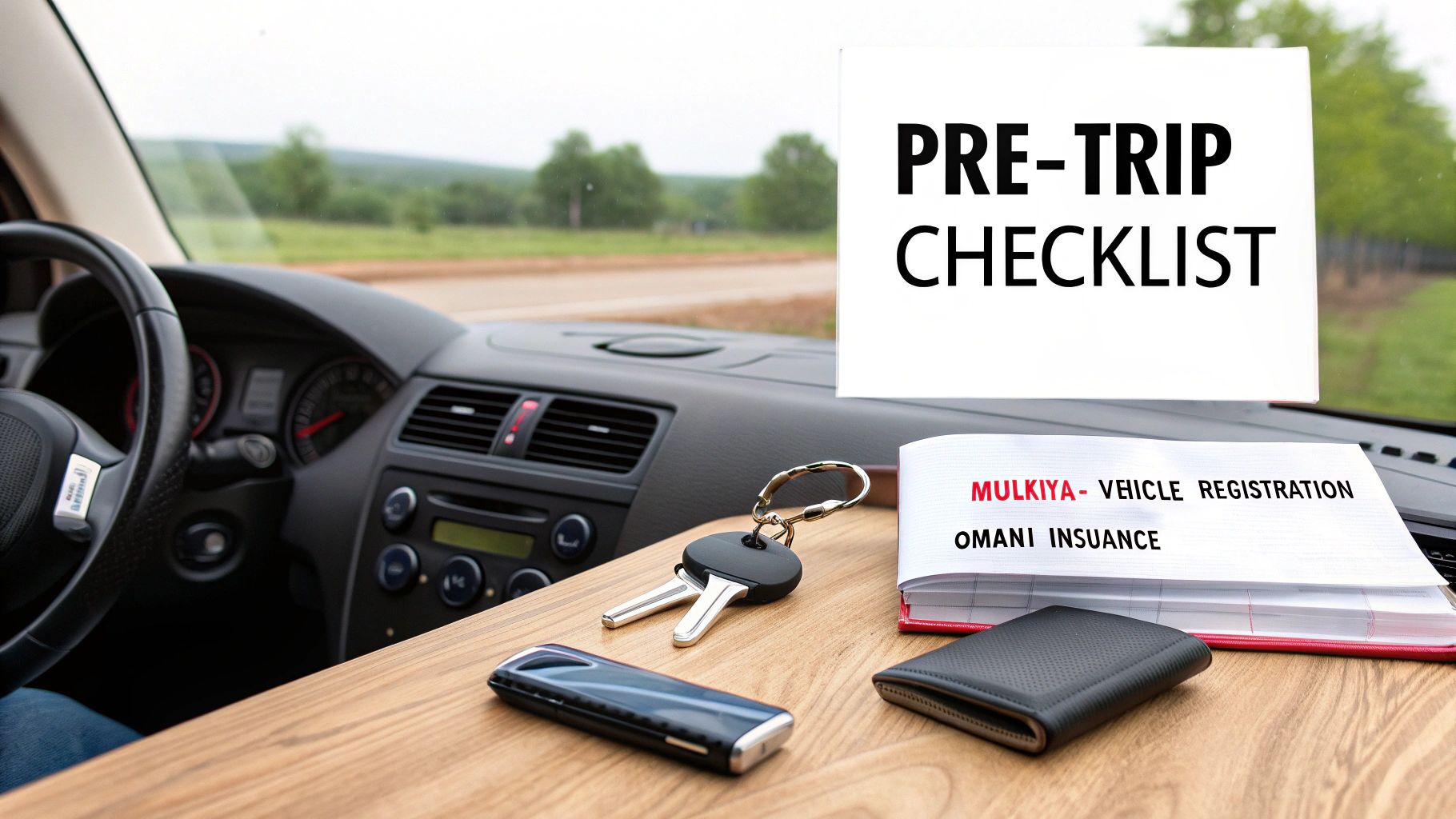
Before you start thinking about your road trip playlist, let's get the paperwork in order. Just one missing document can bring your entire adventure to a screeching halt at the Dubai Oman border, turning what should be an exciting trip into a massive headache.
Let’s break down exactly what you’ll need for yourself, your passengers, and your car.
Personal and Vehicle Documentation
First up, your personal documents. Every single person in the car needs a passport with at least six months of validity left from the day you plan to enter Oman.
If you’re a UAE resident, your residence visa also needs to be valid for a minimum of three months. It’s always a good idea to double-check the latest UAE residence visa expiry rules well before your trip to avoid any last-minute panic.
Next, let's talk about the car's papers. You'll need to have these on hand:
- Your valid UAE driving licence. While you're at it, it's worth taking a quick look at the https://www.uptowndxb.com/international-driving-permit-requirements/ just in case, as rules can vary depending on your nationality.
- The vehicle's registration card (Mulkiya). This is a big one: you need the original card, and it must be in the driver’s name. They won't accept photocopies at the border.
Crucial Tip: Driving a car that isn't yours? Whether it's a rental, a company vehicle, or borrowed from a friend, you absolutely must have a No-Objection Certificate (NOC). This is an official letter from the registered owner giving you permission to drive it into Oman. Rental agencies will sort this out for you for a fee, but make sure you ask for it well in advance.
Arranging Omani Car Insurance
Omani car insurance is non-negotiable, and you've got to have it. While you can buy it right at the border, I wouldn't recommend it. You'll often face long queues and end up paying more than you need to.
The smarter move is to get it sorted beforehand. Many UAE insurance providers offer Omani coverage as a simple add-on to your existing policy. Arranging this online or with a quick phone call before you leave saves a ton of time and hassle at the border, making the whole experience much smoother.
To help you keep track of everything, I’ve put together a simple checklist.
Required Documents and Items Checklist
Here's a quick rundown of everything you need for a smooth border crossing. Double-check this list before you head out to make sure you haven't missed anything.
| Item | Requirement/Note | Status |
|---|---|---|
| Passports | At least 6 months validity for all passengers. | ☐ |
| UAE Residence Visa | At least 3 months validity for all residents. | ☐ |
| Vehicle Registration (Mulkiya) | Original card in the driver's name. No copies! | ☐ |
| UAE Driving Licence | Must be valid. | ☐ |
| No-Objection Certificate (NOC) | Mandatory if the car is not in your name (rental, company, friend's). | ☐ |
| Omani Car Insurance | Valid for the duration of your trip. Best arranged in advance. | ☐ |
| Omani Riyals (OMR) | Have some cash on hand for visa fees and other small expenses. | ☐ |
Ticking off every box on this list is your best bet for a quick and easy start to your Omani adventure.
Choosing the Right Border Crossing
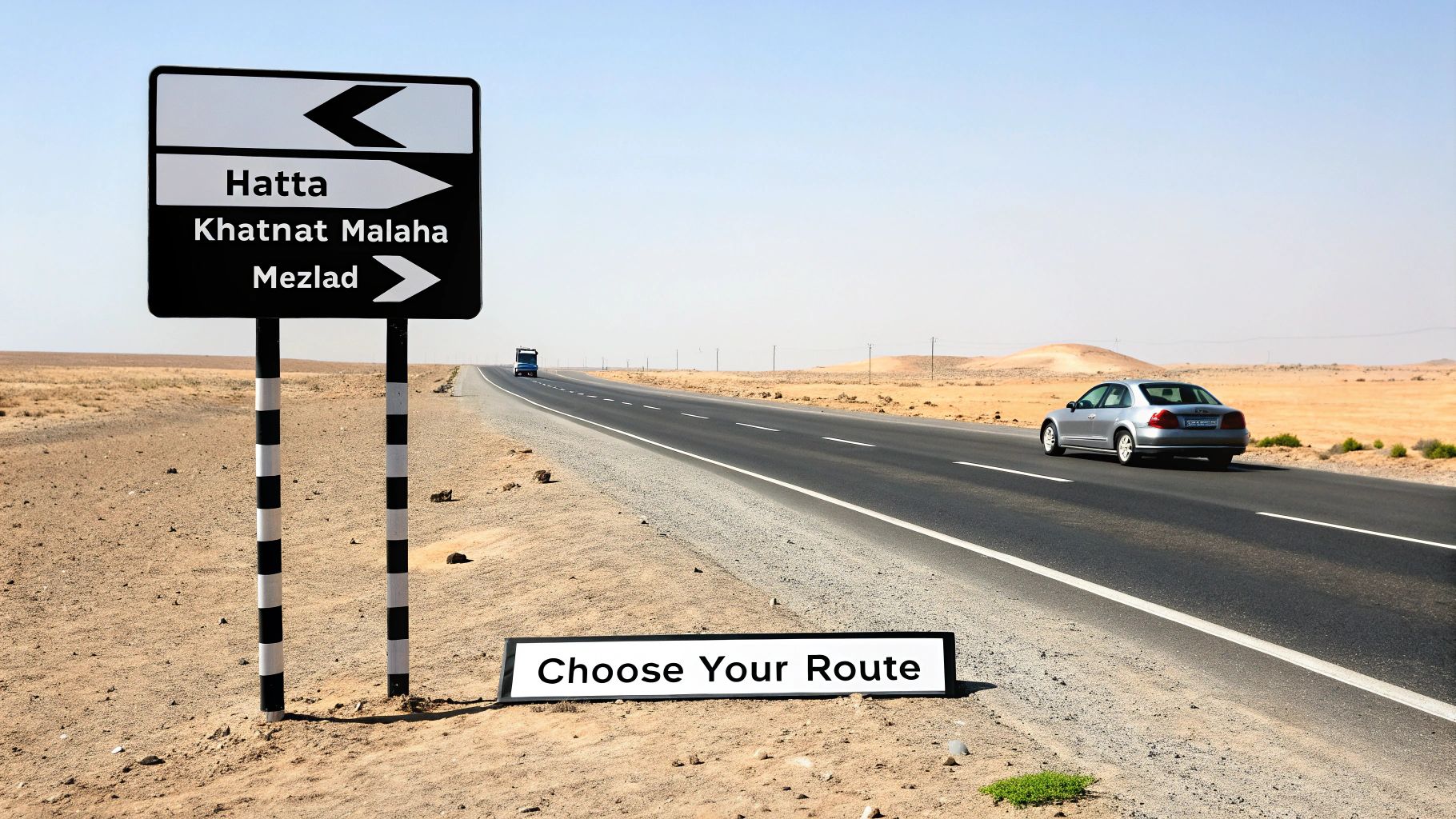
Not all roads to Oman are created equal. The route you pick can make a huge difference to your travel time and the whole vibe of your trip, so knowing which Dubai Oman border crossing to aim for is a crucial first step. Honestly, it all comes down to where in Oman you're actually heading.
For most people driving from Dubai to Muscat, the Hatta/Al Wajajah border is the go-to option. It's the most direct route and is properly set up to handle the constant flow of tourists and commercial traffic. Plus, the drive out there from Dubai winds through some stunning mountain scenery, which is a fantastic way to kick off your Omani adventure.
The flip side? Being the most popular crossing means it can get pretty packed, especially during public holidays and on weekends. You can expect a well-organised process, but you might be in for a bit of a wait.
Exploring Alternative Border Routes
If you're not making a beeline for Muscat or you just fancy taking a road less travelled, you've got a couple of great alternatives. Each one offers a totally different experience.
-
Khatmat Malaha Crossing (Kalba): This is your best bet if you're exploring the incredible Musandam Peninsula. It’s far quieter than Hatta and the crossing is usually much more relaxed, making it perfect for a quick weekend trip up to Khasab.
-
Mezyad/Hafeet Border (Al Ain): Tucked away further south near Al Ain, this crossing is ideal if your Omani road trip includes spots like Nizwa or the mighty Jebel Shams. It's generally less busy, which means a faster, more peaceful start to your journey into Oman's historic heartland.
Picking the right border isn't just about looking at a map; it's about matching the route to the kind of trip you have in mind. A scenic drive to the Musandam fjords requires a different starting point than a straightforward run to the capital city.
Making the Right Choice for Your Trip
So, which one should you choose? If it's your first time making the drive and Muscat is your main destination, just stick with the Hatta/Al Wajajah border. It’s the most common route for a reason—it’s simple and gets the job done.
For anyone planning to see the dramatic landscapes of Musandam, heading through the Khatmat Malaha crossing will save you a good chunk of time. And if you're an adventurer looking to dive deep into Oman's historical interior around Nizwa, the Mezyad border from Al Ain is an excellent launchpad.
To get a better feel for the journey, you can check out a detailed guide on the scenic drive to Oman from Dubai that covers these routes in more depth. A few minutes of planning your route will definitely pay off with a smoother, more enjoyable trip.
Getting Through the Border Crossing Smoothly
Pulling up to the border can feel a little chaotic, but it’s actually a pretty straightforward process once you know the drill. The most important thing to remember is that you have to officially exit the UAE first before you can even start the process of entering Oman.
Think of it as two separate checkpoints with a short drive in between.
First up is the UAE exit. Just follow the signs for cars and you'll be funnelled towards a building or a row of booths. This is where you’ll hand over your passport and the car's registration card (Mulkiya). An officer will check everything over and stamp you out of the country.
After getting your exit stamp, you’ll need to pay the UAE exit fee, which is usually around AED 35 per person. Having cash or a card ready makes this part quick and painless. Once that’s paid, you’re officially done with the UAE side.
Welcome to the Sultanate: Entering Oman
With the UAE checkpoint in your rearview mirror, you'll drive a short distance through a sort of "no man's land" until you reach the Omani border post. This is where you’ll handle your entry, and it has a few more steps, but it's nothing to worry about.
Your first stop on the Omani side is for your visa and car insurance. If you didn’t sort out Omani car insurance beforehand, you'll see small portacabins or offices where you can buy it on the spot. After that, make your way to the visa counter. Here, you'll need to:
- Present the passports for every single person in your car.
- Pay the visa fee. For most nationalities, a 10-day tourist visa costs OMR 5 (about AED 50).
- Hang on to the payment receipt they give you—it's important for the next step.
A Traveller's Tip: I always keep our family's passports, the Mulkiya, and any other documents clipped together in one folder. Handing the officer a neat little package is so much faster than digging around for everyone's papers, especially when the kids are getting restless in the back.
The Final Stretch: Omani Passport Control
Once you have that visa payment receipt, you’re almost there. Drive forward to the final set of booths for Omani passport control. An officer will take your passports and the receipt, give them a final check, and then stamp you into the country.
They might do a quick customs inspection of your car, but it’s usually just a brief look-over. Once they wave you through, that's it! You've successfully navigated the Dubai Oman border crossing.
The stunning landscapes of the Musandam Peninsula or the open roads to Muscat are now yours to discover. Well done on a smooth crossing
Understanding the Costs: Visas and Fees
Nobody likes surprise costs on a road trip. The good news is that budgeting for your drive across the Dubai-Oman border is pretty straightforward once you know what to expect. There are a few mandatory payments you'll need to make, so let's break them down to avoid any guesswork.
Your first stop for payment is on the UAE side. Before you officially get stamped out, everyone in the car needs to pay a UAE exit fee. It's a standard charge of about AED 35 per person. Think of it as your final little transaction before leaving the country—it's quick, but it's essential.
Once you’re through the UAE side and have crossed into Oman, your next task is sorting out the Omani tourist visa. For most nationalities, a 10-day single-entry visa is available right at the border. This will set you back OMR 5 (which is roughly AED 50) for each person. A good tip is to have some Omani Riyals on you, but most crossings accept credit cards too.
This simple flow chart gives you a quick visual of the two main payment points in the process.
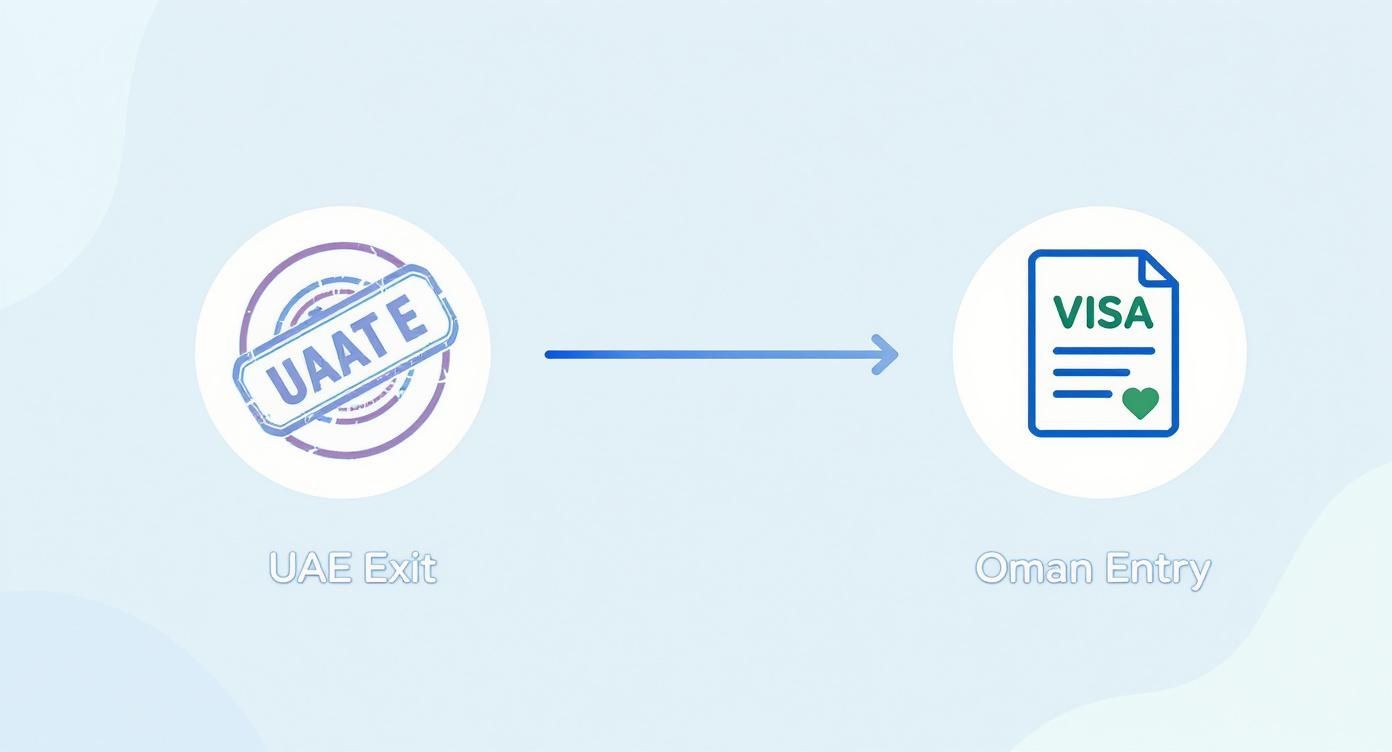
As you can see, it's a logical sequence: handle the UAE exit first, then move on to the Omani entry procedures.
Factoring in Car Insurance
The last big cost to keep on your radar is the mandatory Omani car insurance. You can buy this at the border, and you'll see little kiosks offering it. While it's convenient, I'll be honest—buying it on the spot is almost always pricier and can add a frustrating wait to your journey, especially on a busy day.
My best advice? Sort out your Omani insurance online through a provider in the UAE before you even leave Dubai. It genuinely saves you time, money, and a bit of a headache at the border.
To help you tally up the numbers, here’s a quick summary of what you can expect to pay.
Summary of Border Crossing Fees
This table gives you an estimated breakdown of the main fees you'll need to cover for your trip.
| Fee Type | Estimated Cost (AED/OMR) | Payable At | Notes |
|---|---|---|---|
| UAE Exit Fee | AED 35 per person | UAE border checkpoint | Mandatory for all travellers departing by land. |
| Omani Tourist Visa | OMR 5 per person | Omani border checkpoint | For a 10-day visa; cost may vary by nationality. |
| Omani Car Insurance | Varies (approx. AED 100+) | Omani border or online | Cheaper if purchased in advance in the UAE. |
Keep in mind these are estimates, but they should give you a solid baseline for planning your travel budget.
Insider Tips for a Faster Crossing
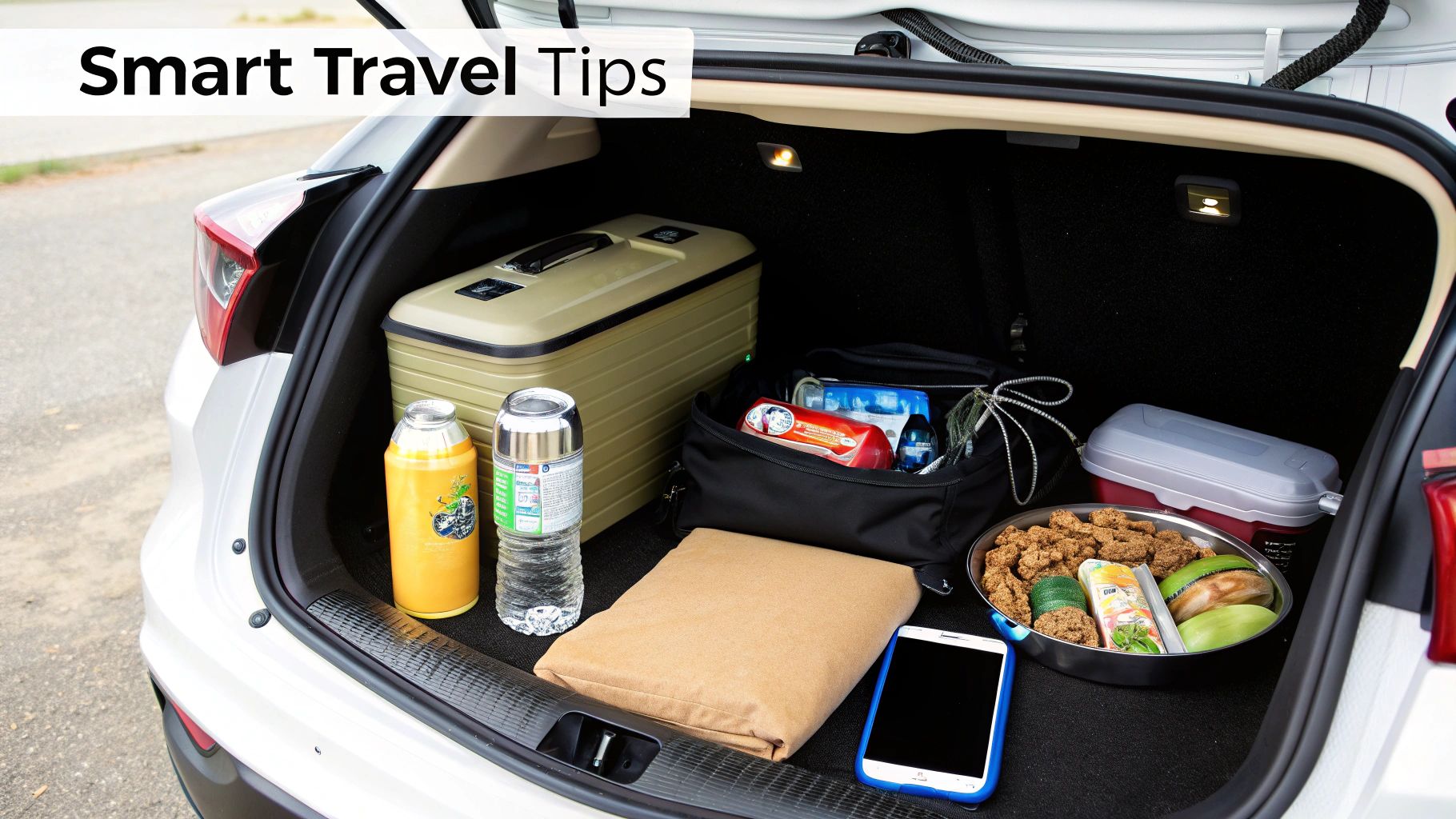
Knowing the official process for the Dubai Oman border is one thing, but a few simple preparations can be the difference between a smooth journey and a frustrating one. These are the small but vital tips that frequent travellers swear by.
Timing is everything. Public holiday weekends are notoriously busy, with queues that can stretch for hours. If you can, plan your crossing for a weekday morning to sail through with minimal delay. It’s also a smart move to arrive with a full tank of petrol, as fuel is significantly cheaper in the UAE than in Oman.
Smart Preparations Before You Go
Before you lose mobile service, download offline maps for Oman. This little trick ensures you can navigate confidently without scrambling for a data connection. Also, pack some snacks and plenty of water, especially if you’re travelling with family. Border waits can be unpredictable, and having refreshments on hand keeps everyone happy.
For an even smoother experience at the immigration counters, it can be a huge help to look into tips for effortless ICA approval before you leave, as this can sometimes speed up processing.
Pro Tip: Keep a small amount of Omani Riyals and UAE Dirhams on you in cash. While cards are widely accepted for major fees, having cash is a lifesaver for small purchases or in the rare case a card machine is down.
These small steps are simple yet incredibly effective. They’re the habits of seasoned border-crossers who have learned from experience how to make the journey as seamless as possible.
Of course, if you'd rather relax and just enjoy the scenery without the stress of driving and navigating border procedures, another great option is to hire a driver in Dubai. They can handle the entire journey for you, turning your trip into a completely hassle-free experience.
Common Dubai Oman Border Questions Answered
Alright, let's tackle some of the most frequent questions people ask before hitting the road. Getting these sorted out beforehand will make your drive from Dubai to Oman completely stress-free.
Can I Take a Rental Car to Oman?
Absolutely, but you can't just pick up the keys and go. This is something you need to plan in advance.
You must tell your rental company that you intend to drive to Oman. They will then prepare a No-Objection Certificate (NOC), which is the official document giving you permission to take their vehicle across an international border.
They’ll also sort out the required Omani insurance for the car, which usually comes with a small extra fee. Don't even think about skipping this step—border officials will turn you right back around if you show up without the correct paperwork.
What Is the Best Time of Year to Drive?
For the best experience, you’ll want to plan your road trip sometime between October and April. The weather during these months is just perfect—pleasantly cool and ideal for exploring Oman’s incredible wadis, mountains, and coastline without breaking a sweat.
Trying to make the drive in the peak of summer (May to September) is a different story. The intense heat can make the journey itself pretty uncomfortable and will definitely limit how much you can enjoy Oman's outdoor sights once you get there.
The golden rule for taking a rental car across the border is clear communication. Never assume it's okay. Always get explicit permission and the official NOC from your rental agency first.
Do I Need an International Driving Permit?
Most of the time, no. If your driving licence was issued in any GCC country, the UK, the US, or most European nations, you're typically good to go for a tourist trip with just your standard licence.
That said, rules can and do change. It's always a smart move to double-check the latest requirements with the Royal Oman Police or your home country's automobile association before you set off. A quick check can save a lot of hassle later.
Ready to experience the stunning drive to Oman in style? At Uptown Rent A Car, we offer a fleet of luxury vehicles and can help arrange everything you need for a seamless cross-border journey. Explore our collection and book your perfect road trip car at https://www.uptowndxb.com.