

The thrill of a road trip from Dubai to Oman doesn't start when you turn the key—it begins with getting your paperwork in order. A successful journey hinges on having the right documents, because one missing piece of paper can bring your entire adventure to a screeching halt right at the border.
This means double-checking everything from your passport and visa to your car's registration and special permits before you even think about heading out.
Your Essential Pre-Trip Checklist
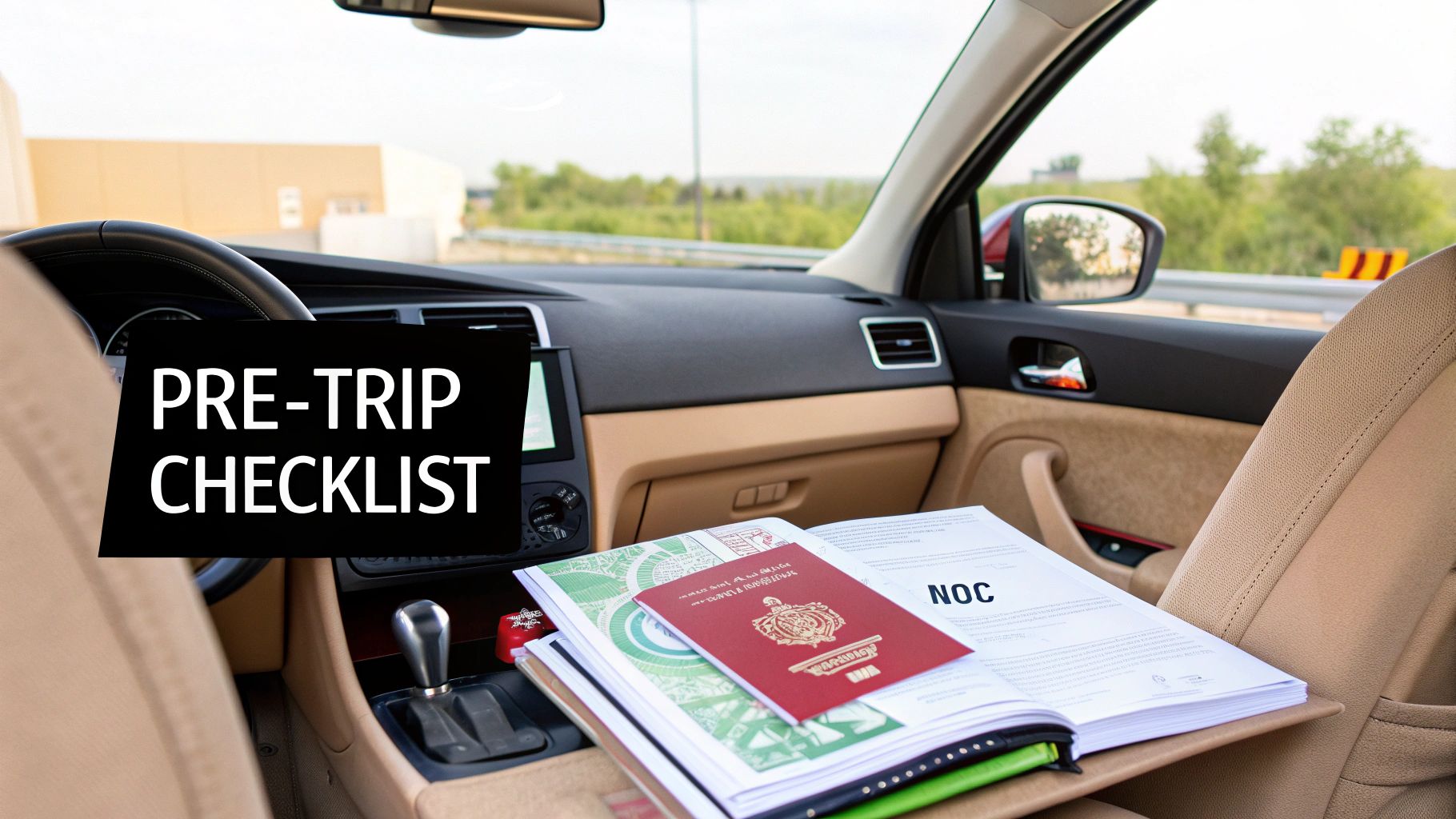
The difference between a breezy border crossing and a day of frustration often comes down to a few key documents. Get everything gathered beforehand, and you can turn a potentially stressful process into a simple formality, leaving you free to focus on the incredible journey ahead.
Let’s break down exactly what you and your vehicle will need.
Personal Documents for Drivers and Passengers
Every single person in the car needs their original passport with at least six months of validity left. Don't even think about bringing photocopies; they won't be accepted. On top of that, your UAE Residence Visa must also be valid for a minimum of three months.
Oman's visa rules can be a bit tricky and depend heavily on your nationality.
- GCC Nationals: If you're a citizen of a GCC country (Saudi Arabia, Kuwait, the UAE, Qatar, or Bahrain), you're in luck. You don't need a visa to enter Oman.
- GCC Residents: Many foreign nationals holding a valid GCC residence visa can get a visa on arrival or apply for an e-visa online. But here's a crucial tip: your eligibility can depend on the profession listed on your visa. Always check the very latest rules on the Royal Oman Police portal before you travel.
- International Tourists: Visitors from many countries can get a visa on arrival, but I strongly recommend applying for an e-visa in advance. It just makes the whole process at the border much faster.
The driver must have a valid UAE driving licence. While this is accepted in Oman, it’s a smart move to also carry an International Driving Permit (IDP), especially if your licence isn't in English or Arabic. You can learn more about the specific international driving permit requirements to see if this applies to you. https://www.uptowndxb.com/international-driving-permit-requirements/
Vehicle Paperwork You Cannot Forget
This is where a lot of road-trippers get stuck. The documents you'll need depend entirely on whether you're driving your own car or a rental.
First up, the vehicle's registration card, or 'Mulkiya'. You must have the original. Next is insurance. Your car has to be insured for driving in the Sultanate of Oman. Many UAE policies include Oman coverage as standard, but you absolutely have to confirm this. If it's not covered, you'll need to buy temporary Omani insurance at the border. This insurance certificate is often called the "Orange Card."
A classic mistake is assuming your comprehensive UAE car insurance automatically covers you in Oman. Dig into your policy and find the 'geographical area of cover' section. If it only says 'UAE', you have to buy separate Omani insurance before you cross.
To be fully prepared for anything the road throws at you, it's also a good idea to pack an emergency kit. You can follow a detailed emergency kit checklist to make sure you have everything from first-aid supplies to essential communication gear.
Required Documents at a Glance
To make things easier, here’s a quick table summarising the essential paperwork you'll need for a smooth border crossing.
| Document Type | For Personal Car | For Rental Car | For All Passengers |
|---|---|---|---|
| Passport (6+ months validity) | ✔️ | ||
| UAE Residence Visa (3+ months validity) | ✔️ | ||
| Oman Visa (or e-visa) | ✔️ | ||
| UAE Driving Licence | ✔️ | ✔️ | |
| International Driving Permit (IDP) | Recommended | Recommended | |
| Vehicle Registration (Mulkiya) | ✔️ | ✔️ | |
| Omani Car Insurance (Orange Card) | ✔️ | ✔️ | |
| No Objection Certificate (NOC) | ✔️ |
Having these documents organised and easily accessible will make your experience at the immigration and customs checkpoints much more efficient.
Special Requirements for Rental and Company Cars
Planning to drive a car that isn't registered in your name? That means you've got an extra layer of paperwork to deal with.
If you’re driving to Oman from Dubai in a rental, you absolutely must have a No Objection Certificate (NOC) from the rental company. This is an official letter giving you permission to take their vehicle across the border. You need to sort this out well in advance, and be aware that not all rental agencies even allow their cars to go to Oman.
It's a similar story if you're driving a company car. You'll need an NOC from your employer, printed on official company letterhead. The letter must clearly state the vehicle's details, the driver's name, and grant permission for the car to be taken to Oman for your specific travel dates. Trying to cross without the correct NOC is a guaranteed way to be turned away at the border.
Navigating Car Rentals and Insurance
Thinking of renting a car for your Oman road trip? It’s a great way to go, but it does add a couple of extra—and very important—steps to your prep list. The single most critical thing is to tell the rental company upfront that you plan on crossing the border.
Not every rental agency in Dubai allows their cars into Oman. The ones that do have a specific process you absolutely must follow. Trying to sneak a car across the border is a terrible idea; you’ll invalidate your insurance, risk huge fines, and get stopped dead in your tracks at the crossing. Always, always get written confirmation that you’re cleared for Oman.
Finding an Oman-Friendly Rental Agency
When you’re shopping around for a car, your very first question should be, "Do you allow your vehicles to be taken to Oman?" Most of the big international brands and quite a few local companies are fine with it, but it’s never something you can just assume.
If they say yes, they’ll prepare a crucial document for you: the No Objection Certificate (NOC). This is the official paper proving you have the owner's permission to take the vehicle out of the UAE, and you won’t get far without it.
Agencies that offer this service will charge an extra fee, usually between AED 300 to AED 500. This covers the admin for the NOC and a basic Omani insurance policy that’s valid for a few days. You can find plenty of agencies that handle this when searching for an online car rental in Dubai.
The Insurance Puzzle: Company vs. Border
You’ve got two main choices for sorting out your Omani car insurance, and one is definitely easier than the other.
- Arrange Through the Rental Company: This is the path I always recommend. The agency bundles the NOC and the Omani insurance (often called an 'Orange Card') together. It’s a simple, one-stop solution that guarantees all your paperwork is correct and approved before you even turn the key.
- Buy Insurance at the Border: You can do this, but it's a bit of a gamble, especially with a rental. You'd still need the NOC from the agency, but you’d buy the insurance yourself from a little kiosk at the border crossing. It might save you a few dirhams, but it introduces a lot of uncertainty. What if the kiosk is closed? What if there’s an issue with your NOC?
My two cents? Just get the insurance through the rental company. The potential savings at the border just aren't worth the stress or the risk of your trip getting derailed before it even really begins. Pay the extra fee for the peace of mind.
Getting the right coverage is a big piece of the puzzle for any road trip. To get a better handle on what you need, check out this detailed guide to auto and rental insurance.
Choosing the Right Vehicle for Oman's Terrain
What car should you get? That completely depends on where you’re going. A regular sedan will get you from Dubai to Muscat on pristine highways without any trouble, but the real soul of Oman is often found where the tarmac ends.
Think about your itinerary:
- City and Highway Driving: If you’re just hopping between Muscat, Sohar, and Nizwa on the main roads, a comfortable sedan or a compact SUV is perfect. You’ll save on fuel, and they’re a breeze to drive.
- Exploring Wadis and Mountains: Planning to tackle Jebel Shams (the Grand Canyon of Arabia) or the stunning, winding roads of Jebel Akhdar? A 4×4 is essential. It's not just a recommendation; police checkpoints on many mountain roads will physically turn you around if you’re in a sedan.
- Desert Adventures: If a trip into the Sharqiyah Sands (formerly Wahiba Sands) is on your bucket list, a powerful 4×4 is non-negotiable. Sand driving is a skill, and trying it in the wrong vehicle is a surefire way to get very, very stuck.
Picking the right car from the start makes all the difference. It ensures your driving to Oman from Dubai adventure is safe, fun, and doesn’t end with you staring up a mountain road you’re not allowed to drive on.
Choosing Your Route and Border Crossing
The drive from Dubai to Oman isn't just a commute; it's a huge part of the adventure itself. Picking the right path and, crucially, the right border crossing can be the difference between a smooth, scenic drive and a frustrating crawl, especially during peak travel times.
It really all boils down to where you're headed in Oman. Are you making a beeline for the dramatic, fjord-like coastline of Musandam, or is the bustling capital, Muscat, your final destination?
The Main Routes to Muscat and Musandam
Mapping your route beforehand is more than just a good idea—it’s essential for a stress-free trip. By far, the most popular journey is the drive from Dubai to Muscat. This route is a fantastic showcase of the region's changing landscape, taking you from the UAE's futuristic cityscapes right into Oman's rugged, awe-inspiring mountains.
The drive itself covers somewhere between 450 to 500 kilometres. Taking the most direct path, you're looking at about 450 km, which should take around five hours without factoring in the border stop. Most people favour the Hatta border for this trip as it's generally efficient, but wait times can be unpredictable. You can always find more in-depth guides on the drive from Dubai to Muscat if you want to dig into the details.
If you're heading to Musandam, Oman's stunning northern exclave, your route is shorter but requires a different crossing. You’ll drive up towards Ras Al Khaimah and use the Al Darah border post to get there.
Taking a rental car across the border involves a few preliminary steps you need to sort out before you even think about which road to take.
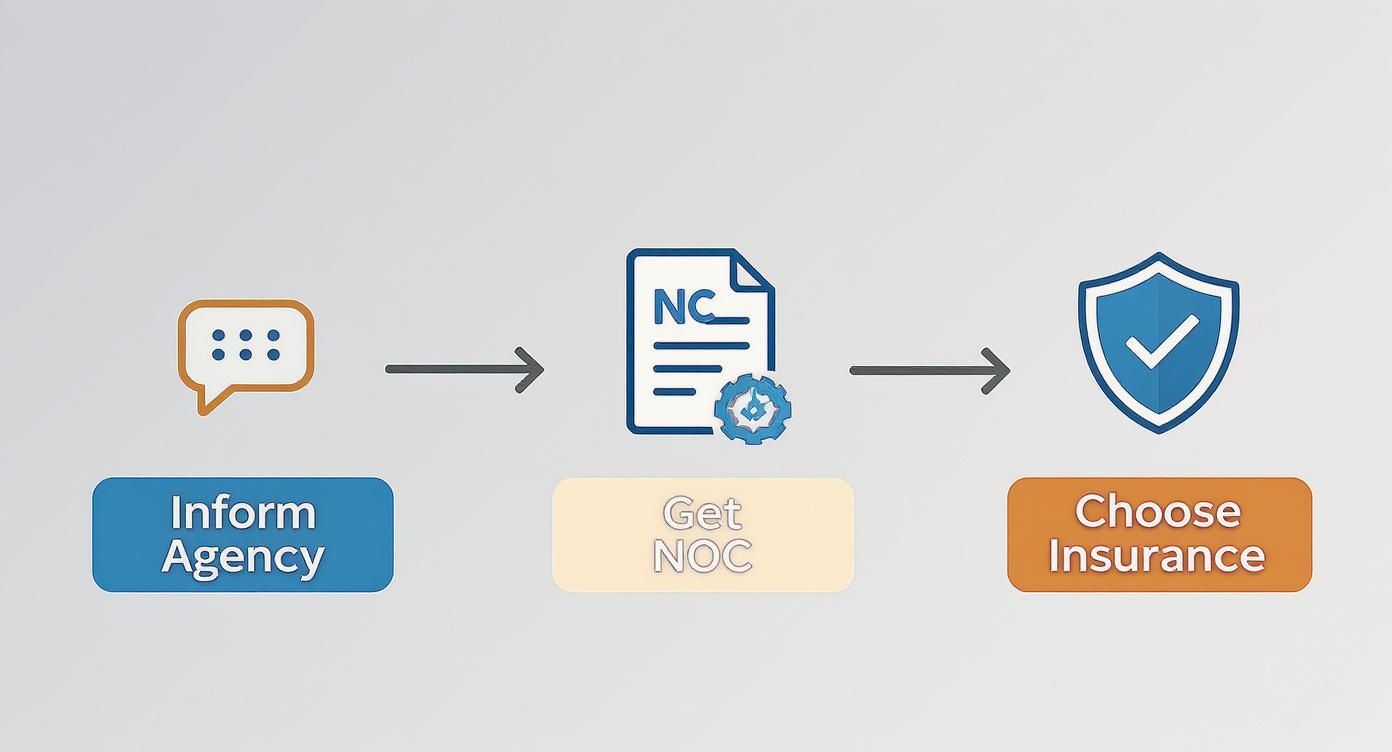
Getting these three things ticked off your list early on is crucial. It ensures all your car's paperwork is perfectly in order before you hit the road.
Comparing the Major Border Crossings
Your choice of border crossing is going to have a massive impact on your travel time. For anyone driving from Dubai towards Muscat, there are really two main options, and each has its own pros and cons.
Here's a quick comparison to help you decide which border crossing makes the most sense for your trip.
Dubai to Oman Border Crossing Comparison
| Border Crossing | Best For (Destination) | Average Wait Time | Key Considerations |
|---|---|---|---|
| Al Wajajah (Hatta Border) | Muscat & Northern Oman | 30-90 mins | Most direct route to Muscat. Modern facilities but gets extremely busy on weekends and public holidays. |
| Khatmat Malaha (Kalba Border) | Muscat & Coastal Route | 20-60 mins | A quieter alternative near Fujairah. Great for avoiding holiday crowds, but adds a bit more driving time to Muscat. |
Choosing the right crossing often comes down to timing. Leaving early on a weekday morning almost always guarantees a quicker crossing than trying your luck on a Thursday evening.
Insider Tip: Fire up Google Maps for live traffic updates just before you leave. A sudden jam at the Hatta border might make the slightly longer route via Khatmat Malaha a much faster overall option.
The Step-by-Step Border Process Demystified
Crossing an international border in your car can feel a bit intimidating the first time, but the UAE-Oman process is surprisingly straightforward. Think of it as a simple two-part procedure: you exit the UAE, then you enter Oman.
First, Exiting the UAE Side:
- Pay the Exit Fee: Your very first stop is a small booth where you'll pay the UAE exit fee. It’s about AED 35 per vehicle. Make sure you keep the receipt they give you.
- Passport Control: From there, you'll drive up to the immigration counters. Everyone in the car needs to have their original passport ready. An officer will check them and give you an exit stamp.
Once you’re cleared, you’ll drive a short distance through a "no man's land" area to the Omani side of the border.
Second, Entering the Oman Side:
- Visa and Immigration: This is the main event. You’ll present your passports and any visa documents you need. If you've sorted out an e-visa online, have the confirmation ready to show. The officer will process your entry and stamp your passports.
- Vehicle Customs and Insurance Check: The last step is all about the car. An officer will ask to see your Mulkiya (vehicle registration card), the NOC if you're in a rental, and your Omani insurance (the Orange Card). They might give the car a quick look-over before waving you on your way.
And just like that, you’re through! Welcome to Oman.
The whole process can be as quick as 30 minutes on a quiet weekday or drag on for over two hours during a major holiday. Strategic timing is everything. Crossing early on a Thursday morning, for instance, is a world away from the chaos of a Thursday evening when the weekend exodus begins.
What to Expect When Driving in Oman
Crossing the border from the UAE into Oman is like entering an entirely different driving world. Leave the meticulously straight, multi-lane highways of Dubai behind. You're about to encounter a road network that's far more varied and, at times, more demanding. It’s a change that requires your full attention, but honestly, this is where the real adventure kicks off.
The first thing you’ll probably notice is the vibe on the road. Omani drivers are generally more relaxed and patient than what you might be used to in Dubai. The pace feels slower, but don't let that fool you into thinking the rules are any less strict. In fact, Oman takes road safety extremely seriously, with a network of both fixed and mobile speed cameras that are notoriously effective.
Understanding the Rules of the Omani Road
The biggest adjustment you’ll need to make is your speed. Speed limits in Oman are typically lower than in the UAE, and more importantly, there is zero tolerance for exceeding them. If you’re used to the 20 km/h buffer on Dubai’s highways, forget about it. That concept simply doesn't exist here. If the sign says 100 km/h, that is the absolute maximum.
Here are the typical speed limits to keep in your head:
- Motorways: 120 km/h is the top speed on major highways, but watch out for sudden drops.
- Rural Roads: These are often limited to 100 km/h.
- Urban Areas: Inside towns and cities, the limit drops to between 60 km/h and 80 km/h.
Fines can be issued on the spot by police patrols or caught on camera, and they must be paid before you can leave the country. Playing the ignorant tourist won't get you very far, so sticking to the limit is your best bet.
The Dubai to Oman drive has become a classic road trip, fuelled by the UAE's tourism boom, which saw 18.72 million international visitors in 2024. Many travellers use Dubai as a launchpad to explore the region, taking advantage of the straightforward visa process and excellent roads connecting the two countries. You can read more about Dubai's role as a travel hub and its impressive tourism growth to understand why this route is more popular than ever.
Navigating Unique Driving Hazards
Beyond speed limits, driving in Oman comes with a unique set of challenges you won't find in Dubai. The terrain is dramatically different, featuring steep mountain passes, vast deserts, and stunningly winding coastal roads.
One of the most common—and surprising—hazards is wildlife. It's no joke: you have to be constantly on the lookout for wandering camels, goats, and donkeys. These animals frequently cross roads, even major highways, and hitting one can be catastrophic. Be extra vigilant around dusk and dawn when visibility is low.
A critical piece of advice for any road trip in Oman: respect the weather, especially the rain. A dry riverbed, known as a 'wadi', can become a raging torrent in minutes during a flash flood. Never, ever attempt to cross a flooded wadi; the currents are deceptive and incredibly powerful.
Practical Tips for a Smooth Journey
Your journey will be much more enjoyable with a few practical things sorted out. While the main highways are in excellent condition, fuel stations can become few and far between once you venture into more remote areas. It’s a good habit to fill up your tank whenever it drops below half.
Most petrol stations in Oman accept credit cards, but it's always smart to carry some Omani Rials (OMR) in cash. This is especially handy for small shops or at older stations in rural villages. Also, remember that fuel stations are full-service, and a small tip for the attendant is always a much-appreciated gesture.
Finally, while most road signs are in both Arabic and English, a reliable GPS app like Google Maps or Waze is non-negotiable. Make sure you download offline maps for Oman before your trip, as mobile signal can be patchy in the mountains. This simple step ensures you can navigate with confidence, even when you're way off the beaten path.
Top Road Trip Itinerary Ideas
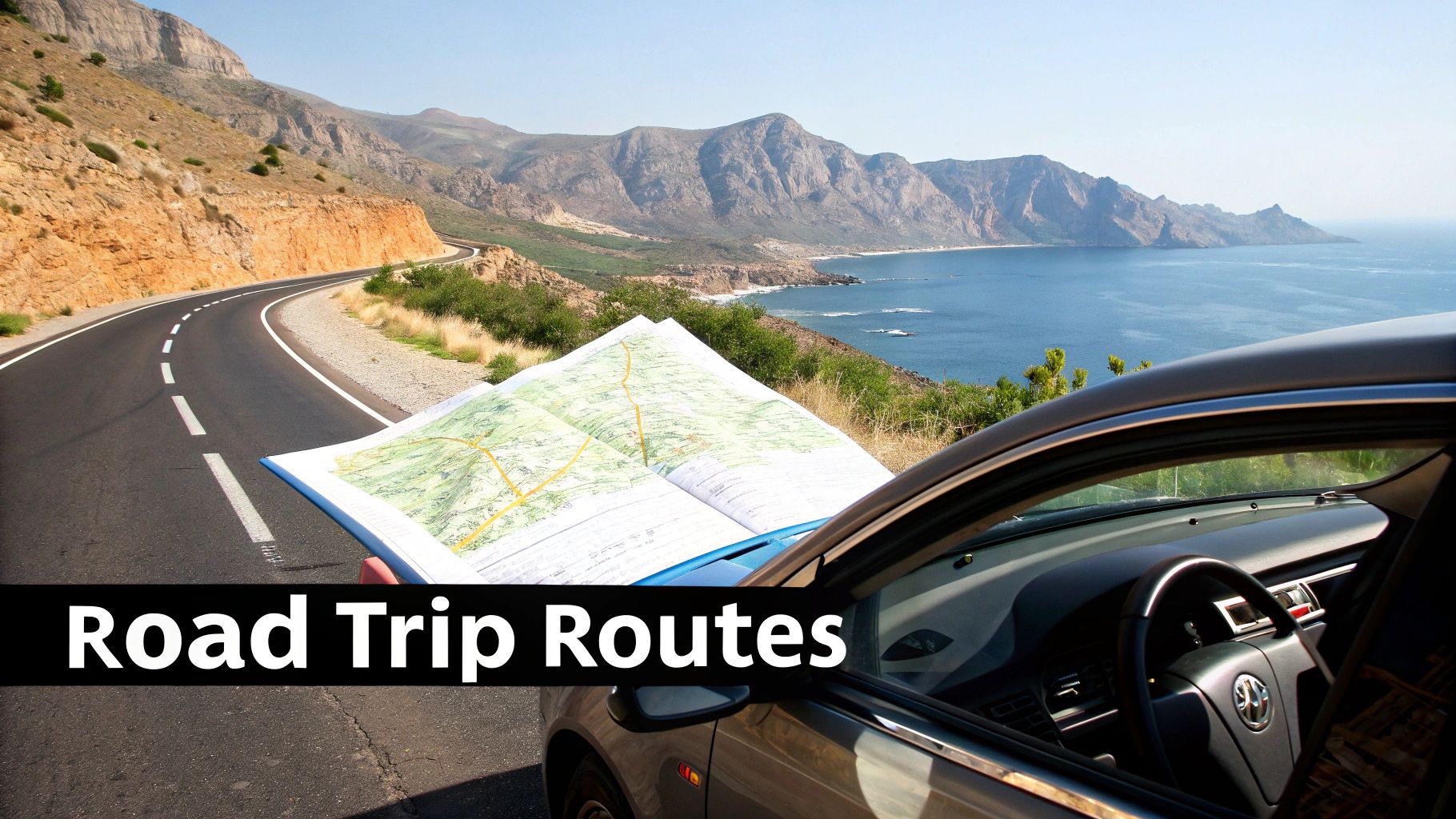
With all the paperwork sorted, this is where the fun really starts. Driving to Oman from Dubai means you're on your own schedule, free to chase the horizon and discover the country's raw, dramatic beauty. Whether you've got a long weekend or a whole week to play with, there’s an epic road trip waiting for you.
And you won't be alone. In 2024, UAE nationals were the number one Arab visitors to Oman, with a staggering 1.1 million Emiratis making the trip. It's a testament to how well Dubai’s urban buzz pairs with Oman's wild landscapes. You can read more about this trend over on Gulf Business.
The Quick Weekend Escape to Musandam
If you're short on time but craving a serious change of scenery, the Musandam Peninsula is your answer. It’s a stunning Omani exclave just a couple of hours from Dubai, often called the "Norway of Arabia" for its incredible fjords (known locally as khors) that carve deep into the mountains.
The drive itself is part of the adventure. You'll head north through Ras Al Khaimah to the Al Darah border post. Once you're across, get ready for a spectacular coastal road to Khasab, Musandam’s main town, full of hairpin turns and jaw-dropping sea views.
- Main Attraction: A traditional dhow cruise through Khor Sham is an absolute must. You'll glide past tiny, isolated villages, stare up at towering cliffs, and almost certainly be escorted by pods of playful dolphins.
- Where to Stay: Khasab has a good mix of hotels. For something a bit more memorable, pack a tent and camp out on one of the secluded beaches.
- Driving Time: Budget around 3-4 hours to get from Dubai to Khasab, which includes time for the border crossing.
The Classic Muscat and Coastal Route
Got a few more days? The drive down to Muscat is the perfect introduction to mainland Oman. This popular route takes you through the Hatta border crossing, where the landscape immediately shifts to the rugged, imposing Hajar Mountains.
Once you arrive in Muscat, take some time to explore the breathtaking Sultan Qaboos Grand Mosque, get lost in the bustling alleyways of the Mutrah Souq, and check out the historic Al Jalali and Al Mirani forts guarding the harbour. If you get the road trip bug, you might want to check out these other scenic drives near Dubai for your next weekend away: https://www.uptowndxb.com/scenic-drives-near-me/
This trip is all about balance. Spend a day or two soaking up Muscat’s culture, then use it as your home base for day trips to nearby wonders like the Bimmah Sinkhole—an incredible natural swimming hole—or the white sands of Fins Beach.
The Adventurous Interior Loop
For those with a 4×4 and at least four or five days to spare, an adventure into Oman's interior is unforgettable. This loop takes you from the coast deep into the country's historical and natural heartland.
Here’s a rough plan:
- Nizwa: Your first stop after Muscat should be Nizwa, Oman's former capital. Get a feel for the country's history at the massive Nizwa Fort and, if you're there on a Friday, don't miss the chaotic and fascinating goat market.
- Jebel Shams: From Nizwa, it's time to head for the mountains. Jebel Shams is Oman's highest peak, and the drive up is spectacular. Known as the "Grand Canyon of Arabia," the views from the edge are simply epic. The Balcony Walk is a world-class hike if you're feeling energetic.
- Sharqiyah Sands: Next, trade the mountain peaks for endless dunes by heading to the Sharqiyah Sands (you might still hear it called Wahiba Sands). Stay in a Bedouin-style desert camp, go dune bashing in your 4×4, and watch a sunset you'll never forget.
- Coastal Return: To complete the loop, drive from the desert out to the coastal city of Sur, which is famous for its traditional dhow-building yards. From there, it's a beautiful coastal drive back towards Muscat, with mandatory stops at Wadi Shab and Wadi Tiwi for a swim in their turquoise pools.
Got Questions About the Dubai to Oman Drive? We've Got Answers
Alright, let's wrap up with some of the questions I get asked all the time about this road trip. Nailing these little details before you go can be the difference between a smooth journey and a frustrating one. Think of this as your final checklist for everything from cash to local customs.
When’s the Best Time of Year to Go?
Without a doubt, the sweet spot for this drive is between October and April. The weather is just fantastic. It’s cool enough for hiking in the mountains, taking a dip in a wadi without freezing, and just generally being outside. The days are warm and pleasant, and the nights get cool – perfect if you’re thinking about camping.
Now, summer can be brutally hot, which makes long drives and daytime exploring pretty tough. But there’s one big exception: Salalah. Down in the south, the 'Khareef' (monsoon) season from June to August turns the whole region into a shockingly green, misty paradise. It’s a brilliant escape from the summer heat you’ll find everywhere else in the Gulf.
Do I Really Need an International Driving Permit?
This one trips a lot of people up. The short answer is: probably not. If you have a valid driving licence from a GCC country, the UK, the US, Canada, Australia, or most of Europe, you generally don't need an International Driving Permit (IDP) for a short trip to Oman. Your regular licence will do just fine.
That said, it’s always a good idea to check with your car rental company. Some have their own internal policies that might ask for an IDP anyway. I also strongly recommend getting one if your licence isn’t in English or Arabic. It’s just a simple, standardised translation that can save you a lot of hassle if you get pulled over.
Can I Get By With My UAE SIM Card and Dirhams?
You can, but you really shouldn't. Your UAE mobile provider will offer roaming in Oman, but the packages are usually eye-wateringly expensive. A much smarter and cheaper move is to grab a local Omani SIM card from a provider like Omantel or Ooredoo. You'll see their kiosks right after you clear the border crossing.
Same story with money. You'll need Omani Rials (OMR). While some bigger shops right near the border might take UAE Dirhams (AED) as a courtesy, you’ll get a terrible exchange rate. The easiest thing to do is either swap some cash before you leave Dubai or just pull OMR from an ATM as soon as you cross into Oman.
Here's a pro tip: Don't be the traveller who relies on their UAE plan and currency. Take ten minutes after crossing the border to get a local SIM and some cash. It’s a tiny bit of effort that will genuinely save you a ton of money and headaches.
What Should I Know About Omani Culture and Driving Etiquette?
Oman is an incredibly friendly and welcoming place, but it’s also more traditional and conservative than Dubai. A little respect for local customs goes a long way and makes for a much better trip. When you’re walking through towns, villages, or visiting any religious sites, dress modestly – that means covering your shoulders and knees.
On the road, you’ll notice the driving style is a lot more chilled out than what you’re used to in Dubai. Be patient, give way, and don't lean on your horn. It’s also good practice to keep your music at a reasonable volume, especially when you’re driving through quiet neighbourhoods or near mosques. And a simple one that people often forget: always ask for permission before taking photos of people.
Ready to find the perfect ride for your Omani adventure? At Uptown Rent A Car, we have a premium fleet of luxury cars and tough 4x4s that are built for this journey. Browse our selection and book your dream car online today.