
Forget any stress you might have about navigating Old Dubai’s charming but often confusing streets. This guide is your key to unlocking the area with the best Bur Dubai maps, turning what could be a tricky drive into a seamless adventure. We've put together curated routes and insider tips designed specifically for exploring this historic district in a luxury car.
Your Essential Guide to Exploring Old Dubai
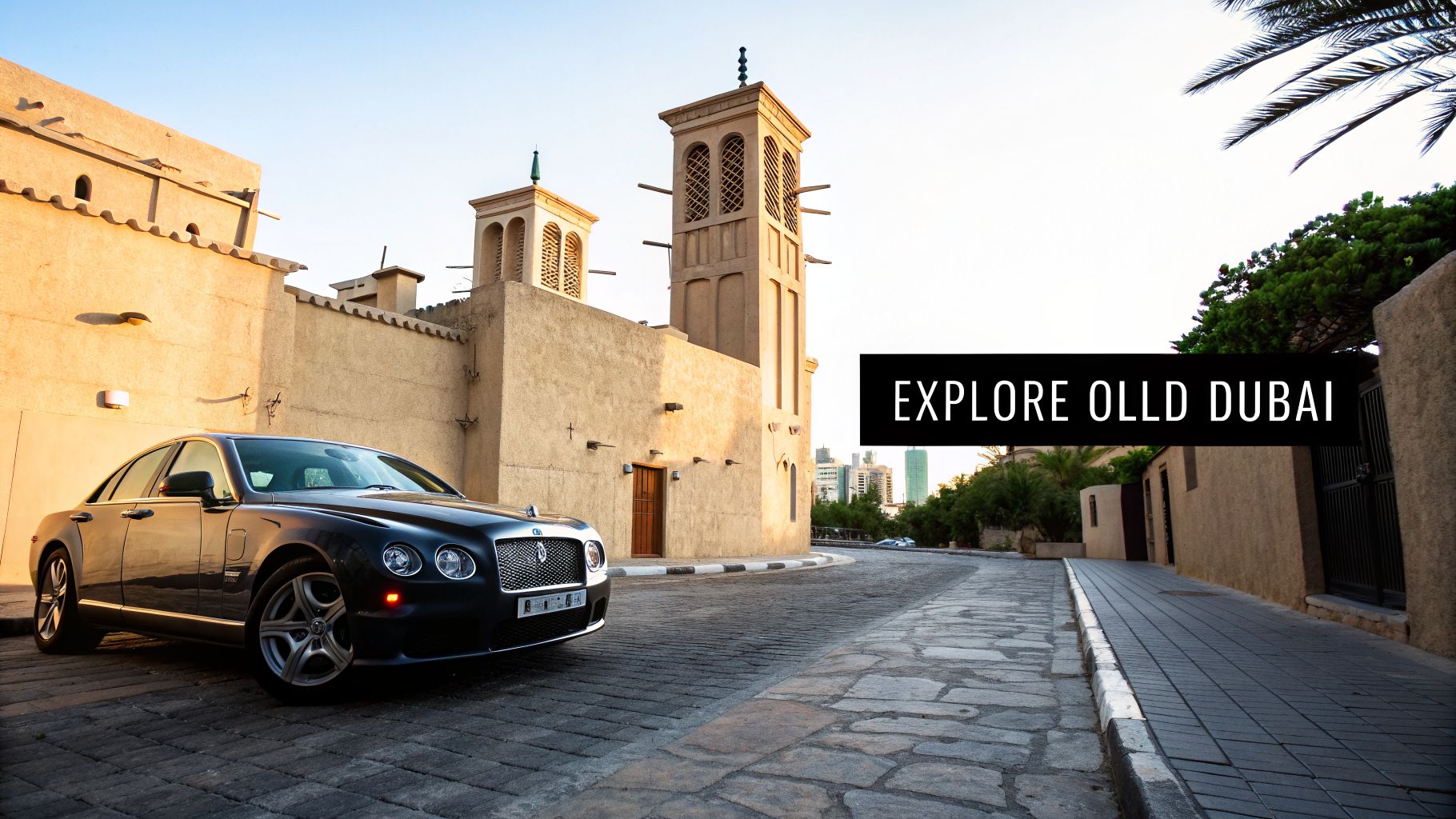
Exploring Bur Dubai feels like stepping into another era, but its labyrinthine alleyways can intimidate even the most experienced driver. This guide transforms that challenge into an exciting opportunity for discovery. We'll show you exactly how to use different Bur Dubai maps to weave through historic lanes, bustling souks, and the peaceful creekside with total confidence.
Think of us as your personal concierge for Old Dubai. Our goal is to make sure your journey in a premium vehicle is as smooth and enjoyable as the car itself. A reliable map isn't just about getting from A to B; it's your most important tool for unlocking the district's secrets.
Why a Map is Crucial for Bur Dubai
Unlike the wide, grid-like avenues of modern Dubai, Bur Dubai is a district of narrow passages, busy one-way streets, and hidden gems that standard navigation often misses. Having the right map in your hands is essential. It lets you:
- Plan Ahead: Pinpoint convenient parking spots before you arrive, which is a game-changer when you’re driving a high-end rental.
- Maximise Your Time: Create smart, efficient routes that cluster attractions together, so you aren't wasting time backtracking through traffic.
- Discover More: Uncover those hidden courtyards, authentic local eateries, and perfect photo opportunities that most visitors drive right past.
This is about more than just navigation; it’s your roadmap to discovering the soul of Dubai with style and ease. By using our specialised maps and tips, you ensure every moment is memorable, from the second you find that perfect parking spot to your final drive out.
We’ll set the stage by diving into Bur Dubai’s unique blend of history and modernity. The area isn't just one destination but a collection of culturally rich neighbourhoods, each with its own character. If you're keen to learn more about the city's roots, you can discover more about the numerous historic sites in Dubai in our dedicated guide.
Now, let's get you equipped to experience it all.
Decoding Bur Dubai’s Key Neighbourhood Zones
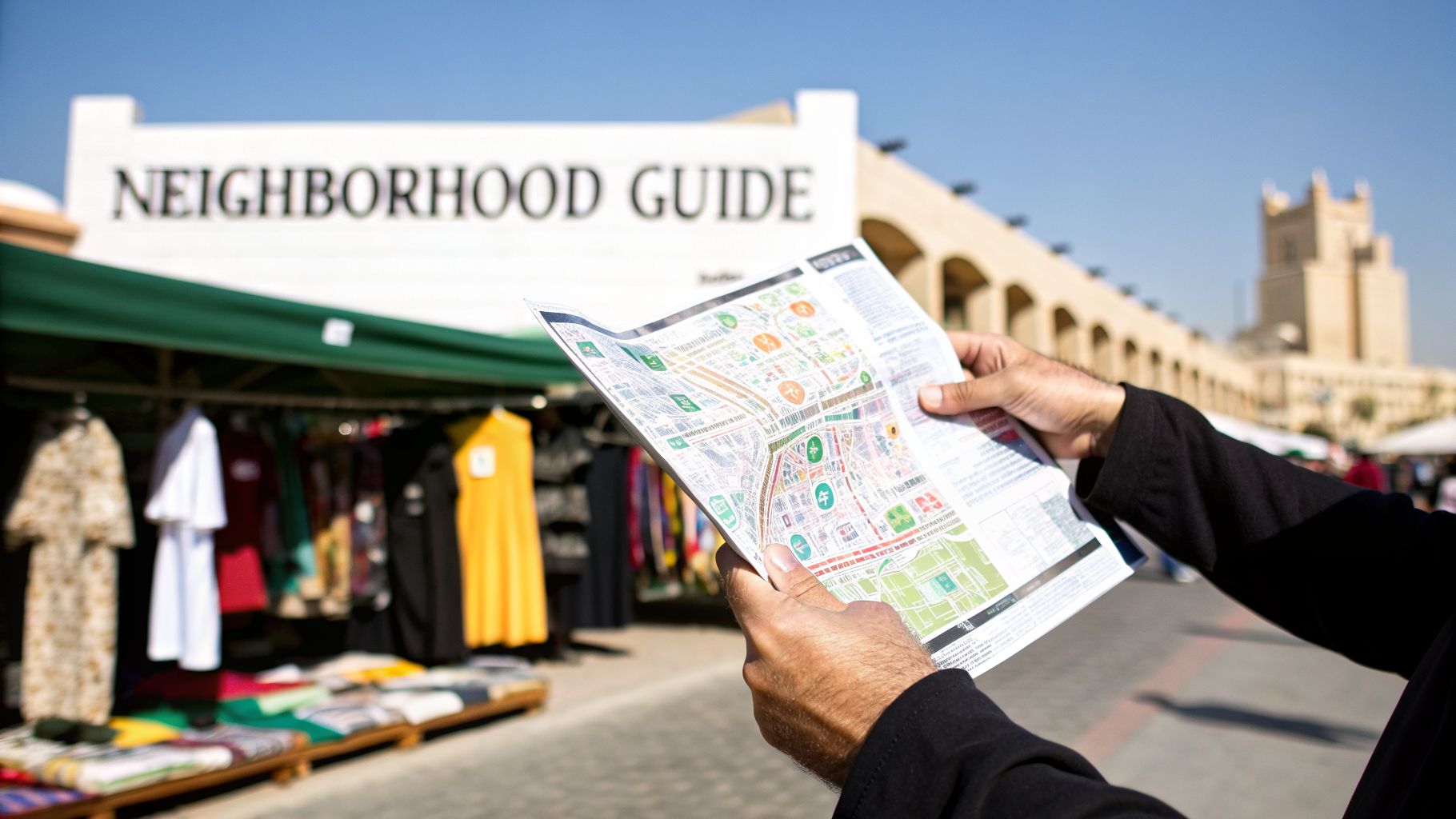
Before you dive in, it helps to know that Bur Dubai isn't just one place. Think of it more like a collection of distinct neighbourhoods, each with its own vibe and story. Looking at Bur Dubai maps without this context is like trying to read a great book without knowing who the main characters are.
We'll break down the district into its essential zones. This way, you can plan your visit around what you truly want to experience, whether that’s a deep dive into culture, some vibrant market shopping, or just a relaxing walk by the water.
Al Fahidi Historical Neighbourhood
Step into Al Fahidi, and it feels like you've walked onto a movie set of Old Dubai. The modern city melts away as you wander its narrow, winding lanes, replaced by a sense of calm and history. This is the absolute cultural heart of the district and a non-negotiable stop for anyone curious about where Dubai began.
Al Fahidi, once known as Al Bastakiya, dates all the way back to the 19th century and played a huge part in Dubai's journey from a humble trading post to the global city it is today. You’ll see gorgeous coral-and-clay houses topped with iconic wind towers, which were the original form of air conditioning. Many of these beautifully restored buildings now host art galleries, charming cafes, and the popular Coffee Museum. To get the full picture, you can discover more about Bur Dubai's rich history and development and see just how far it's come.
- What to See: Don't miss the Dubai Museum (inside Al Fahidi Fort), the incredibly photogenic Arabian Tea House, XVA Art Hotel & Gallery, and the Sheikh Mohammed Centre for Cultural Understanding.
- Best Time to Visit: Aim for late afternoon or early evening. The brutal midday heat dies down, and the golden hour light makes the traditional architecture glow. Plus, many shops and galleries take a break in the middle of the day.
Meena Bazaar and the Textile Souk
If Al Fahidi is the quiet, historic soul of Bur Dubai, then Meena Bazaar is its loud, chaotic, and colourful heartbeat. Just a short walk from the historical district, this area hits all your senses at once with a kaleidoscope of sights, sounds, and smells. It’s officially the Bur Dubai Souk, but everyone calls it Meena Bazaar because it feels so much like the famous market in Delhi.
This is a shopper's dream. The Textile Souk, a covered arcade near the creek, is an absolute treasure trove of brilliant fabrics. You'll find shops overflowing with everything from soft silks and intricate pashminas to dazzlingly embroidered kaftans.
Getting around here is all about embracing the organised chaos. A good map helps you find the main entrances and where to park, but honestly, the best stuff is found when you just let yourself get a little lost in its buzzing alleyways.
Bur Dubai Creekside
The Creekside is the lifeblood of the district, a beautiful waterfront promenade that gives you a real feel for Dubai's seafaring past. It's the perfect spot for a slow-paced stroll, watching the traditional wooden dhows and little abra boats crisscross the historic waterway.
You absolutely have to take an abra ride. For just one dirham, these little wooden water taxis will zip you across the creek to Deira, where you can explore the Spice and Gold Souks. The short trip gives you an incredible view of Old and New Dubai clashing, and it's especially magical around sunset. Make sure you pinpoint the Bur Dubai Abra Station on your map before you set off.
Interactive and Printable Bur Dubai Maps for Every Traveler
Trying to find your way through the historic, winding streets of Old Dubai is an adventure in itself. But let's be honest, you'll want the right map in your pocket to avoid getting lost and make the most of your time. Not all maps are the same, and what works for a drive across the city won't necessarily help you navigate the bustling souks on foot.
We're big believers in a hybrid approach—lean on technology when it’s a lifesaver, but always have a reliable backup for when it isn't. So, whether you’re a tech-savvy traveller or someone who prefers a classic paper map, we have the perfect tool for your journey.
Your Go-To Digital Map
For planning on the fly, nothing beats an interactive map. Think of it as your personal guide, ready to adapt to whatever you have planned for the day. The embedded Google Maps tool below is more than just a map; we’ve pre-loaded it with the essentials: museums, souks, key parking spots, and metro stations.
You can even use its layers to cut through the noise. Just want to see the cultural sites? A single click hides the restaurants and transport hubs, turning a busy map into your own custom itinerary planner.
For the Traditional Explorer: A Printable PDF Map
There's a certain old-school charm to a physical map, isn't there? It never loses battery, needs zero data connection, and lets you see the whole district at a glance—all without a single notification to distract you from the moment.
That’s why we’ve designed a high-resolution, downloadable PDF map of Bur Dubai. It’s the perfect digital backup to save on your phone for offline access, or you can print it out for a more traditional navigation experience.
- Download Our Printable Bur Dubai Map (PDF) – Link coming soon
Having both an interactive and a printable map gives you the best of both worlds. You can use the digital version for driving directions to a major car park and then switch to the printable version for a stress-free walking tour through the souks and alleys.
Comparing Your Map Options
So, which one should you use? The best map really depends on what you're doing. Driving your luxury rental from the hotel absolutely calls for real-time traffic data from a digital app. But once you’re exploring the Al Fahidi Historical Neighbourhood on foot, a simple, focused walking map is far more practical. The table below breaks down the key differences to help you decide.
Digital vs Printable Bur Dubai Maps
| Feature | Interactive Digital Map (e.g., Google Maps) | Printable PDF Map |
|---|---|---|
| Real-Time Updates | Yes, provides live traffic, closures, and directions. | No, it's a static snapshot of the area. |
| Interactivity | High. You can zoom, search, and filter layers. | Low. You can mark it up with a pen. |
| Battery/Data Needs | Requires a charged device and often a data connection. | None. Works perfectly without battery or internet. |
| Best for Driving | Excellent. Live navigation is essential for city driving. | Not recommended. Lacks real-time traffic updates. |
| Best for Walking | Good, but can be distracting with constant updates. | Excellent. Provides a clear, wide view for exploring. |
| Portability | Requires carrying and checking your phone. | Can be folded into a pocket or saved offline. |
Ultimately, having both a digital and a printable option ensures you’re never caught out. By using a multi-format approach, you’ll always have the right Bur Dubai maps for every part of your journey, from the highway to the historic alleyways.
Driving Your Luxury Rental with the Best Routes and Parking
Getting behind the wheel of a sleek, premium vehicle and cruising through Bur Dubai’s historic streets should be an absolute pleasure, not a stressful puzzle. Making that happen is all about smart navigation. A good Bur Dubai maps tool is your best friend here, helping you bypass the inevitable traffic snarls and pinpointing the best places to park, ensuring your drive is as smooth as your rental.
Let's talk strategy for getting in and out of the district. You'll want to avoid the peak congestion that notoriously builds up on the main arteries like Sheikh Zayed Road and Al Khail Road. For example, if you're coming from the south, taking Al Ain-Dubai Road (E66) and then switching over to Oud Metha Road is often a much clearer path. It’s a savvier move than getting tangled in the complex interchanges closer to the creek during rush hour.
Recommended Scenic Driving Route
For a quick, scenic tour that gives you a real feel for the area without getting stuck in the pedestrian-heavy zones, here’s a route I always suggest.
- Start on Khalid Bin Al Waleed Road. Think of this as the main spine of Bur Dubai. It’s a major road that offers a surprisingly smooth driving experience.
- Turn onto Al Fahidi Street. Take it slow here. You’ll be driving right past the edge of the Al Fahidi Historical Neighbourhood, giving you a fantastic drive-by view of the classic architecture and iconic wind towers.
- Loop Towards the Creek. Circle back using Al Souk Al Kabir Street. This route offers glimpses of the bustling street life and brings you close to the Creekside, where you can often spot traditional dhows gliding on the water.
- View Al Fahidi Fort. As you cruise these streets, you'll pass the famous Al Fahidi Fort, which houses the Dubai Museum. It's the perfect landmark to spot from your car before you find a spot to park and start exploring on foot.
Locating the Best Parking for Your Vehicle
Now for the most critical part of your driving plan: parking. Let's be honest, the narrow, winding lanes near the souks are no place for a luxury vehicle. Instead, you need to focus your map search on the larger, more accessible car parks.
For those renting a luxury car, one of the most intimate ways to connect with the area's rich history is to glide through its wider streets in a comfortable sedan. You can park near the Textile Souk, where a lively bargaining culture has flourished since the 1800s, and truly soak in the atmosphere of old Dubai. This area's dense fabric of souks and mosques, including the stunning blue-tiled Iranian Mosque, is a magnet for a large portion of the city's Indian expatriates, partly thanks to the nearby Hindu temple complex founded in the 1960s. It’s a remarkable cultural blend in a district that, incredibly, still retains about 5% of its original buildings. To dive deeper into this fascinating history, you can explore the cultural tapestry of Bur Dubai.
Here are my top recommendations for hassle-free parking:
- Al Ghubaiba Multi-Storey Car Park: Situated right near the Al Ghubaiba Metro Station, this is one of the largest and most convenient options you'll find. It offers plenty of space, making it ideal for larger, high-end cars.
- Al Seef Underground Parking: Al Seef might be a modern development, but its huge underground parking area is immaculate, secure, and just a short, pleasant walk from the historic neighbourhoods.
- RTA Street Parking (Green Zones): Keep an eye out for the green-topped parking meters on your map. These zones, which you'll find along main roads like Khalid Bin Al Waleed Road, are numerous but remember to pay promptly via the RTA app or at the meter. For a full breakdown, check out our complete guide on the Dubai parking zones map.
Pro Tip: When you're driving a luxury vehicle, always choose a larger, designated car park. It completely removes the stress of squeezing into tight spots and lets you start your walking tour of Bur Dubai feeling relaxed and ready to explore.
The Ultimate Bur Dubai Walking Tour Map
Let's be honest, to really feel the pulse of Bur Dubai, you have to get out of the car. The best way to explore its lively, winding streets is on foot, and that’s exactly what this walking tour is designed for. Think of it as your personal guide to confidently parking your ride and diving straight into Dubai's historic core, all without a single worry about getting lost.
We've laid out a route that hits all the best spots, starting from an easy-to-find car park so your adventure begins the moment you step out.
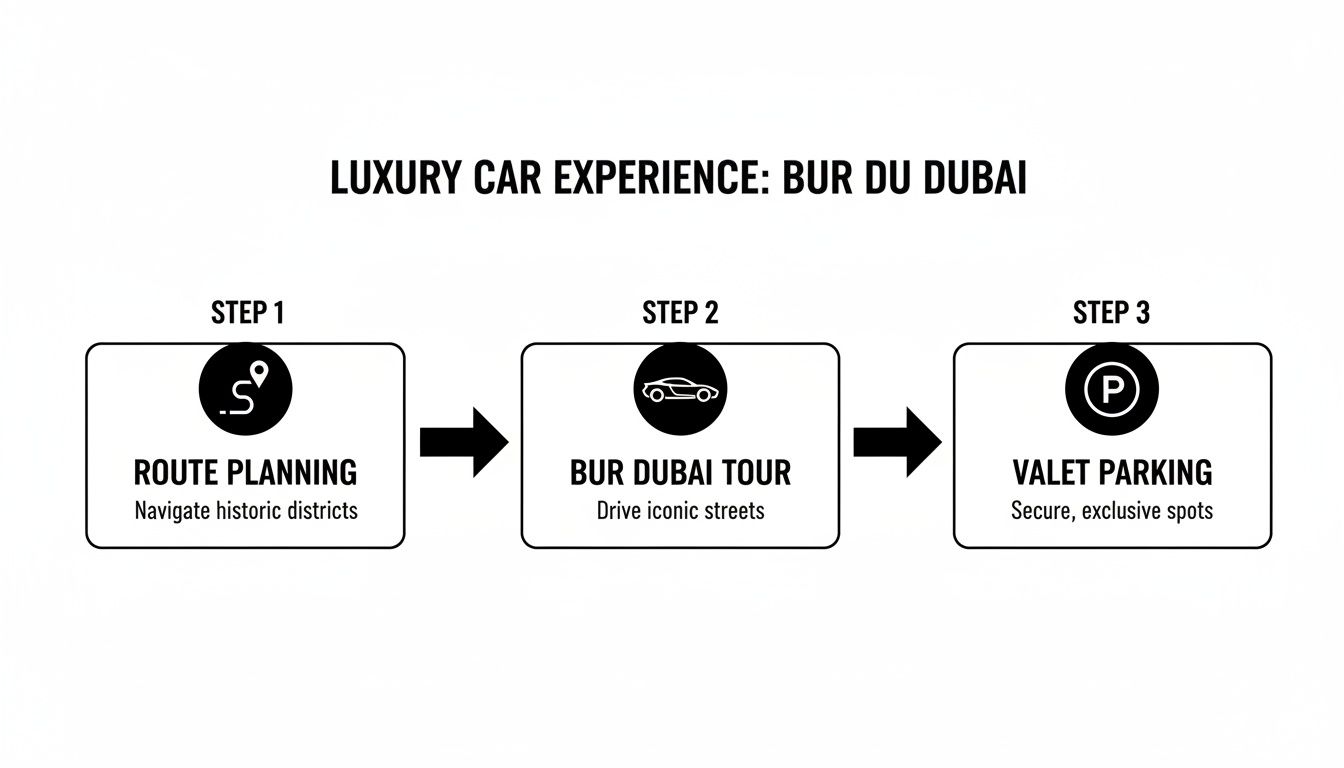
This simple process shows just how smoothly you can blend a premium driving experience with a memorable walking tour. A great day out in Bur Dubai always starts with a smart plan for your car.
Your Step-by-Step Walking Route
Our route is a simple loop, which means no frustrating backtracking. We kick things off from a designated car park, so you can begin exploring without any stress. From there, your Bur Dubai maps journey takes you through some of the most iconic locations in the city, each one telling a piece of Dubai's story.
These aren't just random spots on a map; they are the very pillars of Dubai's heritage. Take Al Fahidi Fort, for instance. Originally built way back in 1787, it became the Dubai Museum in 1971 and has welcomed over 1.5 million visitors. Then you have the walking paths of the Al Shindagha Peninsula, which attract roughly 400,000 people every year who come to trace the footsteps of Dubai's founding families.
Your walking tour will take you through these essential stops:
- The Alleys of Al Fahidi: Get lost in the charm of the narrow, shaded laneways of the Al Fahidi Historical Neighbourhood.
- Dubai Museum: Just a short stroll away is the city’s oldest standing building, offering a fascinating look into its past.
- Textile Souk: Prepare for a sensory overload as you dive into the vibrant colours and fabrics of this classic marketplace.
- Abra Station: End your walk at the creek, where a traditional wooden boat is waiting to give you an unforgettable view from the water.
Key Highlights and Timings
This isn't just about getting from point A to B; it's about soaking it all in. We’ve scouted out the best photo opportunities and pointed you toward hidden courtyards where you can find a quiet café for a quick break. If you're looking for a wider view of the city, our general tourist map of Dubai city is another great resource.
Plan for about 90-120 minutes of walking to complete the loop. This doesn't account for time spent in the museum or haggling in the souks! To dodge the peak afternoon heat, we strongly suggest starting your tour either early in the morning (around 9 AM) or later in the afternoon (after 4 PM).
Your Questions Answered: Navigating Bur Dubai
Getting around the historic and lively streets of Bur Dubai is an adventure in itself. To help you plan your visit with absolute confidence, we’ve put together some expert advice on the most common questions we get about using Bur Dubai maps to explore this incredible district.
The Best Way to Use a Map to Explore Bur Dubai
The secret here is a two-pronged approach that blends digital and physical maps. Think of it like this: your car needs one kind of guide, and your feet need another.
First things first, use a real-time navigation app like Google Maps for the driving part. Your only goal should be to get to one of the large, easy-to-access car parks we’ve highlighted, such as those at Al Ghubaiba or Al Seef. This part of the plan is all about avoiding the narrow, often congested inner streets.
Once you’ve parked the car, it's time to switch to a walking map. This could be our printable PDF saved on your phone for offline access, or even a route you've pre-plotted in your app. This combination lets you truly enjoy the pedestrian-friendly alleyways of Al Fahidi and the souks without the stress of trying to squeeze a car through them.
By marking your points of interest beforehand—the Dubai Museum, the Textile Souk, an abra station—you’re creating a flexible plan that lets you explore at your own pace. You get the best of both worlds: high-tech convenience for driving and a simple, focused guide for when you're on foot.
What to Know About Driving in Bur Dubai
Yes, driving in Bur Dubai is a world away from cruising down Sheikh Zayed Road. The area’s unique, historic layout demands a bit more attention from behind the wheel.
- Roads are Narrow: Many streets are much tighter than in modern parts of Dubai, and one-way systems are everywhere. Always double-check your map for the direction of traffic.
- Pedestrians are Everywhere: Be extra vigilant for people crossing the street, especially near the buzzing entrances to the souks and markets.
- Parking is the Main Challenge: While you won't have to worry about Salik tolls in the heart of Bur Dubai, finding a good parking spot is the biggest hurdle. Street parking can be incredibly tight.
A piece of friendly advice: we strongly recommend not even attempting to find street parking for a premium vehicle. Use your map to head straight for one of the larger, designated car parks. This one simple step will save you from the biggest potential frustration of visiting the area.
Finally, remember that traffic gets heavy during peak rush hours, usually from 7 AM to 9 AM and 5 PM to 7 PM, and also gets busy on weekends. If you can, plan your drive outside these times for a much smoother journey.
How to Create an Efficient Route with a Bur Dubai Map
Building a smart route is all about clustering your attractions. Think of it as creating mini-tours within a larger area to cut down on backtracking and save your energy.
A perfect example of an efficient route would look something like this:
- Park Near Al Fahidi: Use a car park close to the historical district as your home base.
- Explore the Historical Core: From your parking spot, you can easily walk to the Al Fahidi Historical Neighbourhood, the Dubai Museum, and the Grand Mosque, as they're all packed in close to one another.
- Walk to the Souk and Creek: It’s then just a short, very pleasant stroll over to the Textile Souk and the Bur Dubai Abra Station.
This creates a natural loop, letting you experience the cultural heart, the bustling market, and the scenic creekside in one seamless trip. Using your map's layers to see these zones makes planning your day remarkably easy.
Ready to explore Bur Dubai's historic charm in a vehicle that matches its elegance? At Uptown Rent A Car, we provide a seamless luxury rental experience, allowing you to book your preferred car online and start your adventure in style. Discover our fleet and book your perfect drive today at https://www.uptowndxb.com.