
Thinking about "Abu Dhabi Salik free timing"? Let's clear that up. The short answer is that Abu Dhabi's toll system, known as DARB, isn't active 24/7. Tolls only kick in during weekday peak hours, which is great news because it means driving is completely free during off-peak times, all day on Fridays, and on public holidays.
Decoding Abu Dhabi Tolls and Free Timings
Many drivers, especially those used to Dubai's system, automatically think "Salik" when they hear about tolls in Abu Dhabi. But it’s important to know that the capital runs its own distinct system called DARB. Getting this difference is the first step to avoiding surprise charges and planning your drives smartly.
Unlike a system that charges you every time you pass through a gate, DARB is specifically designed to ease traffic congestion during the busiest parts of the day.
This time-based approach is a real win for drivers. It means for the vast majority of the day and the entire weekend, you can cross the main bridges without paying a single dirham. The system zeroes in on the morning and evening rush hours from Saturday to Thursday.
The DARB Toll Schedule
To keep things simple, the toll system works on a straightforward peak-hour schedule. Here’s how it breaks down:
- Morning Peak Hours: 7:00 AM to 9:00 AM (Saturday to Thursday)
- Evening Peak Hours: 5:00 PM to 7:00 PM (Saturday to Thursday)
- Free Periods: Any time outside these peak windows is completely free. This includes all day on Fridays and any official public holidays.
This visual timeline gives you a crystal-clear picture of the Abu Dhabi toll schedule, showing exactly when tolls are active and when driving is free.
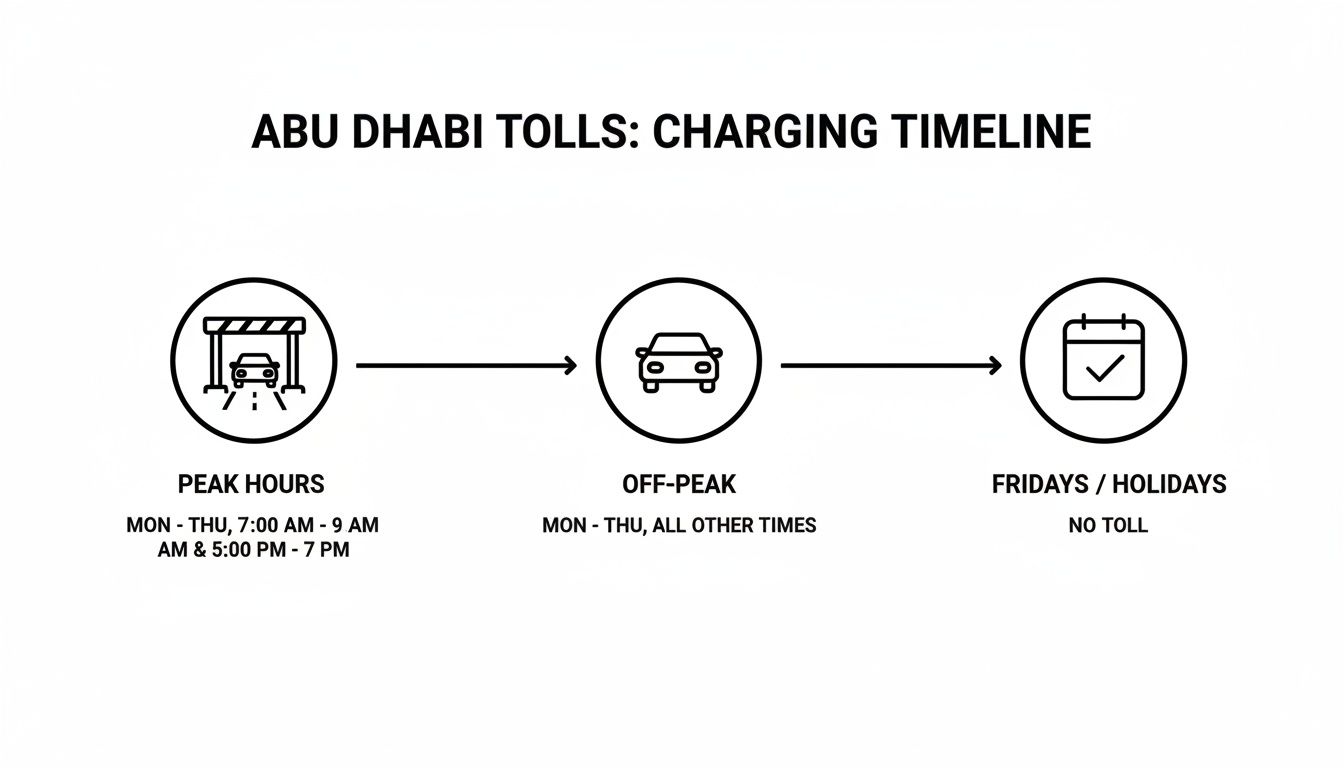
As you can see, the toll charges are limited to just four hours on most weekdays, making most of your driving time in the capital toll-free. This simple framework is the key to mastering the DARB system. By just keeping these active windows in mind, you can plan your trips to cut down on costs or even avoid tolls entirely.
To make it even easier, here's a quick reference table.
Abu Dhabi DARB Toll Timings at a Glance
This table provides a clear summary of when DARB toll gates are active and when driving is free, helping you plan your journeys.
| Day of the Week | Peak Hours (Toll Active) | Free Driving Periods |
|---|---|---|
| Saturday – Thursday | 7:00 AM – 9:00 AM & 5:00 PM – 7:00 PM | Before 7 AM, between 9 AM and 5 PM, and after 7 PM |
| Friday | None | All day is free |
| Public Holidays | None | All day is free |
With this breakdown, you can confidently navigate Abu Dhabi's roads, knowing exactly when you need to account for tolls and when you can drive for free.
How the Abu Dhabi DARB Toll System Actually Works
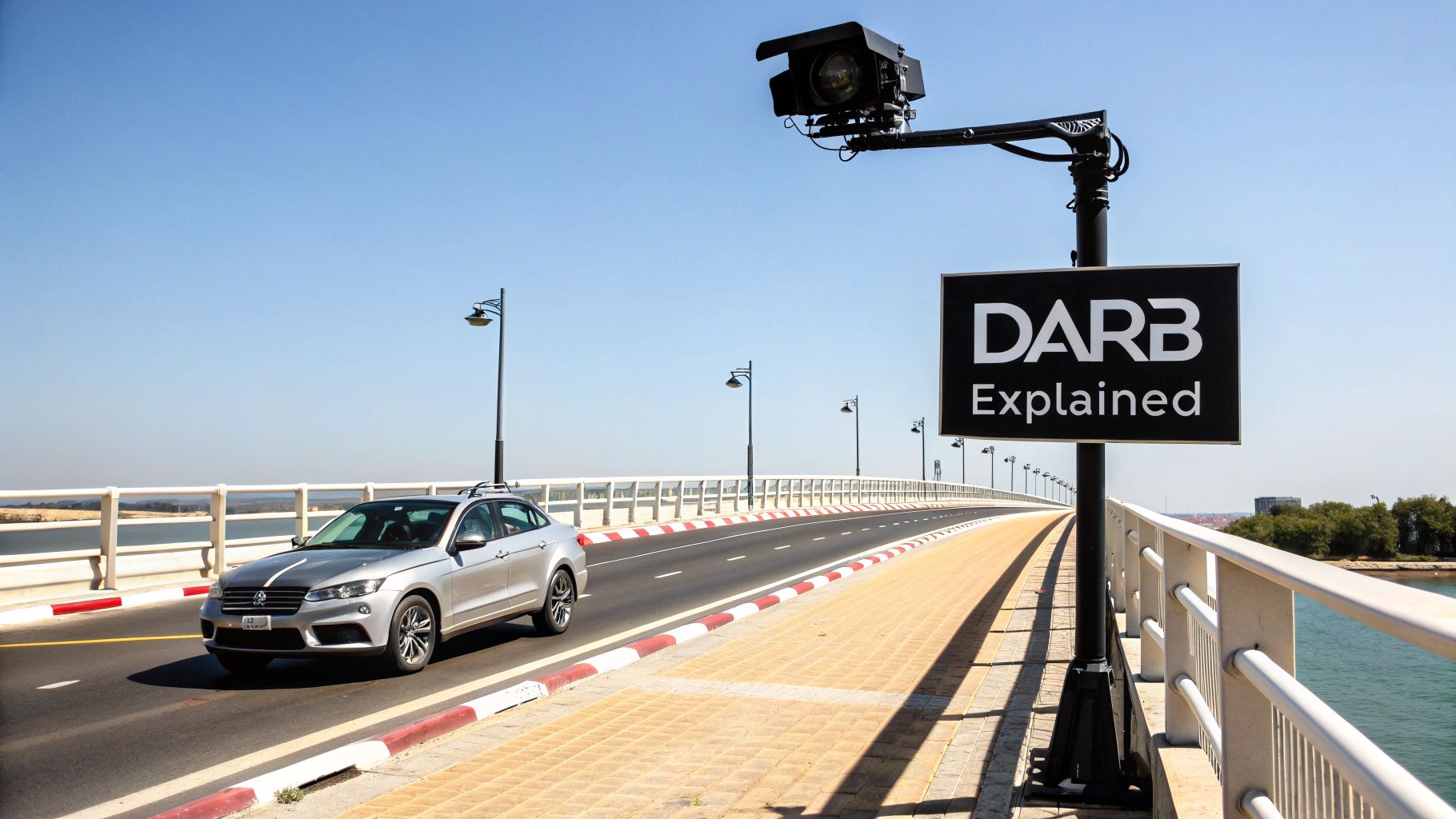
Think of Abu Dhabi's DARB system as an invisible gatekeeper for the capital's four main bridges. It’s designed to manage traffic during the busiest hours of the day, but without the old-school toll booths where you'd have to stop or fumble for change. It's completely seamless.
Instead of physical tags on your windscreen, the system uses high-tech Automatic Number Plate Recognition (ANPR) cameras. As you drive under a toll gantry, these cameras scan your licence plate in a split second, identify your car, and deduct the fee from your registered DARB account. The whole thing happens without you even noticing, keeping traffic flowing smoothly.
Getting Registered is Simple
Before you head into the city during peak hours, your vehicle must be registered in the DARB system. This isn't just for Abu Dhabi residents—it applies to every single vehicle, no matter which Emirate it’s from. Thankfully, the process is quick and easy, and you can do it all online through the official DARB website or their mobile app.
There's a one-time registration fee of AED 100 per vehicle. But don't let that number fool you; AED 50 of that is immediately credited back to your account as a starting balance. So, the actual cost to get set up is only AED 50.
A common trip-up for visitors is thinking only Abu Dhabi-plated cars need to register. Let me be clear: any vehicle from Dubai, Sharjah, or anywhere else passing through an active toll gate must have a DARB account to avoid fines.
How Tolls Are Charged
Once you're registered, the system is on autopilot. Every time you cross a toll point during the active peak hours, a standard charge of AED 4 is taken from your account balance. The system is pretty good about sending notifications when your balance is running low, helping you stay on top of it.
Knowing where these toll gates are is the key to managing your travel costs. They're strategically placed on the main bridges connecting Abu Dhabi island to the mainland.
Here are the four toll gate locations you need to know:
- Sheikh Zayed Bridge: The iconic, wave-like bridge that's one of the busiest entry points into the city.
- Sheikh Khalifa bin Zayed Bridge: A crucial link for anyone travelling to or from the popular Saadiyat and Yas Islands.
- Al Maqtaa Bridge: One of the original bridges into Abu Dhabi, located near some historical landmarks.
- Mussafah Bridge: A vital connection for the industrial zones and communities south of the city centre.
Once you understand this invisible, camera-based system, it all clicks into place. It’s not about collecting tolls 24/7; it’s about strategically easing congestion during those critical morning and evening commutes. By knowing the locations and taking a few minutes to register, what seems confusing at first becomes just another predictable part of driving in Abu Dhabi.
Mastering Peak Hours and Daily Toll Caps
The real trick to managing your travel budget in Abu Dhabi isn't about finding some secret "Salik free timing." It's all about understanding how the DARB system's peak hour model works. The system was cleverly designed to ease that notorious rush-hour traffic, so getting a handle on these times is your best bet for saving money.
That AED 4 toll isn't a round-the-clock charge. It only kicks in during very specific windows: the morning and evening commutes. This targeted approach means that for the vast majority of the day, plus on weekends and public holidays, you won't be charged a thing.
Understanding Peak Hour Timings
The structure is refreshingly simple and consistent, which makes planning your trips a breeze. Tolls are only active during two specific windows from Saturday to Thursday. If you drive through a toll gate at any other time, it's completely free.
- Morning Peak: 7:00 AM to 9:00 AM
- Evening Peak: 5:00 PM to 7:00 PM
By simply timing your bridge crossings to fall just outside these four hours on weekdays, you can avoid any charges. For instance, leaving for that meeting at 9:05 AM instead of 8:55 AM means you pay nothing. This kind of strategic timing is the key to smart, cost-effective driving in the capital.
How Daily Caps Protect Your Wallet
But what if you're a busy commuter who has to cross the bridges multiple times during peak hours? Abu Dhabi's DARB system has a built-in safety net to stop costs from getting out of hand: a daily cap.
No matter how many times you pass through a toll gate during peak hours in a single day, you will never pay more than AED 16 for one vehicle.
Imagine you cross a toll gate five times during peak hours on a Tuesday. Instead of being charged AED 20 (5 x AED 4), the system automatically stops billing you after the fourth crossing. Your daily expense is capped at a predictable AED 16. Simple as that.
This daily cap is a fantastic feature that offers real peace of mind. It guarantees that even on your most hectic days, your toll expenses stay controlled and predictable, taking the worry out of frequent city crossings.
Monthly Caps for Added Predictability
For residents and long-term visitors with their own privately registered vehicles, the system adds another layer of financial protection: a monthly cap. This limit is based on the order of the vehicles registered to your account, offering significant savings for regular commuters.
- First Vehicle: Capped at AED 200 per month
- Second Vehicle: Capped at AED 150 per month
- Each Additional Vehicle: Capped at AED 100 per month
These caps ensure that even if you're driving through the tolls every single day, your monthly transport budget won't spiral. By understanding these peak hours and built-in caps, you can take full control of your travel costs, making your drives through Abu Dhabi both efficient and economical.
Avoiding Common Fines and Navigating Exemptions
Knowing how the DARB system works is the first step, but really understanding how to avoid fines is what will keep your Abu Dhabi driving experience completely stress-free. It's an automated system, which is great for efficiency, but it also means penalties for simple slip-ups are issued just as automatically. A little bit of knowledge goes a long way in protecting you from unexpected charges.
The two most common mistakes drivers make are actually the easiest to avoid: forgetting to register a new vehicle and letting their account balance run dry. If you happen to drive through a toll gate with an unregistered car, don't panic—you have a grace period of 10 working days to get a DARB account set up.
But if you miss that window, the fines start, and they can add up faster than you'd think.
Understanding the Fine Structure
The DARB system is pretty strict, and for good reason—it keeps traffic flowing and ensures everyone pays their fair share. An initial fine might not seem like much, but repeated violations can get expensive.
- First Offence: Driving an unregistered vehicle past the grace period will land you a AED 100 fine.
- Second Offence: Make the same mistake again, and the fine doubles to AED 200.
- Subsequent Offences: After that, every following violation will set you back AED 400 a pop.
It's a similar story if you drive through a gate with insufficient funds in your account. After a short grace period to top up, you'll be hit with a AED 50 fine for that crossing. The easiest way to sidestep this completely? Just set up the auto top-up feature in the DARB app.
It really boils down to two simple rules: register your vehicle and keep your account topped up. Nail these two things, and you'll avoid nearly every common DARB fine out there, letting you focus on your drive.
Who Qualifies for Toll Exemptions
While most of us have to pay the DARB tolls during peak hours, the Abu Dhabi government has made exceptions for certain vehicles and individuals. This is to make sure essential services and vulnerable members of the community aren't burdened by the charges. For visitors, knowing these rules is just part of being a smart driver in the UAE; for more on that, take a look at our guide to international driving permit requirements.
Some vehicles don't need to do anything at all—they are automatically exempt. This category includes:
- Abu Dhabi Police and Ministry of Interior vehicles
- Ambulances and other emergency response vehicles
- Public transport buses
- Authorised school buses
Beyond that, certain individuals can apply to have one personal vehicle exempted from the tolls. This usually involves a straightforward application process on the official DARB portal, where you'll need to provide some supporting documents.
People who are typically eligible for this exemption include:
- Senior Emirati citizens
- People of Determination
- Retired Emirati citizens
- Families with limited income
By getting familiar with these fines and exemptions, you can cruise over Abu Dhabi's bridges with confidence. Your focus will be on the beautiful journey ahead, not on worrying about easily avoidable penalties.
A Practical Guide For Tourists And Rental Car Drivers
Figuring out a new city's toll system can feel like a headache, especially when you're behind the wheel of a rental car. But here’s the good news: when it comes to Abu Dhabi's DARB system, rental agencies have made the whole process incredibly straightforward for tourists and visitors. Your job is to enjoy the drive, not worry about managing a toll account.
Rental car companies take care of all the background details for you. Their entire fleet is already registered within the DARB system, so there’s absolutely no need for you to create an account or set anything up yourself. It’s a seamless experience designed to make your trip as hassle-free as possible.
As you cruise through the toll gates during peak hours, cameras automatically log the charges against your rental car's licence plate. Your rental company settles the bill with the toll authority directly and then simply adds those charges to your final invoice when you return the car.
Understanding Rental Toll Policies
Before you hit the road, it's always smart to have a quick chat with the rental company about their specific policy on tolls. While the process is generally the same everywhere, knowing the fine print can save you from any surprises down the line.
Most reputable companies, including Uptown Rent A Car, just pass on the exact toll cost. For every crossing during peak hours, a AED 4 charge will show up on your bill. That said, some agencies might add a small administrative fee for handling the payments.
Always ask for a clear breakdown of potential charges. A transparent rental agency will be more than happy to explain their toll policy, ensuring you know exactly what to expect. This simple conversation builds confidence and sets you up for a much smoother rental experience.
For many visitors, getting to grips with local toll systems can be a learning curve. Understanding how other regions are streamlining toll payments can offer some useful perspective on modern systems.
Tips For A Smooth Rental Journey
To make sure your journey is as smooth as possible, just keep a few simple points in mind. They'll help you feel confident and in control as you explore Abu Dhabi and beyond. For more specific advice, our guide on driving in Dubai for tourists is packed with valuable insights.
Here are a few actionable tips:
- Confirm Before Driving: Have a quick word with the rental agent to confirm their toll and admin fee structure. No surprises, no stress.
- Review Your Invoice: When you return the vehicle, take a moment to look over the invoice. Make sure the toll charges match up with your travel during peak hours.
- No Personal Registration Needed: Just a friendly reminder—the vehicle is already registered. You don't need to do a thing.
Follow this simple advice, and you can enjoy all the freedom a rental car offers without giving tolls a second thought.
Comparing Abu Dhabi DARB and Dubai Salik
Driving between Abu Dhabi and Dubai is a daily commute for countless people, but the toll systems in each emirate work in surprisingly different ways. Getting your head around these differences is the key to managing your travel budget and avoiding any nasty surprises.
Think of it this way: Abu Dhabi’s DARB system is all about timing. It’s a tool designed to manage the city's infamous rush hour traffic, so it only charges tolls during specific peak windows on weekdays. This is where the idea of "Abu Dhabi Salik free timing" comes from—for most of the day, and all of Friday and public holidays, it’s completely free to pass through.
Dubai’s Salik, on the other hand, never sleeps. It operates on a straightforward pay-per-pass model. You’ll be charged a flat fee of AED 4 every single time you drive under a Salik gantry, 24 hours a day, seven days a week. There are no breaks for holidays.
Key Operational Differences
The biggest contrast is their core philosophy. DARB is strategic and time-based, aiming to ease congestion during the busiest hours. It even includes daily and monthly spending caps to protect regular commuters from racking up massive bills.
Salik is a constant, usage-based system. Your costs are a direct reflection of how often you use the tolled roads, and there's no daily limit to how much you can be charged.
This fundamental difference means your toll expenses can vary dramatically depending on where and when you drive. A multi-stop trip across Dubai during the day could lead to some hefty Salik charges, while making the same kind of journey in Abu Dhabi outside of peak hours would cost you absolutely nothing. If you're getting behind the wheel in Dubai, our Dubai driving tips can help you get around the city more efficiently.
Evolving Toll Strategies
Lately, Dubai’s Salik has been getting a bit more sophisticated. The system is starting to introduce dynamic pricing, where toll fees can actually change based on traffic conditions and the time of day—a strategy aimed at fine-tuning traffic flow even further.
Salik's approach is proving to be a major revenue driver, particularly with the introduction of new gates and variable pricing. This shift highlights a trend towards more responsive and data-driven toll management in the region.
This evolution is clear in its recent financial performance. Adding new gates and implementing dynamic pricing has significantly boosted revenue, with some peak-hour tolls even rising to AED 6. While Abu Dhabi’s DARB is sticking to its fixed peak-hour model for now, these changes in Dubai could signal what's next for toll systems across the UAE.
Your Top Questions About Abu Dhabi Tolls Answered
Whenever a new system like DARB comes along, it’s natural to have a few questions. We get it. To make your drive completely stress-free, here are some quick, straightforward answers to the things people ask us most.
Do I Need a Sticker Like Dubai's Salik?
Nope, you don't. Abu Dhabi's DARB system is a bit more modern in this respect. Unlike Dubai's Salik, which needs that little sticker on your windscreen, DARB uses high-tech Automatic Number Plate Recognition (ANPR) cameras. These cameras simply read your plate as you pass under a gate, making the whole process tag-free.
What Happens if I Forget to Register My Car?
Don't panic if you drive through a toll gate during peak hours and realise you haven't registered. The system is pretty forgiving, giving you a 10-working-day grace period to hop online, create a DARB account, and add your vehicle. If you miss that window, however, fines will start, beginning at AED 100.
Is My Dubai Salik Account Valid in Abu Dhabi?
This is a big one, and the answer is a clear no. Your Dubai Salik account and its balance are completely separate from Abu Dhabi's DARB tolls. Think of them as two different companies. Any car, no matter which Emirate it’s registered in, needs its own dedicated DARB account to drive through Abu Dhabi's toll gates during paid hours.
The most important thing to remember is this: DARB and Salik are not connected. Even if you're fully paid up with Salik, you must register for DARB separately before driving in Abu Dhabi to avoid fines.
How Can I Check My DARB Account Balance?
Keeping tabs on your balance is easy. You can log in to your account any time through the official DARB website or use the DARB mobile app, which is available for both iPhones and Android phones. A pro tip is to switch on low-balance notifications in the app—it's a great way to get a reminder before you run out of credit.
Hopefully, that clears things up and gets you ready for a smooth, hassle-free journey through the capital.
Ready to explore Abu Dhabi and Dubai in ultimate comfort and style? With Uptown Rent A Car, you can choose from a premium fleet of luxury vehicles without worrying about toll registration. We handle all the details, so you can simply enjoy the drive. Discover your perfect ride and book online in minutes.