
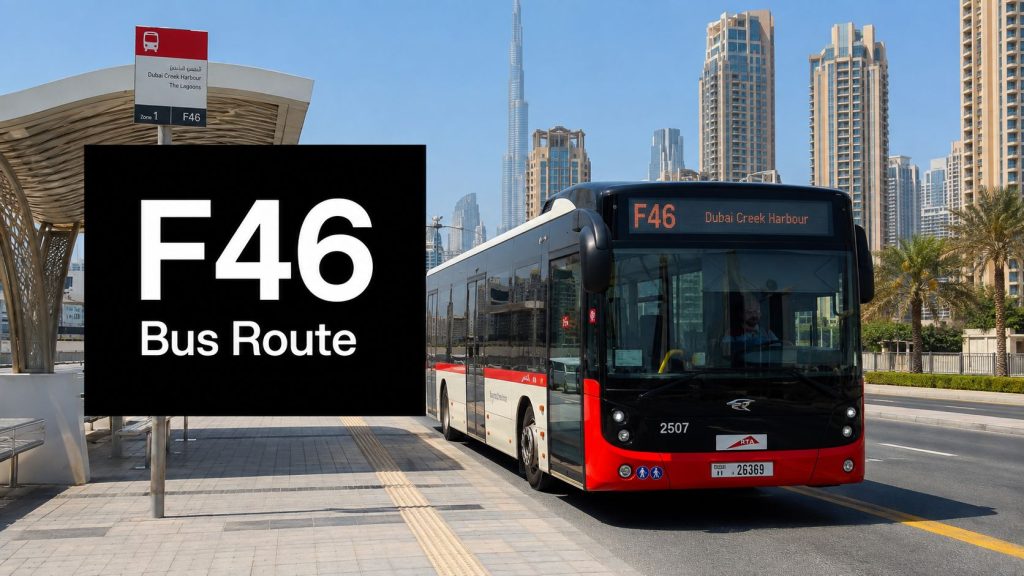
The F46 is an RTA feeder bus running between Ibn Battuta Bus Station and DIP 2, Dubai Investment Park 2, with published listings showing 22 to 29 stops and journey times of about 34 to 59 minutes, depending on direction and timetable. It's the practical metro connection for Jebel Ali, Green Community and Dubai Investment Park.
You've just stepped off the Red Line at Ibn Battuta, carrying a laptop, work bag or suitcase, and your destination is nowhere near a tourist landmark. Dubai Investment Park looks close on the map, but walking isn't a sensible option, particularly in the heat. The F46 closes that gap, carrying residents, shift workers and office staff from the metro interchange into the industrial and residential pockets south of the city.
This isn't merely a short shuttle. It links a major metro interchange with Jebel Ali Free Zone workplaces, labour accommodation, Green Community and DIP neighbourhoods that standard tourist maps often overlook. Before boarding, check the destination display carefully, because the route's stop pattern and duration can vary by direction.
What the F46 Bus Route Is and Where It Goes
You have just arrived at Ibn Battuta with a work bag, suitcase or phone showing a destination far beyond the mall. Stay inside the transport complex, follow the signs to the bus station, and board the F46 towards DIP 2. The route leaves the interchange connected to Ibn Battuta Metro Station and runs through the Jebel Ali and Dubai Investment Park corridor.
Dubai's Roads and Transport Authority operates the F46 as a feeder bus. In practice, it is a strategic first-and-last-mile link, carrying metro passengers to labour accommodation, free-zone workplaces and residential pockets that tourists often miss. It serves the trip after the train, then brings riders back to the metro for the return journey.
Published information shows 22 to 29 stops, with one listing giving 29 stops and about 59 minutes end to end and another showing 22 stops and about 34 minutes. The difference reflects direction, operating pattern and how each source records the active timetable. Check the destination display and current stop sequence before planning around the shorter journey. The RTA bus route inventory is the better reference point for the official route record.
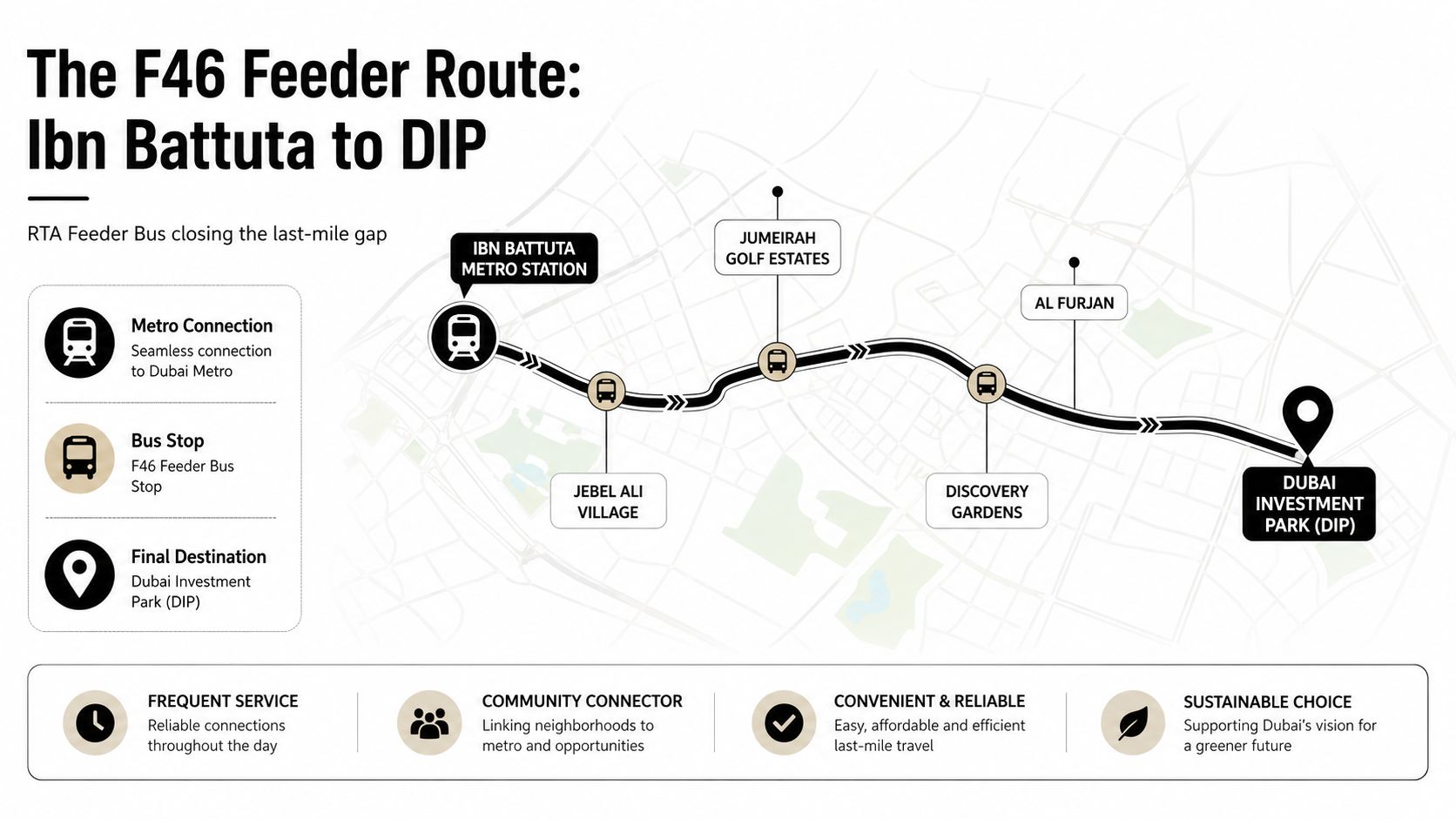
The corridor in practical terms
The F46 passes through employment zones, residential communities and transport connections rather than landmark-heavy sightseeing areas. Its pattern includes Jebel Ali Gardens, Jebel Ali Free Zone interchange points, Green Community, Dubai Lagoon and DIP terminus stops. That makes it useful for shift workers, office staff, residents and visitors with a specific business or community destination.
A route modification reported in 2018 connected Ibn Battuta Metro Station with Jebel Ali, extended service to DIP 2, and passed through DIP 1 and Green Community. The change helps explain why the F46 operates as a corridor service instead of a short station shuttle. Stop counts can change by direction, and live route adjustments can affect the exact sequence, so verify your alighting stop before departure.
Practical rule: If your destination is DIP, Green Community or the Jebel Ali Free Zone area, check the F46 before booking a taxi.
For broader orientation, compare the corridor with this tourist map of Dubai City. A phone, water bottle and compact work kit are useful on the metro-to-bus transfer. Browse commuting gear for everyday travel before a regular trip.
Stop-by-Stop List from Ibn Battuta to DIP 2
Treat the list below as a route-reading guide. The actual stop count changes by direction. The outbound pattern towards DIP 2 commonly shows 29 stops, while the inward service towards Ibn Battuta commonly shows 22. Use the onboard display and live journey information to confirm the stop you need. The route functions as a first-and-last-mile link between the metro, labour accommodation, free-zone workplaces and residential pockets that tourist maps often overlook.
Outbound orientation towards DIP 2
Match your destination to the bus display and announcements:
- Ibn Battuta Bus Station, the main metro and bus interchange.
- Ibn Battuta area stops, serving the mall and nearby local connections.
- The Gardens access stops, connecting residential buildings and community roads.
- Discovery Gardens stops, serving neighbourhood facilities.
- Jebel Ali Gardens stops, covering residential clusters.
- Jebel Ali Free Zone interchange points, used by workers travelling to logistics, warehouse and industrial sites.
- JAFZA gate or industrial access stops, where the correct gate matters more than the broad route name.
- Dubai Lagoon area, serving residential and mixed-use pockets.
- Green Community access stop, a practical alighting point for community destinations.
- Green Community internal stops, where the active service pattern may change.
- DIP 1 access stops, serving offices, warehouses and residential areas.
- DIP internal road stops, useful when your workplace sits away from the main entrance.
- DIP 2 residential stops, serving accommodation and community facilities.
- DIP 2 street-level stops, which can sit closer to specific office or housing clusters.
- DIP 2 terminus, the final outbound stop.
This numbered sequence groups nearby stops because published listings do not always show the same internal stop set. Some present a shorter core pattern, while others include additional local stops. Operational changes can also alter the sequence. The Transit F46 route page and RTA update reference records changes affecting Green Community, including the cancellation of two Green Community stops.
How to choose the right stop
For JAFZA, do not alight solely because a stop name includes “Jebel Ali”. Confirm the gate or interchange in your journey planner. Ask the driver before departure if the workplace entrance is unclear.
Green Community riders should verify the active stop before walking to the shelter. A familiar stop may no longer be served, so check the live display rather than relying on an old map.
Keep your map open, listen for the announcement and press the stop button before the bus reaches your stop. This matters most on internal DIP roads, where walking back from the wrong stop can take longer than expected.
Timetable, Frequency and Trip Duration
The F46 operates every day, making it a practical first-and-last-mile link between Ibn Battuta Metro, labour housing, free-zone workplaces and residential pockets that tourists often miss. Published departures can start as early as 04:54 to 05:00 and continue until roughly 00:00 to 01:05 on certain days. Headways generally sit between 15 and 30 minutes, based on published route schedules.
That schedule suits early shifts and late returns, but a missed bus still creates a meaningful wait, especially after an irregular shift in DIP. First and last departures change by day and direction, so check the time for your actual boarding stop. Do not plan from a route-wide summary alone.
As noted in the stop list, both the stop pattern and journey time change by direction. The Stations.ae F46 route guide provides the published range, while live planning is better for deciding when to leave.
Traffic near the Jebel Ali interchange and on internal DIP roads can extend the trip. Add a buffer for a meeting, shift start or connection to another scheduled service. The F46 is a feeder corridor, not a bus to time to the final minute.
| What you're checking | Practical scheduling guidance |
|---|---|
| Operating window | Early morning through late night, with exact times varying by day |
| Typical headway | About 15 to 30 minutes |
| Stop pattern | Direction-dependent, as shown in the stop list |
| Published duration | Varies by direction and local road conditions |
Friday and public-holiday service can follow a different rhythm from a standard weekday. Before leaving, check the live journey planner for the next bus and the final return service. Use the S'hail app for arrival information and Wojhati for route planning. If you are connecting from the metro, check the onward departure before exiting the station, then confirm the F46 direction on the platform display.
Fare, Nol Card and Payment Options
You'll need a valid Nol card before boarding the F46. The standard Silver card is the sensible choice for regular commuters, while Blue is the personalised option. Gold is designed for premium travel where that class exists, but you shouldn't expect a special Gold cabin experience on a standard F46 feeder bus. The Red Ticket suits occasional riders who don't need a reusable card.
The fare depends on the zones crossed and the card type. Published fare information lists AED 3 for one zone with Silver and AED 6 with Gold, while broader journeys can cost more. (Dubai Bus Timings fare information)
Boarding routine
Top up at a metro station, bus-station kiosk or through an RTA digital channel before reaching the bay. Cash isn't the payment method to rely on, and you shouldn't assume the driver can solve a balance problem at the door.
Boarding habit: Keep your Nol card separate from other contactless cards, tap it clearly at the reader and wait for confirmation before moving into the bus.
Tap at the reader when boarding and follow the system's instructions when leaving. If your journey involves more than one zone, the correct check-in and check-out record matters because the fare is calculated from the journey registered on the card. A low balance can disrupt the trip, particularly when you're transferring from the metro and have already used the card for the rail journey.
How the F46 Compares to Other Routes
The F46 wins on coverage and price, not speed. It reaches internal Jebel Ali, Green Community and DIP locations that a taxi-free metro journey can't cover on its own. The trade-off is the stop-by-stop ride and the possibility of a longer outward journey.
The F55 is the closest feeder comparison, but it's better suited to DIP 1. If your destination is DIP 2 or Green Community, the F46 is the more logical first choice. The X92 is an express intercity service between Ibn Battuta and Abu Dhabi, so it's useful for cross-emirate travel, not for reaching internal DIP workplaces or accommodation clusters.
| Option | Best use | Main drawback |
|---|---|---|
| F46 bus | Lowest-cost public connection into DIP and nearby communities | More stops and variable duration |
| Metro plus taxi | Faster travel when you're carrying luggage or facing a deadline | Higher cost and less useful for internal stop coverage |
| Ride-hail taxi | Direct door-to-door travel | Price varies with demand and destination |
| F55 | DIP 1 trips | Not the right feeder for DIP 2 |
| X92 | Abu Dhabi-bound travel | Not designed for local DIP circulation |
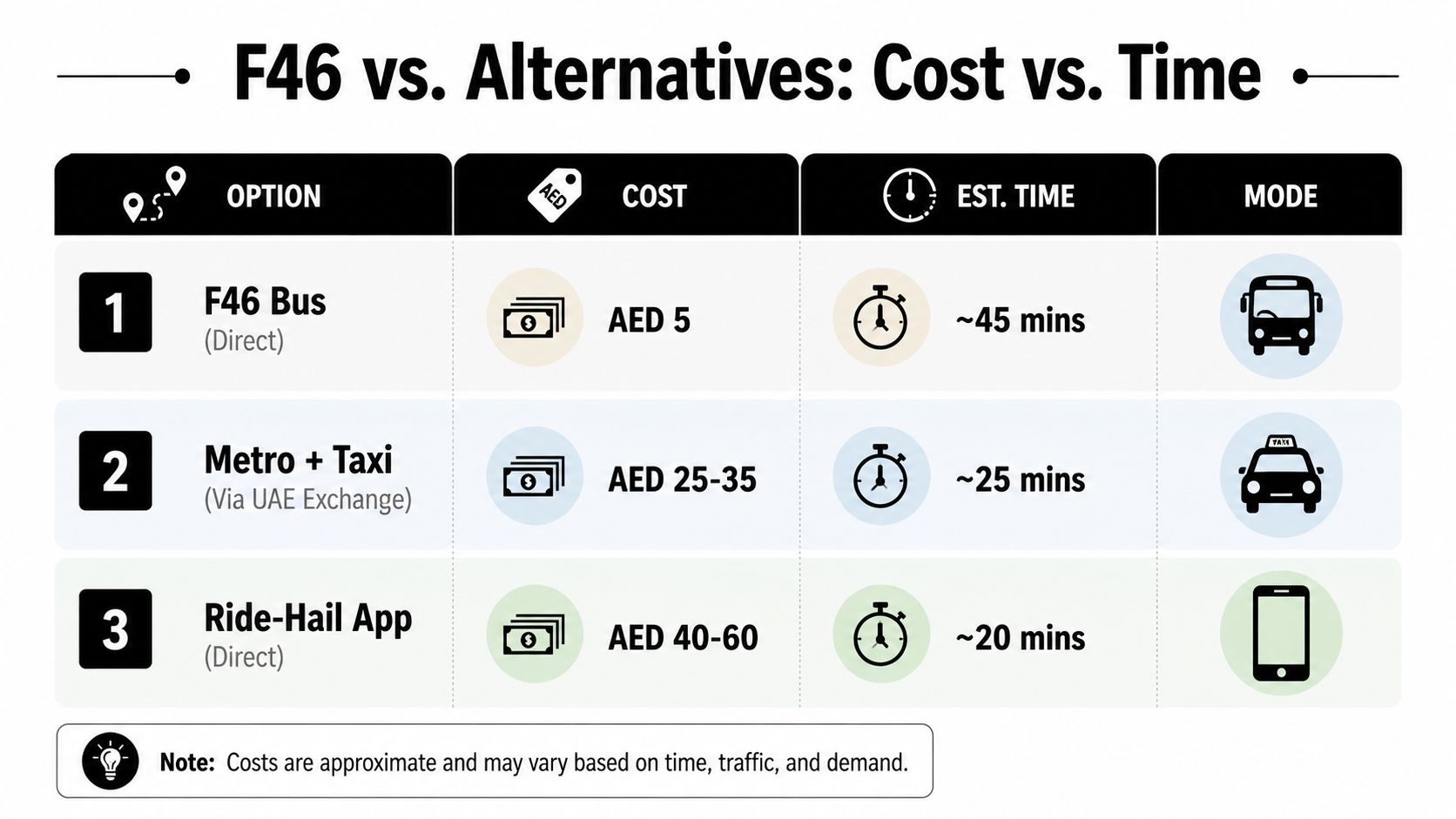
For visitors combining Dubai and Abu Dhabi, review this Dubai to Abu Dhabi transport guide before choosing an intercity option. For a local DIP journey, my decision is simple:
- Cheapest: F46 with a valid Nol card.
- Fastest: Direct taxi or ride-hail service.
- Most direct: Ride-hail from Ibn Battuta to the exact building.
- Best for shift workers: F46 when the live timetable matches your shift, taxi when the return falls outside a reliable service window.
Transfer Points and Connections Along the Corridor
Ibn Battuta Bus Station is the anchor. It connects to the Red Line and several local and intercity routes, so it's the place to change between metro, bus and taxi. If you're coming from central Dubai, complete the metro journey to Ibn Battuta, then follow the bus-bay signs and verify the F46 destination before boarding.
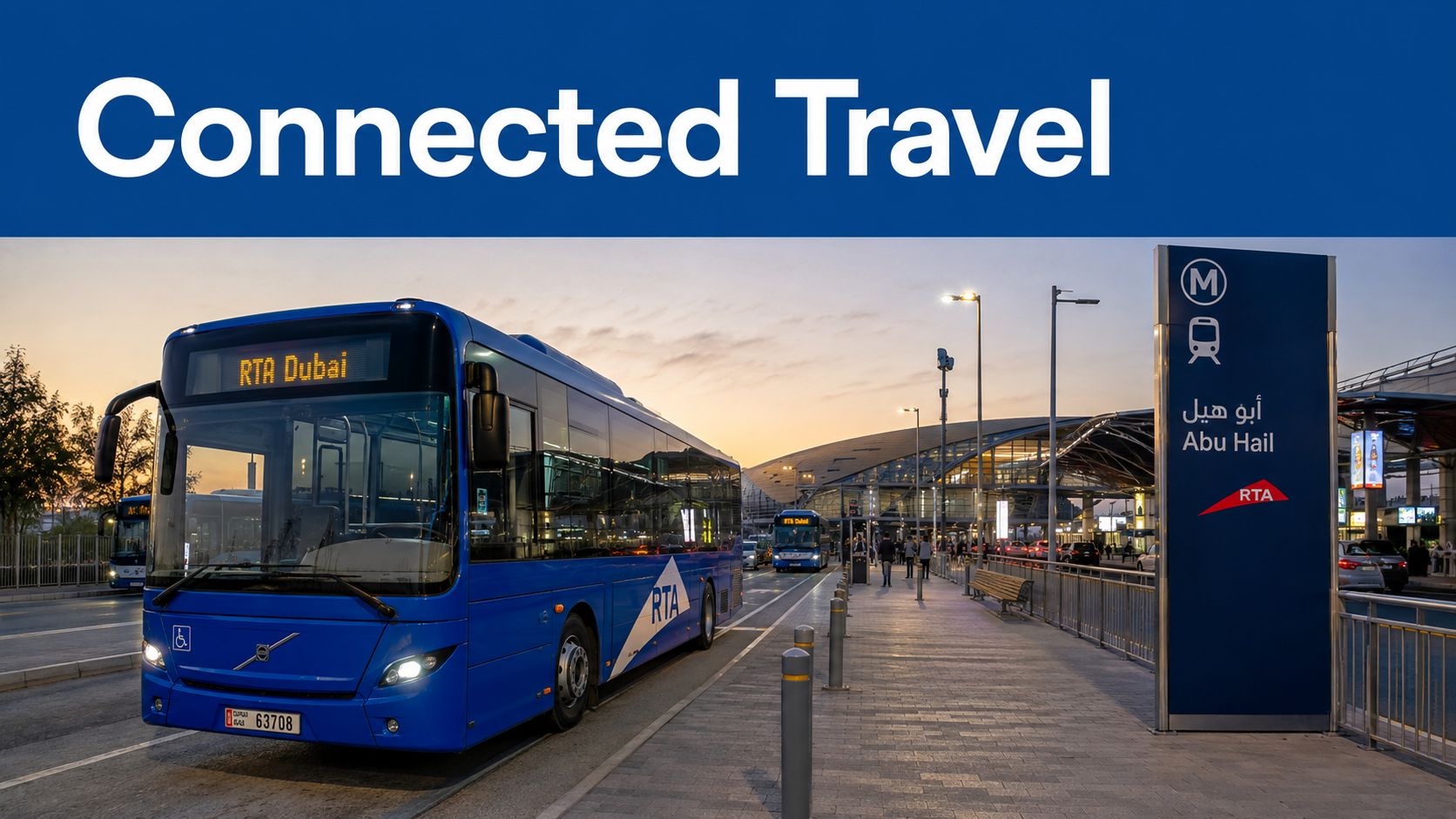
The corridor also offers practical local changes. At Jebel Ali Free Zone access points, workers may connect with employer or site shuttles. At Discovery Gardens and The Gardens, neighbourhood buses can provide a more suitable connection for local movement. Within DIP, alighting near the correct entrance is more important than searching for a single central interchange, because workplaces and accommodation are spread across internal roads.
Green Community passengers should check whether the stop they previously used remains active. The route has had live stop changes, so a community shuttle or short taxi connection may be necessary if your preferred shelter has been cancelled.
For a visual reference on riding the network, this video provides useful context before your first transfer:
Taxi availability is most useful at Ibn Battuta, major JAFZA access points and the DIP 2 entrance. If you're heading to a specific warehouse, office or residence, save the building name and pin before boarding. Drivers and passengers know the broad districts, but an exact destination prevents an unnecessary walk inside a large industrial area.
Accessibility, Comfort and Rider Experience
The F46 is a standard, air-conditioned RTA feeder service designed for ordinary daily travel. Expect low-floor boarding, a front-door wheelchair ramp, priority seating and handrails. These features make the bus practical for passengers with mobility needs, but boarding is still easier when you tell the driver early and allow other passengers to clear the access area.
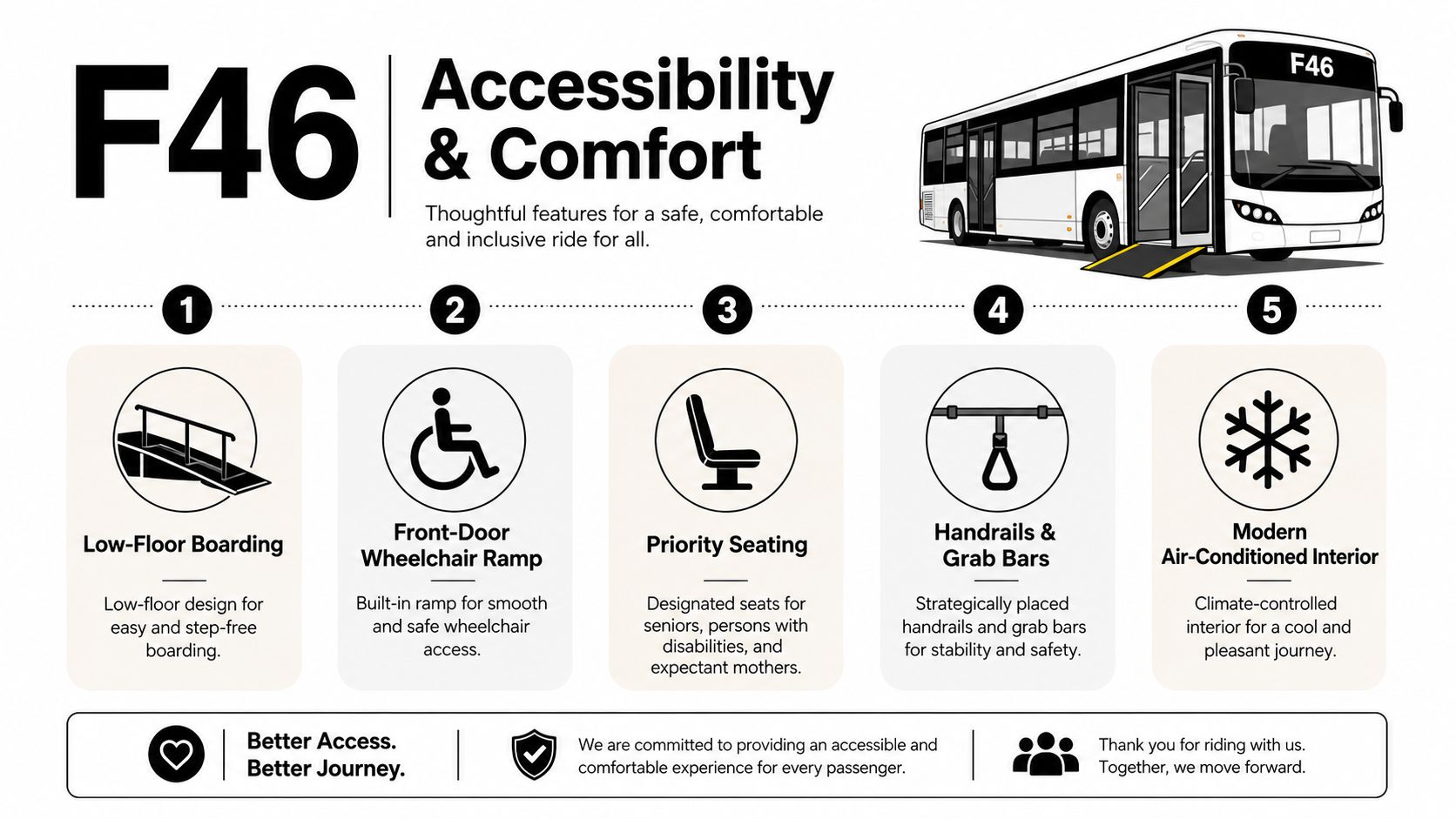
Carry a small bag rather than bulky luggage. The bus is built for commuting, and large suitcases can obstruct the aisle during busy boarding at Ibn Battuta or after shift changes. Keep priority seats available and move towards the rear when you're able, leaving the front area clear for passengers who need it.
Apps that make the ride easier
Use S'hail to check bus movement, Wojhati to plan the full trip and the RTA Dubai app to locate nearby stops. Don't rely on a static screenshot of the route because the F46 has had operational adjustments.
Summer travel demands a little more preparation. Carry water, stand in the shaded area and arrive ready to board rather than waiting in direct sun. Winter mornings can feel more crowded as commuters travel into work, so position yourself near the correct bay and let passengers leave before boarding.
Dubai's bus etiquette is straightforward. Don't eat on board, keep calls quiet, give up priority seating when needed and queue properly at Ibn Battuta instead of pushing towards the door.
Service Alerts and Live Updates
The F46 works as a first-and-last-mile link between Ibn Battuta, labour housing, free-zone workplaces and residential pockets across DIP. Its stops can change, and the number of stops may differ by direction, so treat the route as live service rather than a fixed sightseeing circuit. Recent route information lists the cancellation of two Green Community stops, meaning an old map may send you to an inactive shelter. Check Transit's current F46 listing before travelling.
Recheck the route before unfamiliar trips, particularly for Green Community or an internal DIP stop. Construction, restricted road access and local events can alter the operating pattern without changing the route name.
A reliable pre-boarding check
- Open S'hail and search for F46.
- Confirm that your boarding stop is active.
- Check both displayed terminuses, especially if service appears shortened.
- Compare the next arrival with your intended destination.
- At Ibn Battuta, match the bus display with DIP 2 before boarding.
- Recheck the next stop after entering Green Community or DIP.
Use Wojhati to plan the complete metro-to-bus journey. Physical displays at Ibn Battuta can confirm bay information on the day, while RTA's official social channels may announce wider disruptions. Friday and public-holiday service can follow a different pattern, so a weekday screenshot is not a dependable final check.
Practical Tips for Tourists and Daily Riders
A tourist arriving from the airport should first reach Ibn Battuta on the Red Line, then choose the F46 only if the final destination is in its corridor. Buy or prepare a Nol option at the station, keep the destination written in English and allow time to identify the correct bus bay. If you're visiting a business in DIP, ask the company for its exact building name, gate and nearest stop before travelling.
Daily riders should build their routine around the published headway rather than one exact departure. Early morning and end-of-shift periods can fill quickly, while the route's internal stops mean the bus may already have passengers when it reaches your shelter. Keep your card ready, stand clear of the doors and avoid bringing luggage that blocks the aisle.
Match the advice to your trip
- Tourists: Use Arabic and English signage, and ask the driver or fellow passengers if the stop name doesn't match your map.
- Business travellers: Add a time buffer for internal DIP roads, then use a short taxi ride if the office is far from the selected stop.
- Shift workers: Plan the return first. A taxi reservation or ride-hail backup is sensible when your shift ends late.
- Passengers with bags: Travel with compact luggage and avoid obstructing priority areas.
- Map users: Keep a current Dubai maps app guide available so you can compare the bus stop with your final walking route.
For Friday travel, verify the return journey before you leave your accommodation. A route that works smoothly outbound can become inconvenient if the next suitable bus is later than expected or your destination sits far inside DIP.
Uptown Rent A Car offers luxury cars for business travel, sightseeing and flexible journeys across Dubai when the F46 doesn't match your schedule or destination. Visit Uptown Rent A Car to browse the fleet and book a vehicle online for a more comfortable door-to-door trip.