
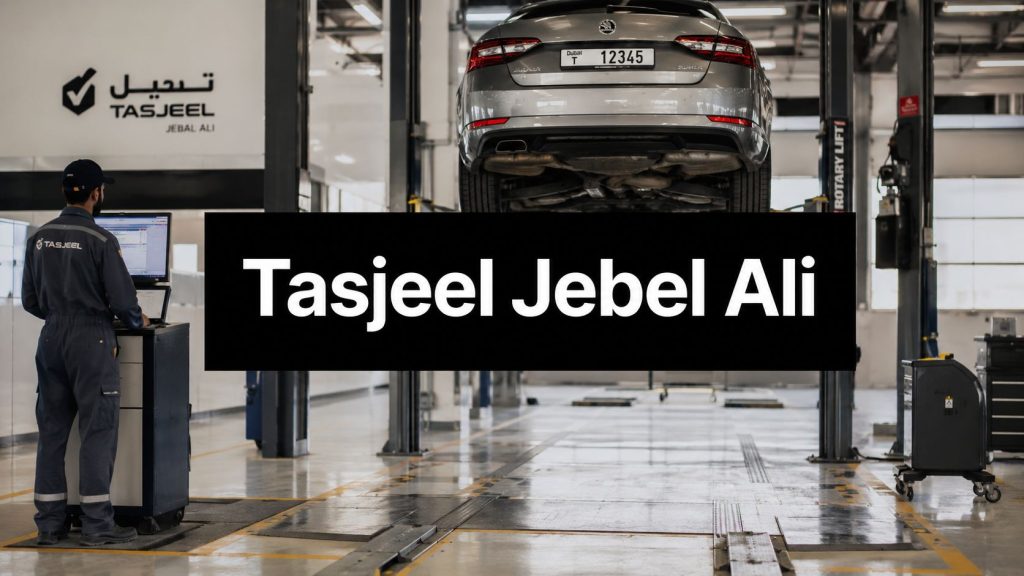
You're in the south side of Dubai, the registration card is about to lapse, and the day's already full of loading schedules, delivery windows, and client calls. At that point, the branch you choose matters as much as the test itself. Tasjeel Jebel Ali is built for that kind of pressure, because it sits inside a logistics-heavy corridor where commercial traffic, fleet movement, and compliance work all collide.
For a private driver, it can be just another inspection stop. For a fleet manager, rental operator, or anyone moving vehicles through Dubai's industrial south, it's closer to an operations node. That difference is why some people save time by going here, while others are better off choosing a more central centre.
What Tasjeel Jebel Ali Is and Why It Matters
A driver usually does not look for Tasjeel Jebel Ali until the renewal deadline is close. A fleet manager feels it earlier, because one failed inspection can delay handovers, rentals, or route planning for an entire day. That is where this branch stands out, it is not just a testing lane, it is part of Dubai's compliance machinery in one of the city's busiest southern districts.
Tasjeel is a major UAE vehicle testing and registration network, and one public listing says it serves more than 5,400 customers daily across the UAE as posted by ENOC. The Jebel Ali branch listing also identifies 24 branches in Dubai at the Jebel Ali Free Zone area, which gives a sense of how embedded this service point is in the local transport ecosystem Jebel Ali branch listing. That scale matters because the branch exists for throughput, not just convenience.
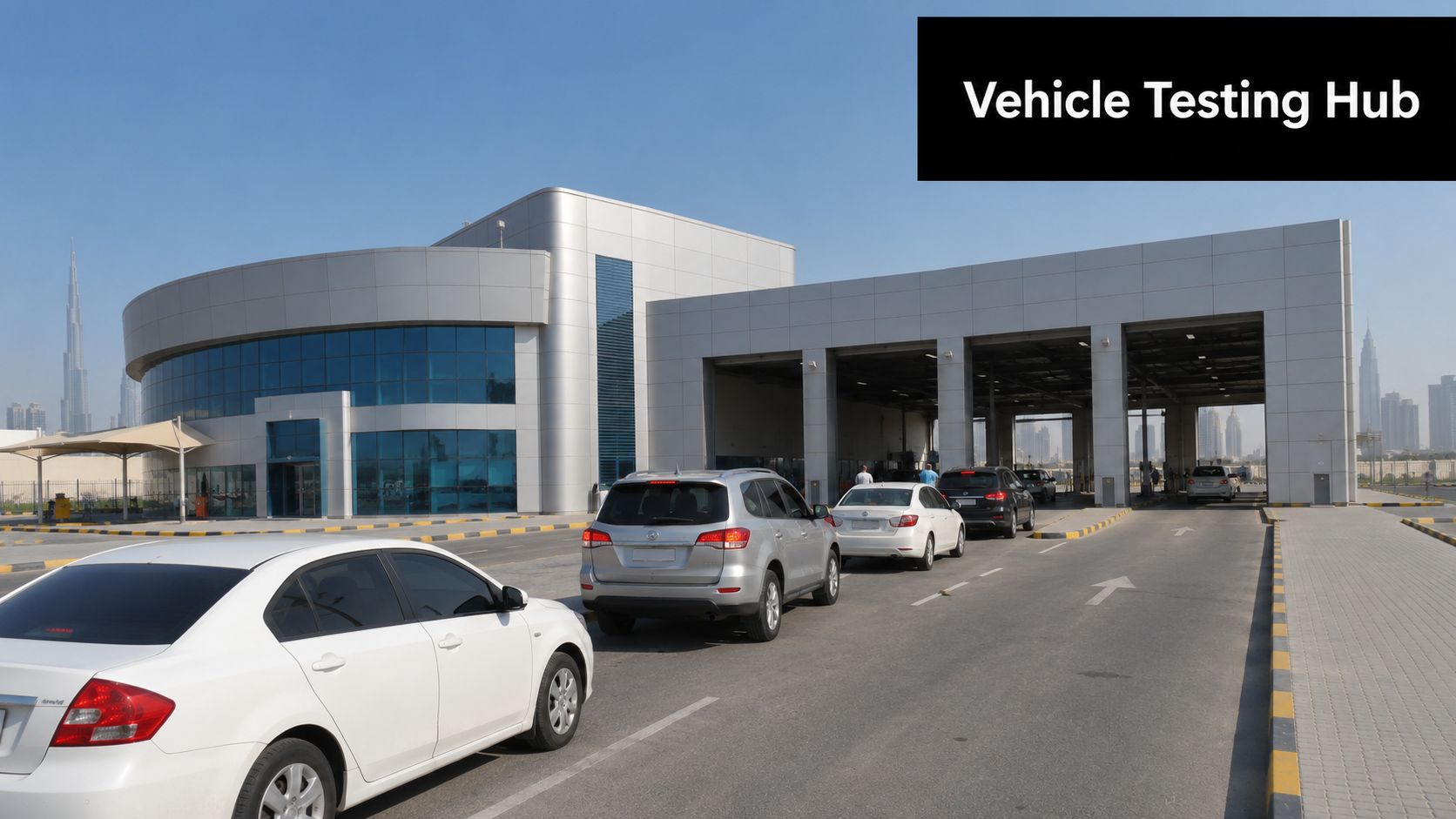
Why the location changes the experience
Jebel Ali sits inside a corridor shaped by freight, warehousing, and port activity. Jebel Ali Port handled 15.5 million TEUs in 2024 and was described as the 9th busiest container port globally source on Jebel Ali Port milestones. It also handled 7.3 million TEUs in H1 2024, up 3.9% year on year, and set a monthly record of 1.4 million TEUs in July 2024 same source.
That context explains why this branch matters to users who move vehicles as part of business, not leisure. A rental company, leasing desk, logistics firm, or workshop does not want a branch chosen for pretty geography. It wants a branch that fits the route, the workload, and the compliance deadline.
Practical rule: if your vehicle is already operating in the south-west corridor, Tasjeel Jebel Ali often makes more operational sense than sending a driver across town for the same paperwork.
For quick vehicle-related reference, the number plate guide at this Uptown DXB page is useful if you're also dealing with plate-related work after inspection or transfer.
Services Offered at the Centre
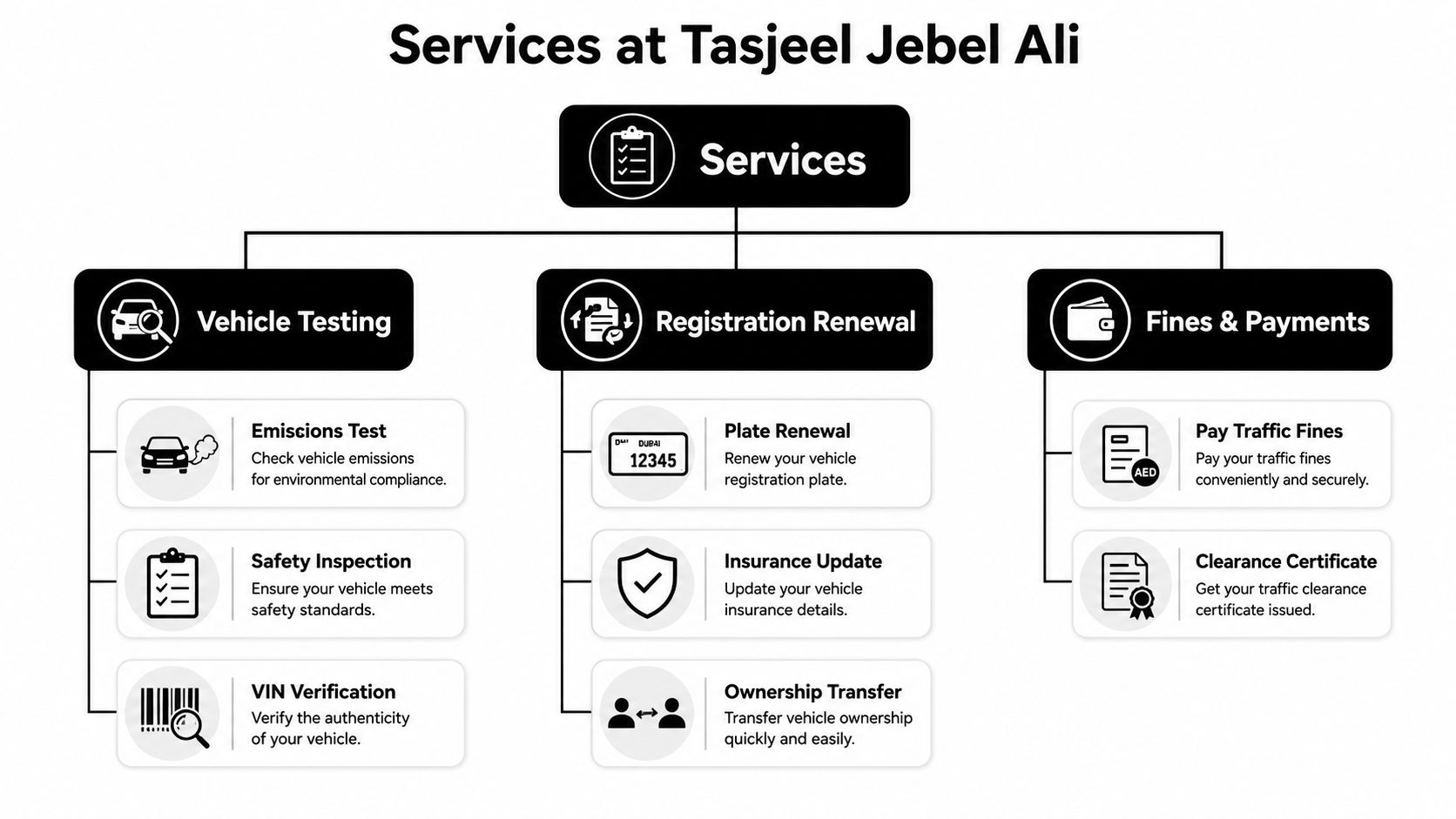
A fleet desk does not come to Tasjeel Jebel Ali for convenience alone. It comes here because the branch combines the jobs that usually eat up a full morning at separate counters. If the vehicle is in good shape and the file is complete, you can often handle testing, renewal-related processing, and payment work in one visit. The trade-off is straightforward, bring the right papers and the right vehicle condition, or the trip turns into a second run.
Vehicle testing and inspection
Vehicle testing is the main service, and it decides whether the car is fit for renewal under the UAE inspection regime. For light vehicles, it becomes part of the renewal path after the first three years, as covered in the UAE vehicle inspection standards guide. Inspectors focus on roadworthiness, so brake performance, steering, lights, and tyre condition matter far more than how clean the car looks.
The same guide sets the minimum brake efficiency at 50% for the primary system, 25% for the parking brake, and a minimum tyre tread depth of 1.6 mm across the central three-quarters of the tyre. Fleet operators should check those items before sending a vehicle to the lane. A worn tyre or weak brake system is cheaper to fix at the workshop than to discover after a failed inspection and a return trip.
Registration renewal and related updates
Renewal processing is the other reason this branch stays busy. Once the vehicle passes inspection, the centre can complete the compliance side of the visit and move the file toward legal road use. That matters most for owners and fleet controllers working against a renewal deadline, because the inspection result and the renewal paperwork stay tied to the same operational task.
Fines, transfers, and export-related handling
Some visits involve more than one file. A sale transfer, a fines-related clearance, or export paperwork can often sit inside the same compliance visit, depending on the case. The practical benefit is less walking between counters, fewer handoffs for dispatch teams, and a lower risk of missing a document between one desk and the next.
Keep the visit targeted. If the vehicle needs inspection, handle that first. If the file also includes a transfer or payment task, bring the supporting paperwork so the counter team can close the case without forcing a second appointment.
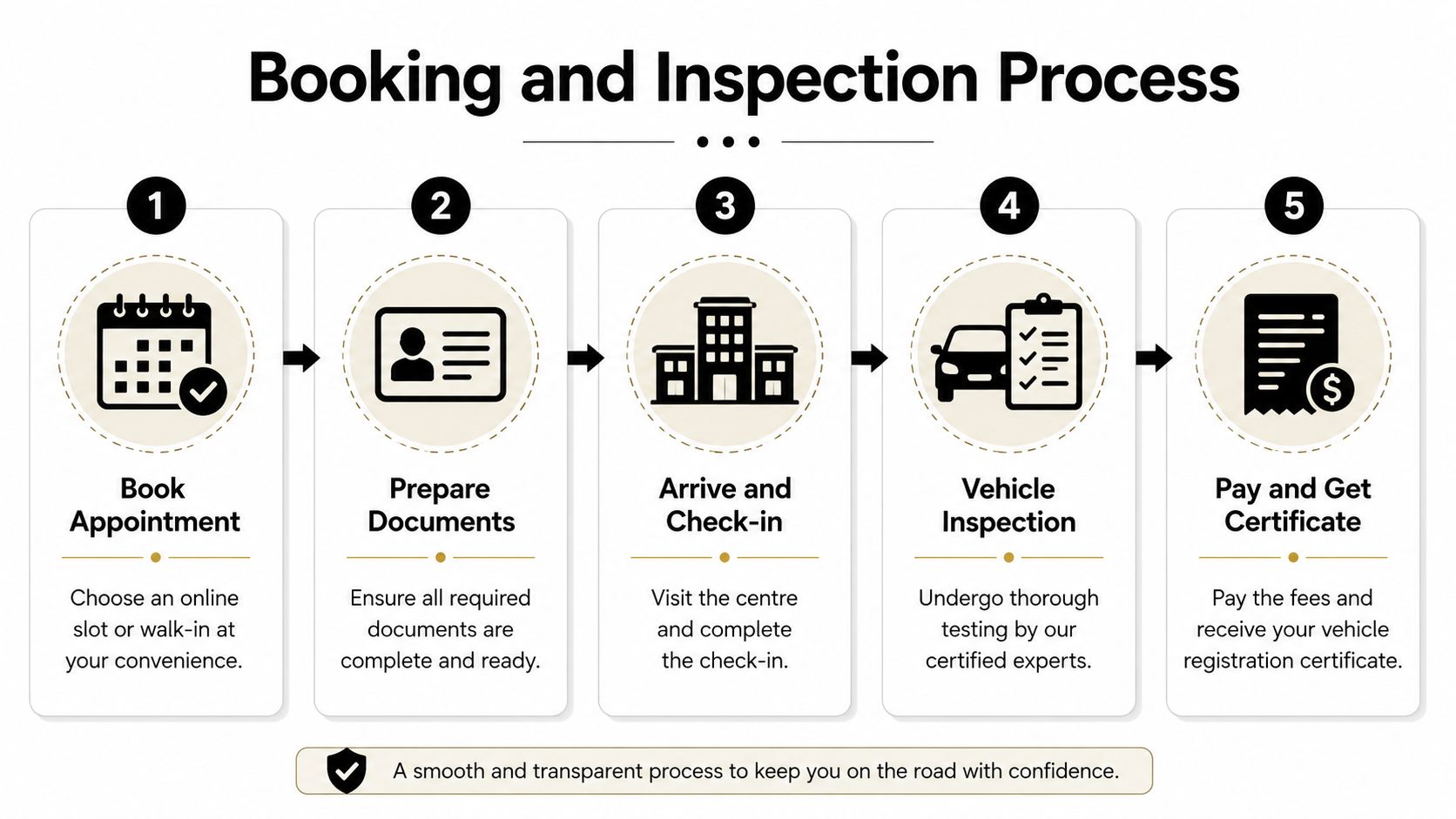
Step-by-Step Booking and Inspection Process
The smoothest visits start before the car reaches the lane. The centre's workflow is straightforward, but delays usually come from missing papers, avoidable defects, or drivers turning up before they've checked the vehicle properly. That is why I always treat this as a preparation exercise, not just a drive-in appointment.
1. Book or confirm your slot
Start by choosing whether you will walk in or use an appointment slot, depending on how urgent the job is. For fleet work, a confirmed slot is usually the safer option because it reduces uncertainty for the driver and the dispatcher. For personal renewals, a walk-in can work if your timing is flexible.
2. Prepare the right documents
Bring the documents that prove identity, ownership, and insurance status. The core set normally includes Emirates ID, the vehicle registration card, and insurance. If the vehicle is commercial or part of a fleet, keep the extra business paperwork with the driver, because missing one document can force a repeat visit.
3. Arrive and let the staff check the vehicle
Once you reach the branch, the car goes through check-in and then inspection. Inspectors are looking at roadworthiness, not presentation. Clean paint does not matter if the lights are out, the tyres are weak, or the brakes are not meeting the standard quoted in the UAE guidance inspection guide.
Practical rule: if you can hear a warning light, feel a pull under braking, or see uneven tyre wear, sort it out before the appointment. Those are the issues that turn a short visit into a return trip.
4. Pay the relevant fees
The Dubai Tasjeel fee is AED 170, and the re-test fee is AED 85 inspection guide. If the vehicle fails, the re-test fee becomes the number people suddenly remember, which is why pre-checks matter more than most drivers admit.
5. Collect the result and move on
If the vehicle passes, you can complete the next compliance step without dragging the file across Dubai. If it fails, fix the fault and return with proof the issue is resolved. That second trip is always slower than the first, so prevention is the better deal.
The inspection rhythm itself is designed around compliance, not comfort. Pay attention to the basics, bring the documents in order, and you will usually move through faster than drivers who arrive assuming the centre will solve everything for them.
Is Jebel Ali the Right Branch for You
The answer depends on where the vehicle is coming from and what the vehicle is doing for you. Tasjeel Jebel Ali is strongest when the trip is already tied to the industrial south, the free zone, port traffic, or a fleet that lives in that corridor. It is less appealing when the only reason to head there is habit.
When the branch makes the most sense
If you manage delivery vehicles, rental cars, or corporate vehicles operating near JAFZA, the branch is often the practical choice. The reason is not mystery, it is route alignment. A driver already moving through the southern logistics belt wastes less time coming here than crossing the city to a central centre.
The branch is also a better fit for businesses that need inspection work to happen around operating windows rather than in the middle of a retail district. Commercial users usually care about predictability, parking flow, and whether the visit can be folded into an existing logistics run.
When a central branch is better
If you are in Dubai Marina, Downtown, or another inner-city zone, a central branch will usually be easier. The drive south adds friction, and there is no value in crossing half the city for a job that can be done closer to home. Private motorists often underestimate how much time the road itself eats before they even reach the lane.
Trade-offs at a glance
| Factor | Jebel Ali Branch | Central Dubai Branches |
|---|---|---|
| Route fit | Best for southern industrial and logistics traffic | Better for inner-city residents |
| Main user type | Fleets, rentals, commercial operators | Private motorists, central-area renewals |
| Operational value | Strong for business movement and combined tasks | Strong for convenience from city neighbourhoods |
| Best reason to choose it | Vehicle already works near JAFZA or port corridors | Shorter drive from central districts |
| Weak point | Less convenient for people far from the south | Can be less efficient for fleet traffic in the industrial corridor |
The useful question is not “Which branch is best overall?” It is “Which branch is best for this vehicle, on this day, for this route?” That answer usually points commercial users south and casual renewals closer to where they live.
Tips for Rental Operators and Tourists
Rental operators should treat inspection dates as part of fleet planning, not as admin afterthoughts. A car taken out of service for testing can disrupt bookings if the schedule is loose, so the best teams stagger renewals and keep a buffer around high-demand periods. That is even more important for luxury fleets, where every car in rotation has a visible revenue role.
Tourists have a simpler job, but they still need to understand what they are driving. If you are collecting a rental car, ask the desk to confirm that the vehicle is current on registration and compliance before you leave the lot. If you're unsure about the wider rental process, the smart car rental advice article from Approved Experiences Traveler is a helpful companion read because it focuses on the practical side of renting, not just the marketing language.
What rental teams should keep tight
- Track expiry dates early: Do not wait until the final week. Put reminders in the fleet calendar and give yourself room for a failed inspection.
- Pre-check the basics: Lights, tyres, brakes, and warning lamps should be checked before a vehicle is sent to the centre.
- Separate the paperwork: Keep registration, insurance, and company authorisation together so the driver does not arrive with half a file.
- Plan for failures: If one vehicle fails, another unit should be ready so bookings do not collapse.
Tourists usually do not handle the centre visit themselves, but they still benefit from awareness. If the rental vehicle has a problem, the operator needs to switch cars quickly and keep the booking intact. The customer experience depends on the company having its inspection system under control.
Temporary or newly imported vehicles require even more discipline. They often come with extra document handling, and that is where operators lose time if the file is incomplete. The cleanest way to avoid drama is to keep one staff member responsible for compliance tracking and another responsible for handover readiness.
Opening Hours and Getting There
If you are sending a fleet unit through Tasjeel Jebel Ali, timing is part of the job. This branch sits in a corridor built for constant commercial movement, so the listed operating windows usually run 07:00 to 16:30 on weekdays and Sunday, with a limited Friday evening shift at the Tasjeel Jebel Ali branch details. That schedule works well for operators who plan around dispatch, handover, and same-day recovery, but it also leaves less room for a late arrival or a missing document.
Drivers coming from central Dubai usually do best with the simplest route, not the prettiest one. If the vehicle is coming from Abu Dhabi or the southern logistics side, the Jebel Ali approach is the more natural fit. From the northern emirates, the main risk is spending too long on the access roads and arriving after the branch has already started to tighten its flow.
What the zone feels like on arrival
The area is industrial first. It is built for freight movement, storage, and service traffic, so the experience feels very different from a branch tucked beside a shopping district. Around the centre, the wider setting reflects that scale, from Jebel Ali Port's heavy-duty handling environment to nearby utility infrastructure designed for business throughput, as outlined in the Tasjeel Jebel Ali branch details. Parking, lane movement, and driver patience all behave differently in a logistics corridor, and that difference matters when a fleet has multiple units waiting in line.
Use a map before you leave, especially if it is your first trip into the area. The route notes in this Dubai maps guide help cut down confusion at the final approach and make it easier to spot the right entry points before traffic stacks up.
Small things that save time
- Arrive with buffer time: Security checks, parking, or lane flow can slow things down.
- Keep the driver reachable: If the file needs a quick call or document resend, the person at the wheel should be easy to contact.
- Plan the exit before you enter: Industrial roads are straightforward on the way in and less forgiving on the way out if you have not checked the return route.
For fleet managers and rental operators, the branch works best as a business stop, not an errand. That mindset keeps the visit efficient, keeps the driver focused, and reduces the chance of losing time to avoidable route mistakes.
Your Pre-Visit Checklist and Key Takeaways
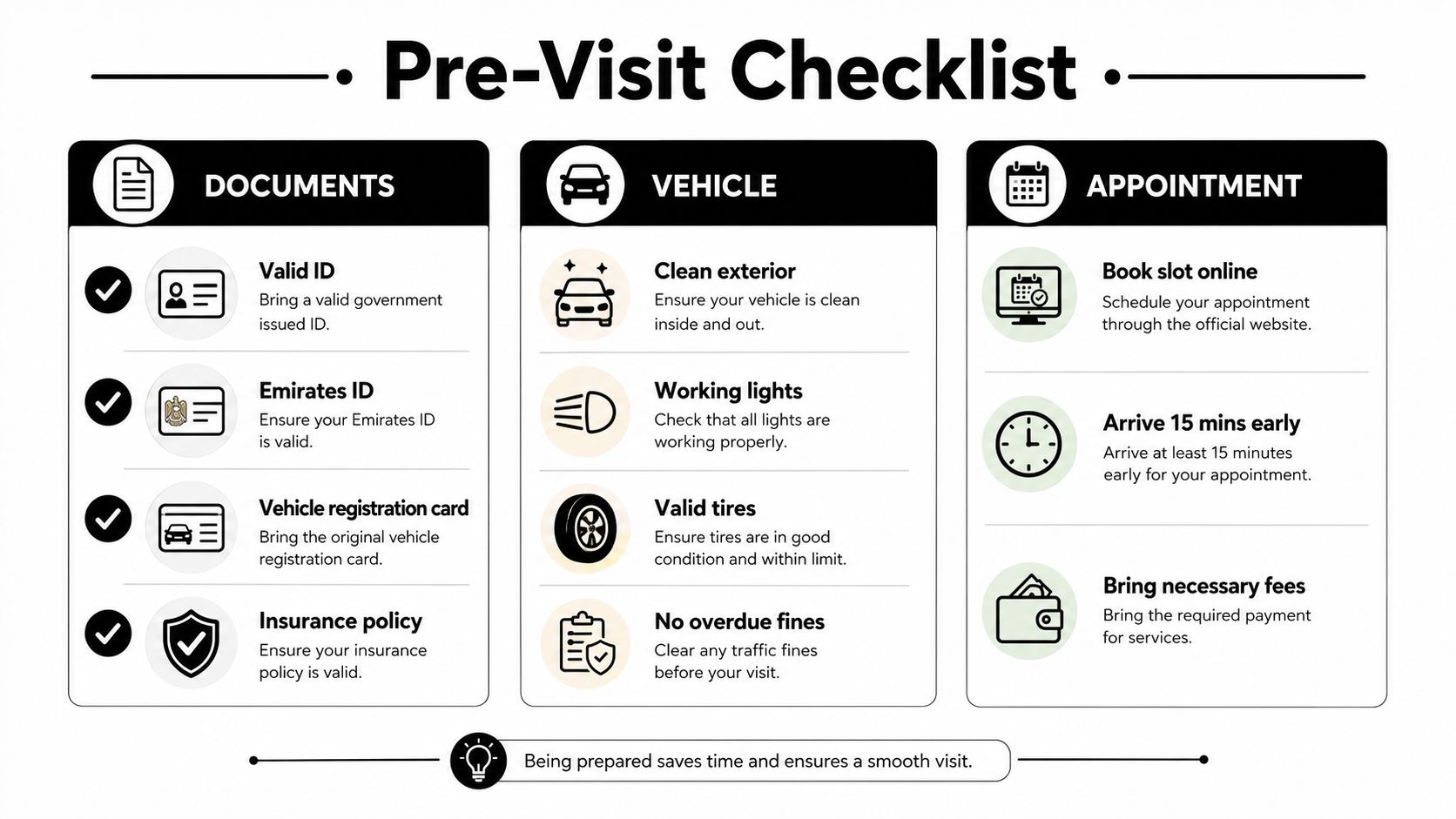
A missed document at the queue can turn a short visit into a wasted morning. At Tasjeel Jebel Ali, preparation does the heavy lifting, especially for fleet operators and rental companies that cannot afford delays in the southern logistics corridor. The best results usually come from a quick check at the office or at the yard, followed by a proper look over the vehicle before anyone drives over.
Quick checklist before you go
- Documents ready: Keep the Emirates ID, vehicle registration card, and insurance policy within easy reach. Use the Uptown Rent A Car vehicle inspection checklist to make sure nothing gets left behind.
- Vehicle roadworthy: Check the lights, tyre condition, and any warning signs before you head to the branch.
- Fines and paperwork cleared: Resolve any outstanding issues before the inspection visit so the file does not stall at the counter.
- Appointment confirmed: If you booked a slot, keep the confirmation on your phone and arrive early enough to absorb any queue movement.
- Fees prepared: Know the renewal and re-test costs before you leave so payment does not slow the handover.
The branch choice still matters. Use Jebel Ali if the vehicle is tied to the south, the free zone, port operations, or a commercial schedule that already runs through that corridor. Pick a more central centre if the only thing you care about is getting closer to home or the office. That difference separates a useful compliance stop from a cross-city detour that burns time and adds pressure to the day.
For operators running multiple units, the value is control. A well-prepared file, a roadworthy vehicle, and the right branch reduce the chance of repeat visits and keep vehicles moving through the business with less interruption.