
You've just landed in Dubai, your hotel's two streets away, and the scooter app says the ride looks easy. Then a marshal asks for your permit, and the whole “quick ride” turns into a fine and a very dull explanation at the kerb. That's the nature of electric scooter permit Dubai rules, they're free, but they're not optional.
Dubai made that clear in April 2022, when the city required riders to hold either an RTA e-scooter permit or a valid driving licence before using an electric scooter in approved areas, with a minimum age of 16 and a 20 km/h operating limit in designated zones (DubaiCars summary of the RTA permit rules). The city didn't build this as a paper exercise. It built it as a safety and compliance gate for a dense transport network.
If you want the blunt version, here it is. Riding without the required permit can cost Dh200 (Gulf News on Dubai e-scooter fines). Carrying a passenger or riding on roads above 60 km/h can bring Dh300 penalties too (Gulf News on Dubai e-scooter rules). If you want the wider legal backdrop, the practical comparison in global scooter law rules shows the same pattern, permits matter because cities use them to control where scooters can operate.
For a straight local rules overview, the Dubai transport rules guide is a useful companion. But the job here is simpler, figure out whether you need the permit, how to get it, what the fines really mean, and where the permit protects you on actual Dubai trips.
Why Dubai Takes E-Scooter Permits Seriously
A tourist rolls away from a hotel lobby and cuts toward a busy side road, assuming the scooter rental screen is enough to keep the ride legal. In Dubai, that assumption is how people end up paying for a mistake at the roadside. The permit system exists because the city treats e-scooters as part of traffic control, not casual sightseeing.
The city tightened the rules in April 2022, and that changed how micro-mobility works across a dense transport network (DubaiCars summary of the RTA permit rules). The permit is free of charge, which makes it easy to get but easy to misunderstand. The point is not the price. The point is that Dubai now has one clear legal check for riders, and that check is tied to safety and route control.
What the permit does
The permit gives you access to riding inside RTA-designated zones and on dedicated tracks. It sits alongside speed, age, and single-rider restrictions, so it controls where you can ride and how you have to behave once you are on the scooter (DubaiCars summary of the RTA permit rules, Gulf News on Dubai e-scooter fines and zones). That is why I tell visitors to treat it as a route filter, not a blanket pass.
Practical rule: if your trip depends on using a normal road for the last stretch, the permit by itself does not make that route legal.
That matters on real Dubai journeys. A ride from the airport to a hotel, a hotel-to-marina hop, or last-mile travel from the metro only works if the route stays inside the approved scooter network. The permit helps with compliance inside that network, but it does not extend into every road you might want to cross or every shortcut you might want to take. A broader look at global scooter law rules shows the same basic idea in other cities, scooters are allowed where the local system says they are allowed, and nowhere else.
Why the free application still matters
Free does not mean optional, and it does not mean low priority. Dubai uses the permit to separate riders who are cleared to use the system from riders who are not, which is why it belongs in the same mental bucket as hotel check-in and SIM setup when you plan a trip. If you are going to ride in Dubai, sort the permit first, then plan the route around the approved areas.
Who Needs the Permit and Who Is Exempt
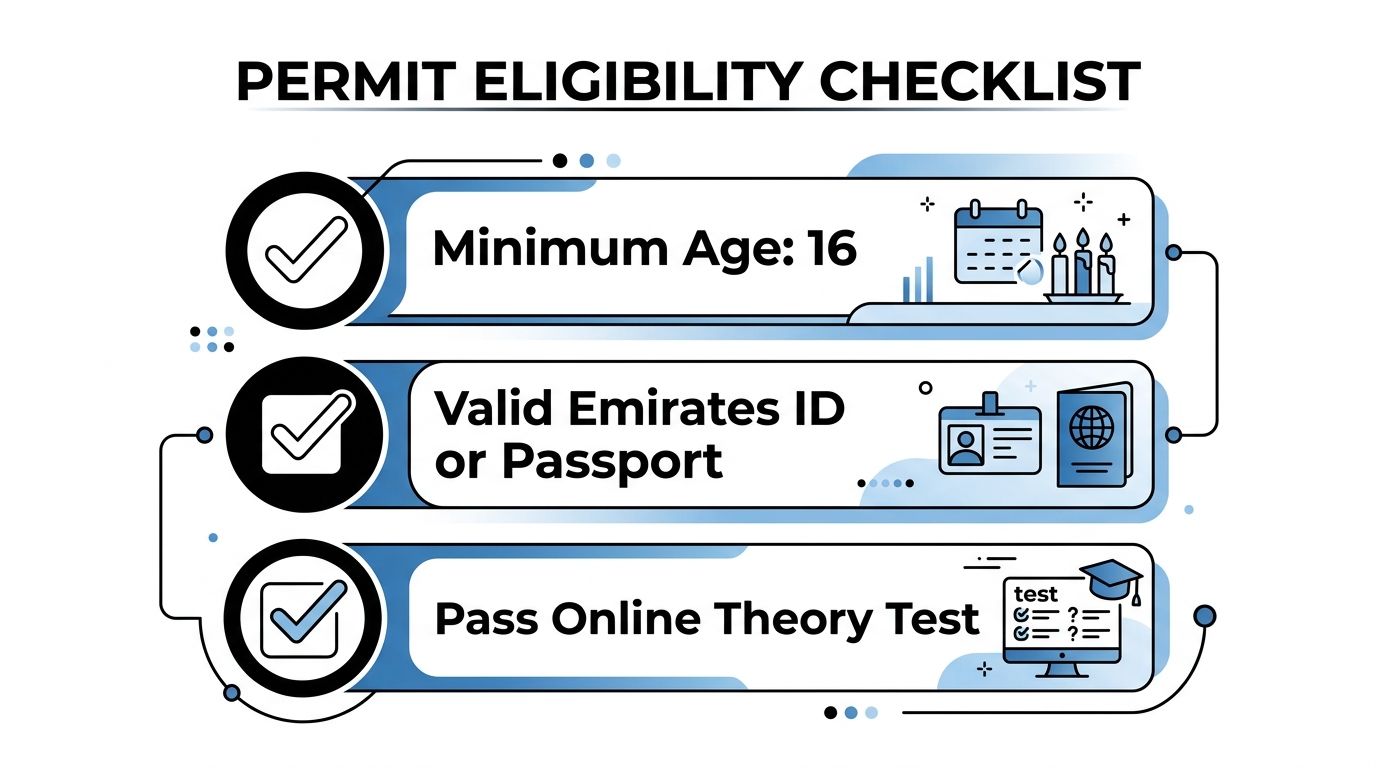
Dubai makes a clear split here, and riders should follow it instead of guessing. If you are 16 or older and you do not hold a valid UAE or international driving licence, you need the e-scooter permit before you ride. If you already have a valid driving licence, you are exempt from the separate permit requirement (RTA service details, DubaiCars summary of the RTA permit rules).
That exemption trips people up because they assume any licence they carry will do the job. It will not. The licence has to be valid, and the scooter rules still apply even when the permit step is removed (RTA service details). A valid driving licence can save you the extra permit step, but it does not give you free rein to ride anywhere you like.
What to keep ready before you start
Have your documents ready before you open the form. Residents should keep their Emirates ID at hand, and tourists should have a passport ready, along with any visa details the portal asks for (DubaiCars summary of the RTA permit rules). The primary concern is identity verification, not an extensive list of documents.
If you are still unsure whether your driving licence is valid, sort that first. The exemption depends on a valid licence, not just a licence in your wallet. For readers who are also dealing with other transport paperwork, our guide to avoiding medical fitness rejection shows the same rule in practice, check the qualifying document before you submit anything.
A simple yes or no
Apply if you want to ride a scooter in Dubai and you do not hold a valid driving licence that removes the permit requirement. Skip the separate permit if you already have a valid UAE or international driving licence, then stick to the approved riding rules. That is the clean split.
For airport-to-hotel transfers, hotel-to-marina hops, and last-mile rides from the metro, the permit only helps inside the permitted scooter network. It does not legalise a shortcut on a normal road, and it does not make every route fair game. Use the permit to clear the paperwork, then choose your route with the rules in mind.
Applying for the Permit Online Step by Step
Dubai keeps the application digital for a reason. Riders should not need an appointment or a counter visit for a basic e-scooter permit, and the online route is the one the city wants people to use. The permit is issued electronically after you complete the process, so there is no paper chase at the end.
The online flow you'll see
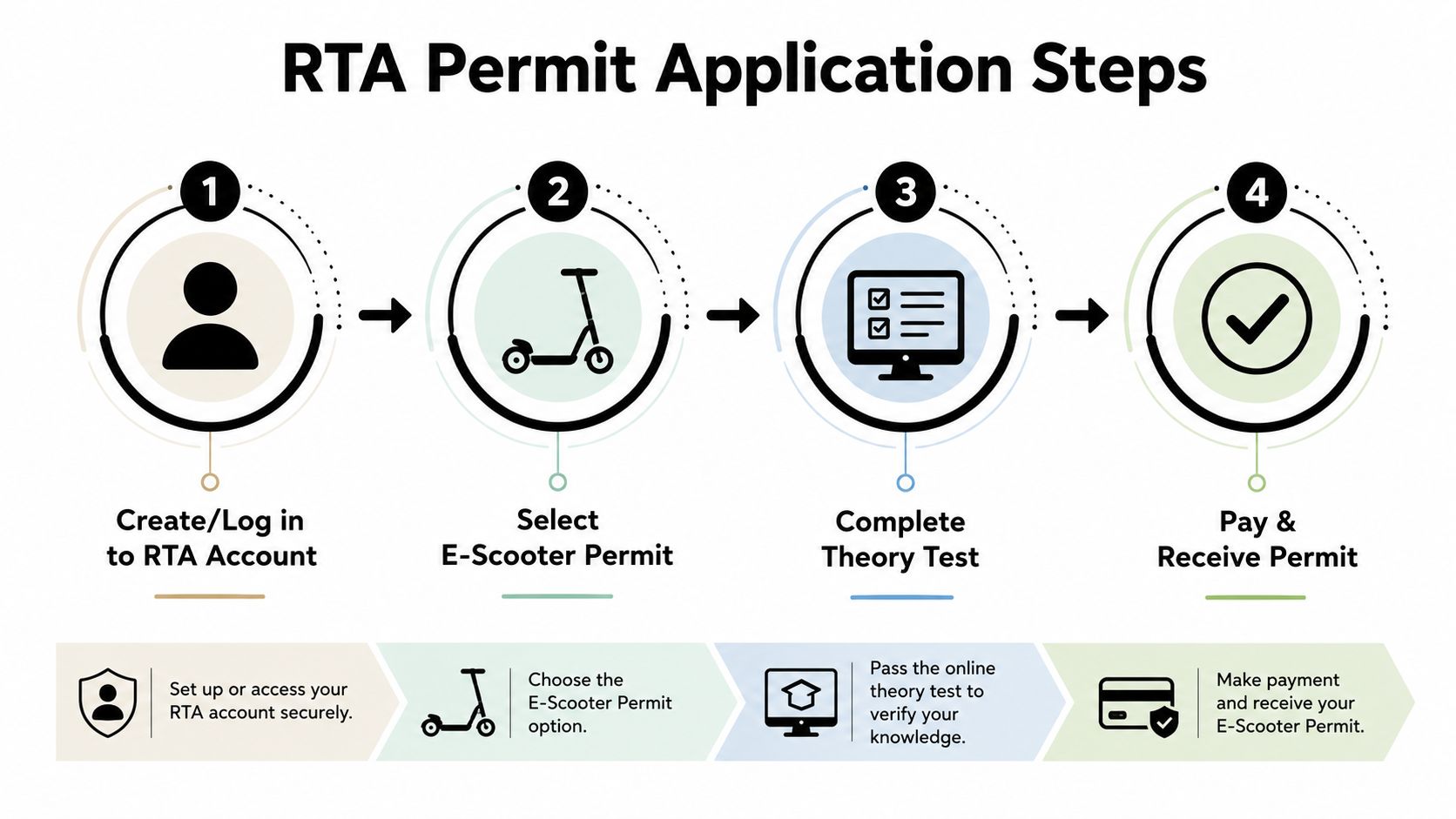
Open the RTA website or app and choose the e-scooter permit service. The portal then sends you through the learning material, followed by the required assessment. Once you pass, the permit lands in electronic form.
Do the steps in order. People get stuck when they rush straight to the test without finishing the learning content, or when they assume a driving licence lets them skip the permit process without checking whether that licence removes the requirement. If you are dealing with other transport paperwork at the same time, the same basic rule applies, check the qualifying document before you submit anything. For a related example, see avoiding medical fitness rejection.
How to handle the test without wasting time
Read the lesson material properly. Skimming it like a hotel check-in screen is how people waste time and fail on avoidable basics. The test is part of the permit workflow, and if you pass, the permit is issued electronically after that.
If you already deal with transport admin online, the process will feel familiar. It follows the same careful order you see in online driving licence renewal in Dubai, where the system expects the right steps in the right sequence. Treat it as compliance work, not a casual sign-up.
The part people misunderstand
The permit does not override route restrictions. After approval, you still have to stay inside RTA-designated zones and use the approved riding paths. That is the point of the system, the permit says you can ride, not that every road in Dubai is open to you.
For airport-to-hotel transfers, hotel-to-marina hops, and last-mile rides from the metro, the permit only supports you where scooters are allowed in the first place. It does not make a normal road legal, and it does not turn a shortcut into a safe route. If you are already comparing the permit against your daily trip, that is the right way to use it.
Fines, Speed Limits, and What Triggers a Penalty
Dubai treats scooter fines as a practical control system. If you ride where scooters are not allowed, carry a passenger, ignore parking rules, or push into traffic that belongs to faster vehicles, the penalty is the city's way of saying you have crossed the line. The permit gives you permission to ride within the rules, not a free pass across the whole road network. For riders comparing Dubai with other markets, understanding e-scooter legal requirements helps show how tightly local rules shape what is and is not allowed.
| Dubai E-Scooter Fines at a Glance | |
|---|---|
| Violation | Fine (AED) |
| Riding without a valid permit | 200 |
| Carrying a passenger | 300 |
| Riding on roads above 60 km/h | 300 |
| Parking in a non-designated or obstructive area | 200 |
The speed limit is part of the compliance picture too. Dubai keeps e-scooter riding at 20 km/h and expects riders to stay inside designated zones, so a scooter that looks harmless can still be a violation if the route or road type is wrong (DubaiCars summary of the RTA permit rules). That matters on real trips, especially airport-to-hotel transfers and last-mile runs from the metro, because the permit only supports those journeys where scooters are already allowed.
Read the fine against the behaviour
A Dh200 fine is the basic hit for riding without a valid permit. The city uses that penalty to push riders toward the permit process before they start using scooters around town (Gulf News on Dubai e-scooter rules and fines). The higher Dh300 fines are for behaviour that creates more risk, such as carrying another person or taking a scooter onto a road above 60 km/h. That is the pattern you should remember, solo riding, controlled routes, controlled speeds.
Parking gets people too. A scooter left in a non-designated spot or in a way that blocks others can also bring a fine, and that is where casual holiday riding turns into avoidable trouble (Dubai traffic fines list). The permit does not cover sloppy parking, and it does not excuse a bad route choice.
My blunt recommendation
Do not rent a scooter if you have not checked the route, the permit status, and the parking rules first. If your trip only works by cutting through roads that do not belong to the approved scooter setup, choose a different mode and save yourself the fine. Dubai is clear about this, and it will not care that you were only trying to make the ride shorter.
Where You Can and Cannot Legally Ride
A permit does not give you free rein across Dubai. It only supports riding inside the zones and track types the city already allows, so the main question is not whether you have paperwork, it is whether the route itself is legal.

Airport runs are the easiest way to get this wrong. If your hotel sits inside a permitted scooter area, the final stretch can work, but the moment your plan depends on a main road or any stretch that does not belong to the approved network, the permit does not save it. The same applies to a hotel drop-off that looks short on a map but forces you into traffic. Short does not mean legal.
Airport to hotel
This is the route visitors usually overestimate. They land, grab a scooter, and assume the permit covers the gap to the hotel. It only works if the route stays inside a scooter-friendly zone and never drifts onto roads that belong to general traffic.
Hotel to Dubai Marina
This trip can be practical, but only on the approved network. The destination is not the problem, the connector roads are. If the app sends you toward a stretch that does not fit the scooter setup Dubai allows, stop and reroute rather than trying to improvise. That is how riders end up with avoidable fines.
Metro last mile
This is the cleanest use case in Dubai. A scooter makes sense for a short hop from a metro station to a nearby office, residence, or stop that sits inside the permitted area. It does not make sense as a replacement for a taxi on open roads. Once the route starts looking like ordinary traffic, you are no longer using the scooter the way the city intended.
For a useful outside perspective on route legality, understanding e-scooter legal requirements is a decent reminder that the basic rule is the same in other markets, legal use depends on where you ride, not just on whether you have a permit.
Practical rule: if the route planner points you onto a road with heavy mixed traffic, assume the ride is outside the safe legal envelope until you verify it is allowed.
Treat the scooter as a designated-zone vehicle, not a shortcut for every trip across the city. That keeps airport transfers, Marina hops, and metro connections realistic, and it keeps you out of trouble.
Scooter Specs That Matter for Compliance
The scooter itself has to pass the test too. A permit does not legalise a badly equipped vehicle, and Dubai's technical expectations are specific enough that fleet operators should check them before riders leave the pickup point. Region-focused guidance points to a white front headlamp, red rear light, red reflectors, functional brakes on both wheels, a horn or bell, and GPS tagging, with a 20 km/h speed cap in Dubai (Gulf News on e-scooter specifications).
What each part is doing
The lights are for visibility, plain and simple. Evening traffic, shaded streets, and low-contrast routes all make a scooter harder to spot, so the front and rear lighting matter more than most riders expect. The brakes matter because scooter paths often involve shared space and sudden stops. GPS tagging is the bit people forget, but fleet apps use it to keep riders inside approved zones and to support the geofencing logic Dubai expects.
If you rent, inspect the scooter before you leave the pickup point. Turn it on, check the lights, squeeze both brakes, and confirm the app shows you inside a permitted area. If something looks off, swap the scooter immediately rather than arguing with enforcement later.
A quick personal-scooter audit
- Front light present: If there's no white headlamp, do not ride at night.
- Rear visibility present: Red rear lighting and reflectors are part of compliance, not decoration.
- Both brakes work: Test them before you leave, not after you have picked up speed.
- Sound signal works: A horn or bell is part of the safety kit, not an optional extra.
- Speed stays capped: The scooter should stay aligned with the 20 km/h Dubai limit. For a plain-English recap of the permit rules, see the DubaiCars summary of the RTA permit rules.
If you are buying rather than renting, audit the scooter first and the paperwork second. A legal rider on an illegal scooter is still exposed, and Dubai's rules treat that as a compliance problem, not a technicality.