
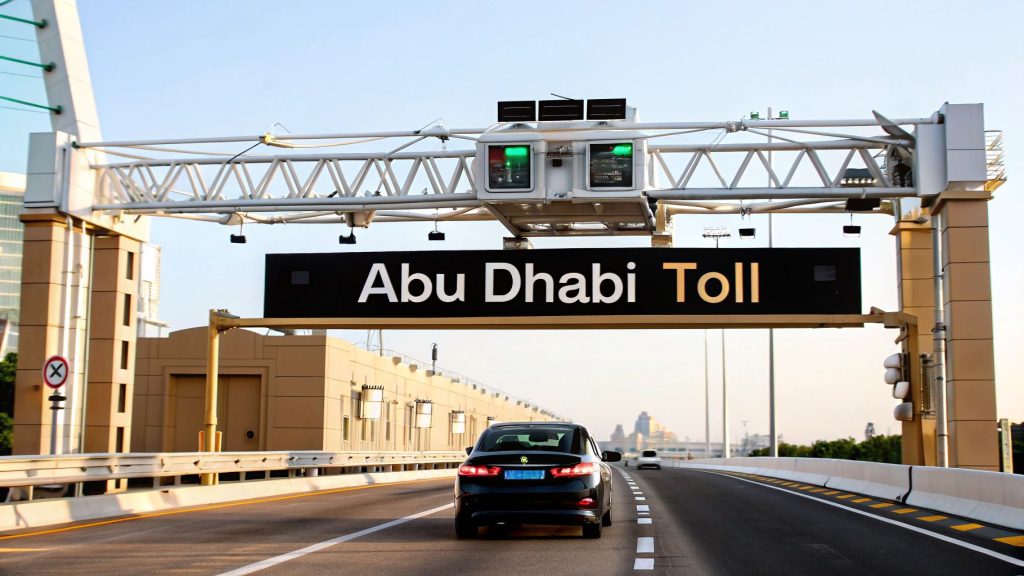
If you’ve ever driven in Abu Dhabi, you’ll be familiar with the Darb toll system. It's the capital's modern, automated answer to managing traffic flow, but it works a little differently than you might expect. Forget about scrambling for change or slowing down for a booth; Darb is a completely barrier-free network that keeps you moving.
Understanding the Abu Dhabi Toll System
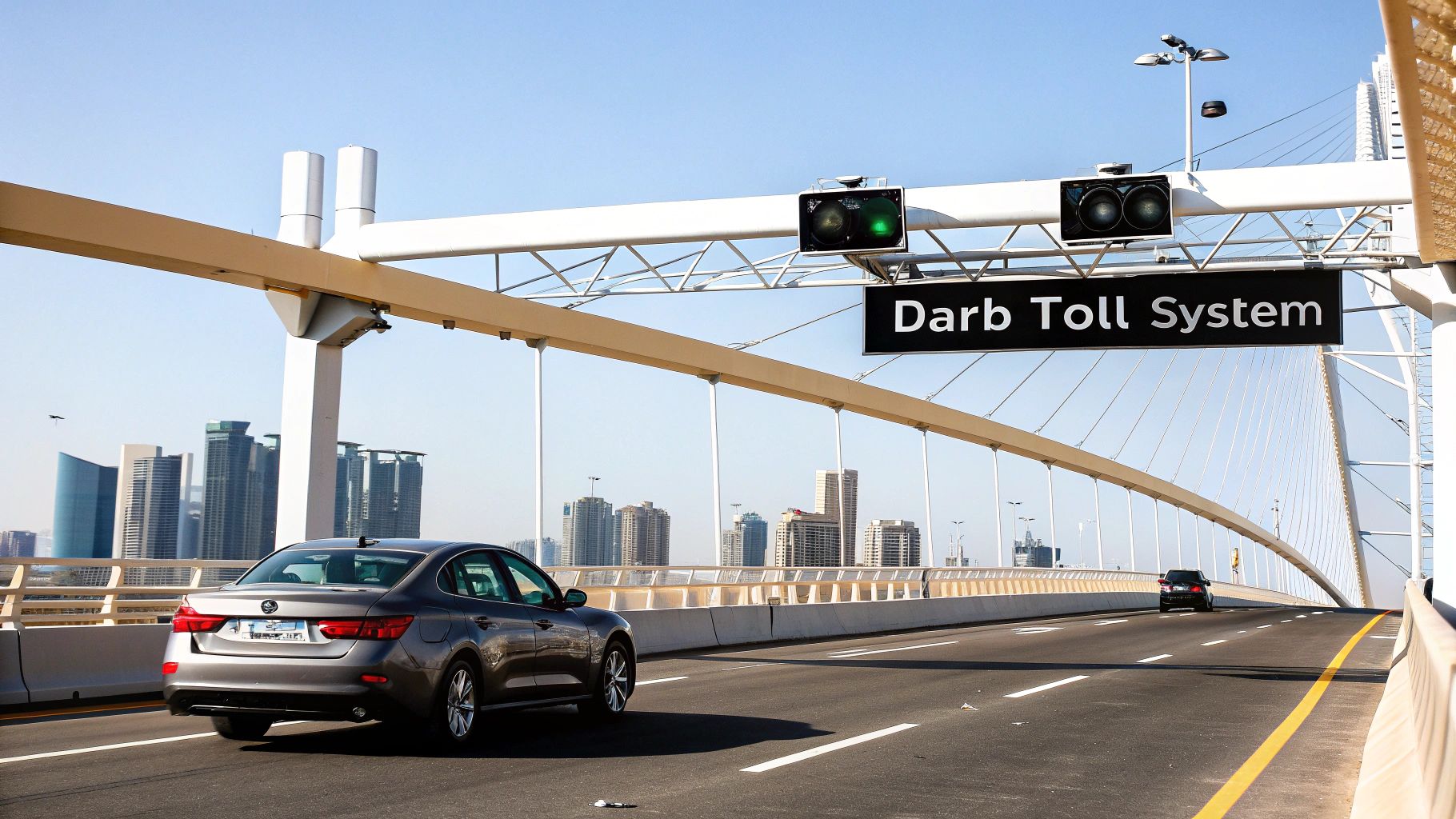
Picture this: you're driving into the city, expecting to hit a toll plaza, but you just sail right through. That’s the Darb system in action. It’s not about physical roadblocks but smart traffic management. The whole idea is to ease the daily gridlock on Abu Dhabi's busiest bridges when everyone is trying to get to and from work.
So how does it work? High-tech cameras mounted on gantries above the road automatically scan your vehicle's number plate as you pass underneath. There's no tag, no stopping, and no slowing down, which makes for a completely seamless drive. For anyone visiting the UAE and driving around, knowing this is a game-changer. If you're a tourist getting behind the wheel, our guide on driving in Dubai for tourists provides some great extra tips for navigating the region's roads.
The Goal Behind Darb
At its heart, the Darb system was put in place to tackle the ever-growing volume of cars pouring onto Abu Dhabi island every day. By charging a small fee during the busiest hours, the system gently encourages drivers to think about their travel habits—maybe leave a bit earlier, take a different route, or even hop on public transport.
The main goals are straightforward:
- Reducing Congestion: To thin out the traffic jams during the morning and evening rush hours.
- Promoting Sustainability: To nudge people towards carpooling or using public transport.
- Improving Air Quality: Fewer cars idling in traffic means cleaner air for everyone.
The system went live on 2nd January 2021, a project by the Integrated Transport Centre targeting the main traffic arteries like the Sheikh Zayed and Al Maqtaa bridges. It was an instant hit, with reports showing that over 250,000 users signed up on the very first day. This massive early adoption showed that people in the capital were more than ready for a smarter way to manage traffic.
How the Darb Toll System Actually Works
The Abu Dhabi toll system, Darb, is so slick you might drive right through a toll gate and not even notice. Gone are the days of fumbling for change at a physical booth or needing a tag stuck to your windscreen. Darb is a completely invisible, tag-free network that works silently in the background, all designed to keep the city's traffic moving.
At its heart, the system runs on Automatic Number Plate Recognition (ANPR) technology. Just think of it as a set of super-smart cameras perched on gantries above Abu Dhabi's main bridges. As your car passes underneath, these high-resolution cameras snap a quick picture of your licence plate.
In a split second, clever software reads the plate number, identifies your car with pinpoint accuracy, and checks it against the Darb database. Once your vehicle is confirmed, the AED 4 toll fee is automatically charged to the linked account. The whole thing happens faster than you can blink, so your drive is never interrupted.
How Darb Manages Different Vehicle Types
The real genius of the Darb system is how it handles everyone, from local commuters to first-time tourists in a rental car. The way you're charged depends entirely on who the car is registered to, which is a key detail for visitors.
- For Personal Vehicles: If you own a car registered in Abu Dhabi, your Darb account is set up for you automatically. For drivers with cars from other emirates, you’ll need to register on the Darb website or app and keep your account topped up to cover the tolls.
- For Rental Cars: This is where it gets incredibly simple for visitors. Rental agencies are required to register their entire fleet in the Darb system. As the renter, you literally don't have to lift a finger. The rental company handles it all.
The most important thing for tourists to remember is this: your rental company manages all Darb registrations and payments. You just drive. The toll fees are tracked and simply added to your final bill when you return the car, sometimes with a small admin fee.
This hands-off approach is designed to take all the stress out of the equation. There's no need to create an account, worry about adding credit, or risk getting a fine. It’s built for pure convenience, letting you focus on enjoying your journey through Abu Dhabi without any of the usual driving admin. You'll see the charges clearly itemised on your final invoice from the rental agency.
Darb Toll Gate Locations and Peak Hours
To really get the hang of the Abu Dhabi toll system, you only need to know two things: where the gates are and when they’re switched on. Unlike toll systems that run 24/7, Darb is designed to manage traffic only during the city's busiest times. That means a bit of smart timing on your part can save you money.
The entire system is focused on the four main bridges that act as the primary gateways to and from Abu Dhabi Island. Think of them as the city's main arteries. Controlling the flow here is key to keeping traffic moving, especially during the morning and evening rush.
Identifying the Four Toll Bridges
You’ll pass through a Darb toll gate whenever you cross one of these key bridges. They’re strategically placed to cover every major route onto the main island.
- Sheikh Zayed Bridge: An architectural icon and a major artery connecting Abu Dhabi to the mainland.
- Sheikh Khalifa bin Zayed Bridge: Another crucial link, especially for anyone coming from Saadiyat Island or Yas Island.
- Al Maqtaa Bridge: One of the city's oldest and most historic bridges, it's still a vital connection for thousands of commuters.
- Mussafah Bridge: A key route for industrial and commercial traffic, this bridge handles a massive volume of vehicles daily.
Knowing these locations helps you anticipate when a toll might pop up on your journey. If you're a tourist in a rental car, remember that driving over any of these during active hours will trigger a charge.
This visual shows just how smooth the automated toll process is, from the moment your car passes a gate to the charge being logged.
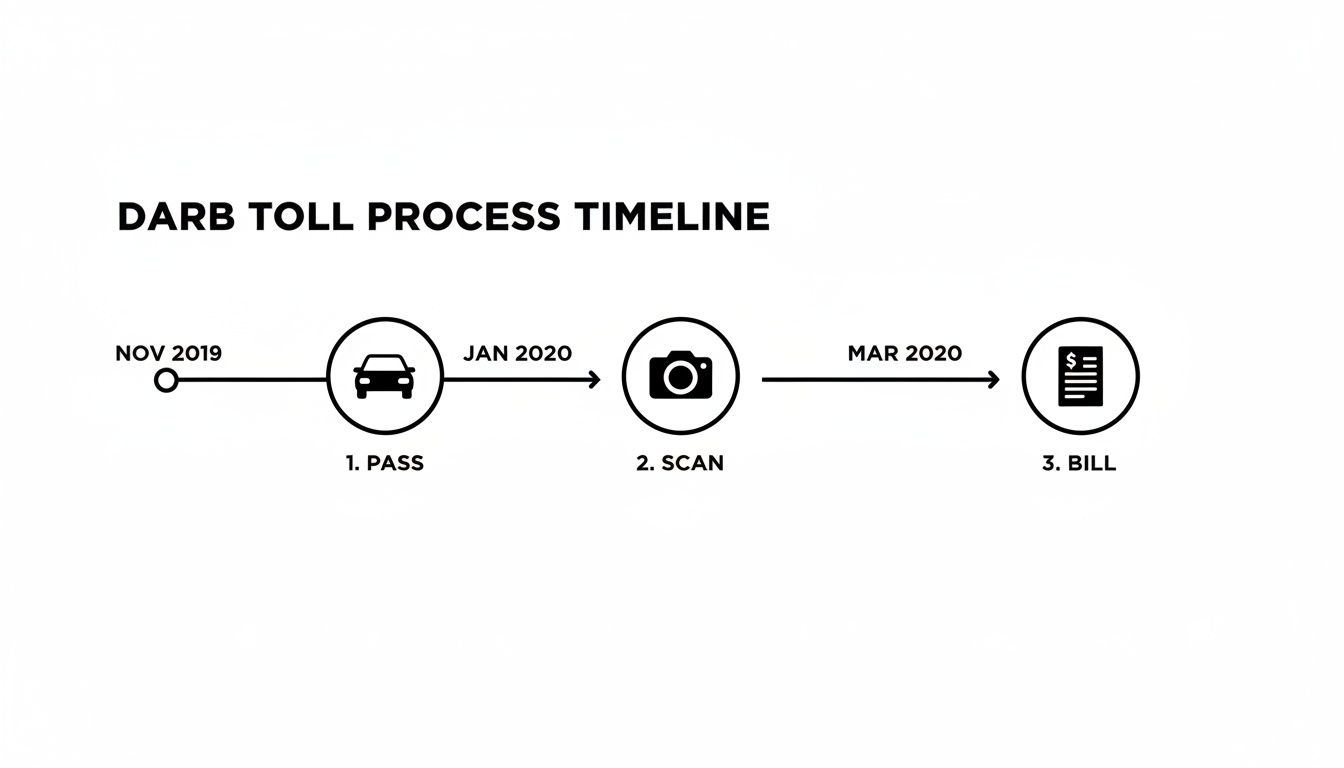
As you can see, the system is incredibly efficient. There are no toll booths or stops—just a simple pass, scan, and bill process that happens entirely behind the scenes.
Pinpointing the Peak Hours for Tolls
The most important part of mastering the Abu Dhabi toll is knowing when you get charged. The system is only live during peak weekday traffic hours to ease congestion.
A toll fee of AED 4 is charged only during two specific windows from Monday to Saturday. If you plan your travel outside these times, you can cross the bridges for free.
Here’s a quick summary of the toll timings and fees to help you plan your trips around the city.
Abu Dhabi Darb Toll Timings and Fees at a Glance
| Time Period | Days | Toll Fee Per Crossing |
|---|---|---|
| 7:00 AM – 9:00 AM | Monday – Saturday | AED 4 |
| 5:00 PM – 7:00 PM | Monday – Saturday | AED 4 |
| All Other Times | Monday – Saturday | Free |
| All Day | Sundays | Free |
| All Day | Public Holidays | Free |
This time-based approach makes Darb less of a constant fee and more of a smart tool for managing traffic. Simply by scheduling your drives outside these busy windows, you can completely avoid the charges.
Darb Toll Fees and Payment Explained
Getting to grips with the costs of Abu Dhabi's toll system is pretty straightforward, and it helps you avoid any nasty surprises on your statement. Darb works on a simple pay-per-pass system, charging a flat fee each time you cross a gate during its active hours.
Every time your vehicle passes under one of the four toll gates during peak times, you'll be charged a standard fee of AED 4. That fee is the same for every single crossing, no matter what kind of vehicle you're driving.
It's also worth noting that the old daily and monthly caps have been removed. This was a significant change designed to better manage the city's traffic, meaning your costs are now directly tied to how often you use the toll roads. For a deeper dive into why these changes were made, you can explore the details of Abu Dhabi's toll gate revisions.
How Payments Are Processed
How you pay for the tolls depends on one simple thing: are you driving your own car or a rental? Either way, the process is fully automated, so you'll never have to fumble for cash or stop at a booth.
If you own the vehicle, you'll manage your payments through a personal Darb account. You have to register this account online and make sure it's topped up with enough credit to cover your tolls. When you drive through a gate, the AED 4 fee is just automatically taken from your account's wallet.
The most important thing for private car owners is to keep that balance topped up. If your account runs out of money, you could face fines. It's a good idea to set up an auto top-up or at least check your balance regularly.
Payment for Tourists and Rental Cars
For anyone visiting Abu Dhabi or just renting a car, the system is designed to be as hands-off as possible. You don't need to create an account or worry about topping up a wallet—the rental company takes care of all of it.
Here’s a quick rundown of how it works for rental cars:
- Everything is Pre-Registered: Rental agencies are required to register their entire fleet of vehicles with the Darb system.
- Automatic Tracking: As you drive through the toll gates, the system logs every crossing against your rental car’s number plate.
- Settling Up at the End: When you return the car, the total toll charges you've accumulated are simply added to your final rental invoice.
Most rental companies will add a small administrative fee for managing this service, which you'll see itemised on your bill. It’s a transparent process that lets you focus on your driving, not the tolls. If you’re planning a trip, looking into an online car rental in Dubai ahead of time can help you find a vehicle that’s all set for Abu Dhabi's roads.
How to Avoid Common Darb Fines
Getting to grips with the Abu Dhabi toll rules is the easiest way to keep your drive smooth and free of surprise penalties. The Darb system is pretty straightforward, but a couple of common slip-ups can lead to fines.
For private car owners, the two biggest culprits are driving through a gate with an unregistered car or not having enough cash in your Darb wallet. But here’s the good news for tourists and renters: you don’t have to worry about this. Rental agencies are required to register their entire fleet, so you can hit the road knowing the car is fully compliant.
These rules are a direct response to the city’s incredible growth. Abu Dhabi's population has exploded by 51% in just one decade, jumping from 2.7 million in 2014 to an estimated 4.1 million by the end of 2024. That kind of expansion demands smarter traffic solutions, which is exactly what Darb provides.
Grace Periods and How They Work
Darb is designed to be fair, offering drivers a chance to sort things out before a fine is issued. Think of it as a friendly heads-up.
- Unregistered Vehicles: If you pass through a toll gate in a non-Abu Dhabi vehicle that isn't registered, you get a 10-day grace period to set up a Darb account. Miss that window, and you’re looking at a AED 100 fine on day one, which then doubles every day after, up to a massive AED 10,000.
- Insufficient Balance: Ran out of credit? No problem. The system gives you a 5-day grace period to top up your wallet. If you forget, it’s a AED 50 fine for every trip you made with a zero balance.
The key takeaway for tourists is that these fines and grace periods are primarily the responsibility of the vehicle owner—in this case, your rental company. They ensure all cars are registered and handle toll payments, removing any burden from you.
On a related note, if you’re planning on driving into the UAE from abroad, it pays to be prepared. Take a look at our guide to understand the complete international driving permit requirements before you travel.
Answering Your Questions About Abu Dhabi's Toll Gates
Driving in a new city always comes with a few questions, especially with automated systems like Abu Dhabi's Darb toll. To make sure you can hit the road with total confidence, we've answered the most common queries we get from visitors and renters.
Do I Need a Sticker Like Dubai's Salik?
Nope, you don't. This is one of the biggest differences between Abu Dhabi's system and Dubai's Salik. The Darb network is completely tag-free, so there's no sticker to worry about on your windscreen.
Instead, it uses sophisticated Automatic Number Plate Recognition (ANPR) cameras to identify your car as you pass through. This modern approach makes things incredibly simple, especially when you're in a rental.
How Do I Pay the Tolls in My Rental Car?
The entire process is designed to be invisible to you. Every reputable rental agency, including ours, pre-registers its entire fleet with the Darb system. All you have to do is drive.
When you pass through a toll gate, the cameras log the crossing against your car's plate.
The rental company takes care of it all. They'll calculate your total toll charges, which will then appear as a clear, itemised line on your final rental invoice. You settle the bill when you return the car—it's that easy.
Are the Abu Dhabi Tolls Active 24/7?
This is a key detail for planning your drives: the tolls are not active all day. Charges are only applied during peak traffic hours to help keep the city moving smoothly.
You'll only be charged the AED 4 fee if you drive through a toll gate during these times:
- Morning Peak: 7:00 AM to 9:00 AM (Monday to Saturday)
- Evening Peak: 5:00 PM to 7:00 PM (Monday to Saturday)
If you pass through the gates outside these hours, on a Sunday, or on any official public holiday, it's completely free.
What if I Drive Through a Toll Gate by Mistake?
Don't worry for a second. The system is designed for a seamless flow of traffic, so there are no barriers or booths. You can't "accidentally" do anything wrong.
If you happen to pass through a gate during its active hours, the ANPR cameras will simply log the AED 4 charge against your rental car's number plate. The rental agency will process it automatically, and you'll see it on your final statement. It's completely hassle-free.
To truly enjoy your journey through Abu Dhabi and beyond, the right vehicle makes all the difference. At Uptown Rent A Car, our entire fleet of luxury cars is fully registered with the Darb system, guaranteeing you a smooth and effortless drive. Explore our collection and book your perfect ride today.