
A successful Oman border crossing in a rental car really boils down to one thing: getting your documents right. The success of your trip isn't decided at the border checkpoint itself, but in the days leading up to it, making sure every single piece of paper is in order. Nail this part, and you're set for a smooth, hassle-free start to your Omani adventure.
Preparing for Your UAE to Oman Road Trip
There's something special about a road trip from the glittering cities of the UAE to the rugged, serene landscapes of Oman. But that feeling of hitting the open road requires a bit of careful planning, especially when you’re taking a rental car across an international border. The key is to get your paperwork organized meticulously to sidestep any potential delays or turn-arounds.
The Crucial No-Objection Certificate (NOC)
First things first, the single most important document you'll need is the No-Objection Certificate (NOC). This is essentially a border crossing permit from your car rental agency, and without it, you will be turned away at the border—no exceptions, no arguments.
When you ask your rental company for the NOC, make sure it clearly states these details:
- Driver's Details: Your full name, exactly as it appears on your passport.
- Vehicle Information: The car's make, model, color, and license plate number.
- Travel Dates: The specific dates you're permitted to have the vehicle in Oman.
- Official Stamp and Signature: The document must be officially stamped and signed by the rental company to be valid.
Pro Tip: Give your rental agency a heads-up and request the NOC at least 48-72 hours in advance. Some are quick, but building in this buffer saves a lot of last-minute stress. Before you drive off, double-check that every single detail on the certificate is 100% correct.
Understanding Omani Car Insurance
Your standard UAE car insurance policy won't cover you in Oman. You'll need to get separate Omani insurance, and you've got two main ways to handle this. You can either sort it out with your rental company when you get the NOC, or you can buy it right at the border.
Buying insurance at the border is usually straightforward and can be a little cheaper. You’ll find insurance offices at all the major crossings, and the whole process takes about 15-20 minutes. That said, arranging it beforehand through your rental agency gives you one less thing to worry about, letting you drive straight to immigration without an extra stop.
Personal Documents and Visa Requirements
Once the car's paperwork is sorted, the final piece of the puzzle is your own personal documents. Visa rules can and do change, so it’s always a smart move to check the latest requirements for your specific nationality before you set off.
To help you out, here’s a quick rundown of the mandatory documents we put together.
Mandatory Documents at a Glance
For a smooth crossing, a quick checklist can be a lifesaver. This table breaks down exactly what you and your vehicle need to have on hand.
| Document Type | Who Needs It | Key Requirement |
|---|---|---|
| No-Objection Certificate (NOC) | The Rental Car | Issued by the rental company, with correct dates and vehicle details. |
| Omani Car Insurance | The Rental Car | Must be valid for the duration of your stay in Oman. |
| Valid Passport | Every Passenger | At least 6 months of validity remaining from your entry date. |
| UAE Residence Visa | UAE Residents | At least 3 months of validity remaining. |
| Valid Driving License | The Driver(s) | Your home country license. An IDP may also be needed. |
| Vehicle Registration (Mulkiya) | The Rental Car | The original card must be present in the vehicle. |
Having these items organized and easily accessible will make your interaction with the border officials much quicker.
And speaking of border crossings, Oman's connection with the UAE is a major artery for tourism and trade. To give you some perspective, the Hatta border crossing was known to handle over 14,000 vehicles daily before global travel interruptions, which really shows how vital this land route is.
Finally, a crucial tip: before you even start your engine, make sure you have comprehensive United Arab Emirates travel health insurance. It’s one of those things you hope you never need, but you’ll be incredibly glad you have it if any unexpected medical issues pop up.
Choosing the Best UAE to Oman Border Crossing
Picking the right route for your Oman border crossing can be the difference between a frustrating delay and a seamless start to your road trip. It really all comes down to where you're starting in the UAE, where you're headed in Oman, and frankly, how much patience you have for queues.
For most tourists driving from big city hubs like Dubai or Abu Dhabi, the choice boils down to two main options: the Al Wajajah Border Post (what everyone calls the Hatta crossing) and the Mezyad Border Post down by Al Ain. Each has its own vibe and is better suited for different kinds of trips.
The Hatta Al Wajajah Border Post: The Main Artery
If you're setting off from Dubai, the Hatta crossing is the most direct and logical pick. It’s the main highway connecting Dubai to Muscat, which makes it super popular—and often, super busy. From the heart of Dubai, you can expect the drive to the Hatta border to take about 90 minutes.
This crossing is built to handle a ton of traffic, with pretty clear signs and a process that’s usually straightforward. The problem is, its popularity is also its biggest weakness.
- Weekends and Public Holidays: Brace yourself for serious delays. It's not out of the ordinary to spend two to four hours getting through if you're traveling on a Thursday evening or at the beginning of a long weekend.
- Weekdays: Travel mid-week (Monday to Wednesday), and you'll have a completely different experience. You can often sail through in under an hour.
The roads on both sides of the Hatta crossing are fantastic, smooth highways, making for a really comfortable drive. Once you’re through, you’re on a straight shot towards Sohar and Oman's capital, Muscat.
The Mezyad Hafeet Border Post: The Quieter Alternative
Now, if you're starting your journey from Al Ain or even the southern parts of Abu Dhabi, the Mezyad crossing is a no-brainer. For those of us coming from Dubai, the extra drive time to Al Ain can actually save you time and a headache, thanks to a much faster border experience.
This route is famously quieter than Hatta. It's the go-to crossing for anyone heading towards Nizwa, Jebel Akhdar, or Jebel Shams. It positions you perfectly to explore Oman's incredible mountainous interior without having to backtrack from the coast.
Insider Tip: Mezyad is almost always the less congested choice. Even on a packed holiday weekend, you can often get through the entire process in about an hour. That’s a world away from the potential gridlock at Hatta. Plus, the scenic drive past Jebel Hafeet on the UAE side is a beautiful way to start the trip.
Choosing Mezyad gives you a different taste of Oman right from the start. Instead of the coastal highway, you'll be cruising through more rugged, inland desert landscapes as you make your way toward Nizwa.
Comparing Your Options
So, which one is it? The choice is a simple trade-off: driving distance versus potential border wait times. Here’s a quick breakdown to help you decide.
| Feature | Hatta (Al Wajajah) Crossing | Mezyad (Hafeet) Crossing |
|---|---|---|
| Best For | Travelers starting from Dubai or Sharjah. | Travelers starting from Al Ain or Abu Dhabi. |
| Omani Destinations | Direct route to Muscat, Sohar, and the northern coast. | Ideal for Nizwa, Jebel Akhdar, and Oman's interior. |
| Typical Traffic | Very busy, especially on weekends and holidays. | Significantly quieter, even during peak times. |
| Wait Times | Can range from 45 minutes to 4+ hours. | Usually under 60-90 minutes. |
| Scenery | Modern highways leading to the Omani coastline. | Scenic drive past Jebel Hafeet into desert landscapes. |
For a play-by-play of the journey, our guide on how to drive to Oman from Dubai shares a first-hand account that will help you picture the whole trip.
Ultimately, if getting to Muscat from Dubai as fast as possible is your only goal, Hatta is the classic route. But if you'd rather have a calmer border experience and your itinerary includes Oman's stunning mountains, the extra drive to Mezyad is absolutely worth it.
How to Navigate the Border Crossing Process
Crossing an international border in a rental car sounds more intimidating than it is. In reality, it’s just a series of straightforward steps. Once you have all your documents lined up, the whole process is surprisingly smooth.
Let’s imagine a typical scenario: a couple driving from Dubai to Muscat for a weekend trip. Picturing their journey will give you a clear, play-by-play guide on exactly what to expect.
This quick infographic breaks down the main difference between the two most common border crossings for visitors.
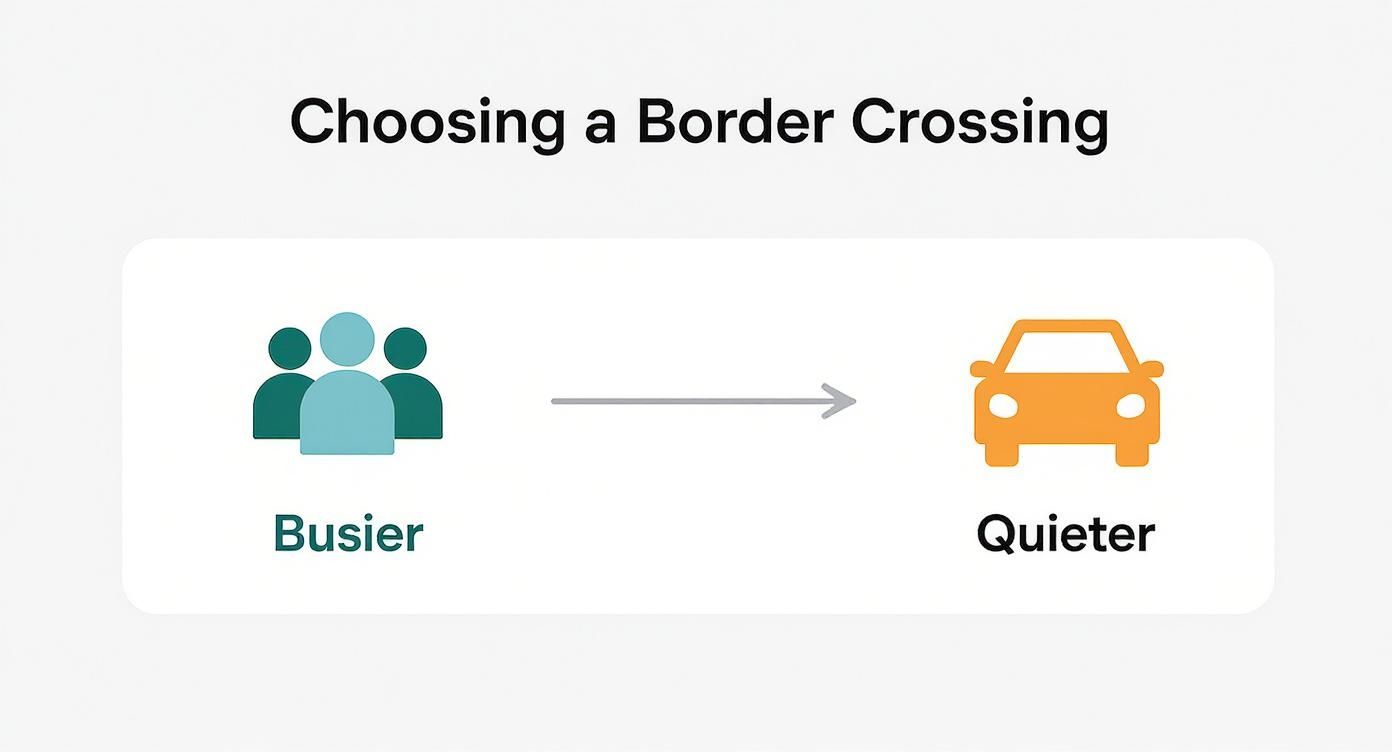
It’s a simple choice: Hatta is more direct but can get busy, while Mezyad offers a quieter, more scenic start to your Oman adventure.
Exiting the UAE: The First Checkpoint
As you pull up to the border post—we’ll use the popular Hatta crossing for this example—the first signs you'll see are for the UAE exit. Pay attention to the lanes, as they're often separated for GCC nationals and other passport holders. Hop into the correct one.
Your first interaction is at a drive-through booth. An officer will ask for everyone's passports, give them a quick scan, and then wave you forward toward the main immigration building.
Parking and Getting Your Exit Stamp
Next, you'll be directed into a large parking area. Park the car and grab all your important documents before heading inside the immigration hall. You’ll need:
- Passports for everyone in the car
- The vehicle registration card (Mulkiya)
- Your driver's license
- The rental car’s No-Objection Certificate (NOC)
Inside, you'll join a queue for the immigration counters. Hand your passports over, and the officer will process your departure, placing a crisp exit stamp inside. Don't walk away without checking for that stamp—it's essential for getting into Oman.
Paying the UAE Exit Fee
With stamped passports in hand, your last stop on the UAE side is paying the exit fee. Look for a separate counter or window, usually marked "Payments."
The UAE exit fee is AED 35 per person. You can pay with a credit card or cash. They'll give you a receipt; keep it somewhere handy, as you might need to show it at the final UAE checkpoint before driving into the "no-man's land" between the countries.
Key Takeaway: The UAE side is all about officially checking you out. It's a quick sequence: drive-through passport check, an exit stamp inside the main building, and paying the fee. Keep your documents together, follow the signs, and you'll be through in no time.
The Drive to Omani Immigration
Once you're clear of the UAE exit, you'll drive for a few minutes along a stretch of road connecting the two countries. This is the 'no-man's land'. The road funnels you directly to the Omani border post, which looks pretty similar to the one you just left.
Another officer at a drive-through booth will do a preliminary passport check and point you toward the main Oman immigration and customs building. Park the car and head on in.
Securing Your Omani Visa on Arrival
This is it—the official entry into Oman. Inside the immigration hall, you'll need to sort out your visa on arrival (assuming you're from an eligible country). You may need to fill out a simple form with your name, passport number, and how long you plan to stay.
Head to the immigration counter with all your documents:
- Passports for all passengers
- The rental car’s NOC and Mulkiya
- Your Omani insurance certificate (if you're buying it at the border, you’ll do this at a separate insurance office before approaching immigration)
The officer will check everything and process your visa. The fee is usually OMR 5 (about AED 50) per person for a standard tourist visa. You can pay by credit card or in Omani Riyals. Once paid, the officer stamps your passport with an Omani entry visa. Welcome to Oman!
Final Vehicle Inspection and Customs
You're on the home stretch now. After getting your entry stamp, walk back to your car and drive toward the customs inspection area. An officer will ask you to pull over and might want to take a quick look inside the boot and the car. They're just checking for prohibited items.
This inspection is usually quick and professional. The officer will also want to see the car's paperwork one last time—especially the Mulkiya and Omani insurance. After a final glance, they'll wave you through. You are officially in the Sultanate of Oman.
To make this process even slicker, Oman has been investing in automated border control (ABC) technology. These new ABC gates have already cut down on manual passport checks by nearly 40% at some crossings, seriously reducing wait times. You can explore more about these technological advancements and how they're improving travel in Oman.
A Practical Guide to Border Fees and Costs
Knowing what you’ll need to pay at the border can be the difference between a smooth, exciting road trip and a stressful one. Nobody likes financial surprises when they’re supposed to be on vacation.
Luckily, the costs for crossing from the UAE into Oman are pretty straightforward. Once you get a handle on what to expect, you can budget accurately and just focus on the adventure ahead.
The first fee you'll encounter is on the UAE side. Before you can officially drive into Oman, you have to be stamped out of the UAE, and that comes with a standard departure fee. This costs a flat AED 35 per person. You’ll pay this at a counter inside the UAE immigration building right after getting your exit stamp. They usually take credit cards, but having some cash in Emirati Dirhams is always a good backup plan.
Omani Visa and Entry Fees
After you've cleared UAE immigration and driven through the short "no-man's land," you'll arrive at the Omani border post. This is where you'll handle your entry visa. For most travelers, getting a visa on arrival is the standard procedure.
The typical tourist visa on arrival will set you back OMR 5 (which is about AED 50) for each person. Just like on the UAE side, you can generally pay with a credit card or in local currency—Omani Riyals in this case. Keep in mind that visa costs can sometimes change based on your nationality or how long you plan to stay, so a quick check of the latest Royal Oman Police guidelines before you leave is a smart move.
Insider Tip: While card machines are the norm at the border, they aren't foolproof. I've seen them go down due to network issues. To avoid any potential hiccups, I always recommend carrying enough cash in both AED and OMR to cover all the fees for your entire group. It’s a simple precaution that can save you a lot of hassle.
The Cost of Omani Car Insurance
Now for the biggest variable in your border-crossing budget: mandatory Omani car insurance. Your UAE rental car policy stops the second you leave the country, so getting separate coverage for Oman isn't just a suggestion—it's the law. As we mentioned earlier, you can sort this out with your rental company beforehand or just buy it right at the border.
Often, the most wallet-friendly option is to buy it from one of the small insurance offices you'll see at the border crossing. The price really depends on what kind of coverage you're comfortable with.
- Third-Party Liability: This is the bare minimum you need to be legal on Omani roads. It covers any damage you might cause to other people's property or vehicles, but it won't cover your rental car. You can expect to pay around AED 100-120 (OMR 10-12) for a week's worth of coverage.
- Comprehensive Coverage: If you want total peace of mind, this is the way to go. It covers your rental car in addition to third-party damages. The cost is naturally higher, usually starting from AED 250 (OMR 25) for a week and going up depending on the value of the car you're driving.
Thinking about your options ahead of time is key. When you look for an online car rental in Dubai, it's a great idea to ask about their Oman insurance packages upfront. Talking about your travel plans with the rental agency before you book makes the entire process so much smoother.
Estimated Border Crossing Fees
To give you a quick snapshot for your budget, here’s a simple breakdown of the typical costs involved. Just remember these are solid estimates, and final prices can vary slightly.
| Fee Type | Payable To | Estimated Cost (AED/OMR) | Payment Method |
|---|---|---|---|
| UAE Exit Fee | UAE Immigration | AED 35 per person | Credit Card / AED Cash |
| Oman Entry Visa | Oman Immigration | OMR 5 per person | Credit Card / OMR Cash |
| Omani Car Insurance | Border Insurance Office | OMR 10-25+ per vehicle | Credit Card / OMR Cash |
By factoring these costs into your trip planning, you can make sure your budget is as clear and easy as the beautiful Omani roads waiting for you.
Insider Tips for a Seamless Crossing
Knowing the official rules for an Oman border crossing is one thing, but mastering the unwritten ones is what really turns a good trip into a great one. After years of making this drive, I've learned that a few practical tricks can save you time, money, and a whole lot of potential frustration.
These are the road-tested tips that go beyond the paperwork. Think of this as your inside track to a flawless border experience, ensuring your journey starts off as smoothly as the Omani highways you're about to enjoy.
Timing Your Crossing Perfectly
One of the easiest ways to guarantee a quick crossing is to be smart about when you go. The difference between a 30-minute breeze-through and a three-hour crawl often comes down to timing.
- Avoid the Rush: The absolute worst times are Thursday evenings, Friday mornings, and the start of any public holiday. This is when a huge number of UAE residents head to Oman for a weekend getaway, and the queues can be massive.
- The Sweet Spot: Your best bet is to cross mid-week. Aim for a Monday, Tuesday, or Wednesday morning for the quietest and fastest experience.
- Early Bird Advantage: If you have to travel on a weekend, go super early. Arriving at the border by 6 AM can help you beat the main wave of traffic that really starts to build from 8 AM onwards.
Financial Readiness at the Border
While credit cards are widely accepted for official fees, technology isn't always reliable out there. A little bit of cash preparation is a solid backup plan and can speed things up considerably.
Always carry a mix of currencies. You'll need Emirati Dirhams (AED) to pay the UAE exit fee and Omani Riyals (OMR) for your visa and any insurance you buy on the Omani side. Having the exact amount ready in cash saves you from dealing with slow card machines or bad exchange rates at border kiosks.
Crucial Advice: Don't rely solely on your credit card. I've seen card machines offline more than once due to network issues. Having enough cash to cover all fees for your entire group is a simple backup that can save you a major headache.
Pre-Travel Vehicle Preparations
A few simple vehicle checks before you leave can make a huge difference. The last thing you want is a preventable breakdown far from a familiar garage.
The most important tip? Fill up your fuel tank in the UAE. Petrol is noticeably cheaper in the UAE than in Oman, so topping up before you cross will save you a decent amount of money right off the bat.
It’s also a good idea to give your car a quick once-over: check your tyre pressure, oil, and coolant levels. It’s basic stuff, but it provides real peace of mind for the long drive ahead.
Preparing for the Vehicle Inspection
The final step on the Omani side is a quick customs inspection. This is usually just a formality, but you can make it even faster by being prepared. The officers are professional, and a little organization shows respect for their process and helps them move you along quickly.
Oman's border security is robust and efficient. In fact, their enhanced patrols and surveillance have helped reduce illicit activities by roughly 35% since 2020. Their goal is security, not to inconvenience travelers, so a tidy car helps them do their job. You can find more insights on Oman's border security framework on state.gov.
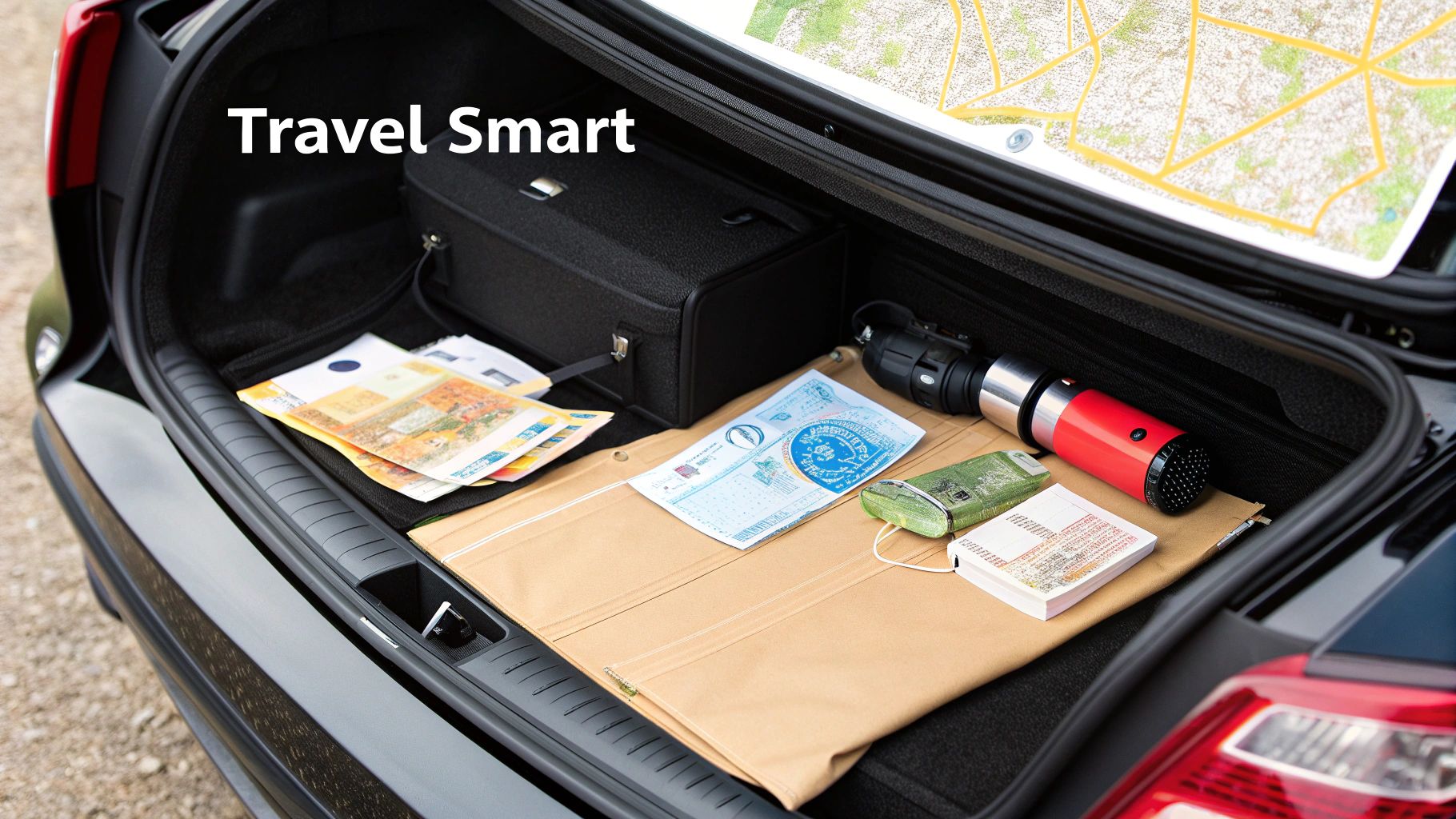
Here’s how to pack smart for a fast check:
- Keep your luggage organized and easy to access, especially if your car is full.
- Try to avoid having loose items scattered all over the seats and floor.
- Have your vehicle documents (NOC, Mulkiya, Omani insurance) handy to show the officer.
Finally, a pro tip: download offline maps for Oman using an app like Google Maps or Maps.me before you leave the UAE. Mobile signal can be patchy right after the border, and having your route pre-loaded means you can navigate confidently from the moment you enter the Sultanate.
Common Questions About Driving to Oman
Even the most seasoned travelers have a few last-minute questions before a big road trip. It's only natural. To put your mind at ease, we've rounded up some of the most common queries we get about taking a rental car across the border to Oman.
Can I Take Any UAE Rental Car to Oman?
This is the single most important thing to get right: absolutely not. Only select rental companies in the UAE allow their cars to be taken into Oman, and even then, they often have restrictions. You’ll usually find that high-end sports cars and certain luxury models aren't permitted to make the journey.
Before you even think about booking, you have to get explicit confirmation from the rental agency that they allow border crossings. If they give you the green light, you'll need them to issue a No-Objection Certificate (NOC). This official paper, along with mandatory Omani insurance, is non-negotiable. Show up at the border without them, and you’ll be turned away, plain and simple.
How Long Does the Border Crossing Take?
This really depends on your timing. If you play it smart and cross during an off-peak time, like a Tuesday or Wednesday morning, the whole process can be surprisingly quick. I've done it in as little as 30-45 minutes from the UAE exit stamp to the Omani entry.
But if you try to cross on a Thursday evening or during a public holiday, get ready for a completely different experience. You should budget anywhere from 2 to 4 hours, especially if you're using the popular Hatta crossing. For a smoother ride during peak times, it's often worth driving a bit further to a quieter checkpoint, like Mezyad near Al Ain.
Insider Tip: Time is your best friend here. The easiest way to guarantee a smooth, hassle-free entry into Oman is to cross mid-week. A little flexibility in your travel plans can literally save you hours of sitting in a queue.
What Happens if My Visa Is Denied?
Honestly, a visa denial at the border is extremely rare as long as you have your documents in order and meet the entry requirements. The border officials are professionals, and the system is well-oiled for eligible tourists.
In the very unlikely event you were denied entry, you would simply have to turn around and drive back into the UAE. The best way to avoid this is just to be prepared. If you're from a country that isn't eligible for a visa on arrival, make sure you apply for an e-visa through the Royal Oman Police website well ahead of your trip.
Should I Exchange Money Before I Cross?
It’s definitely a good idea to have some local cash on you. You'll find currency exchange booths at the border, but the rates they offer are rarely as good as what you'll find back in the city.
I always recommend swapping a small amount of money in the UAE to get some Omani Riyals (OMR) before you set off. It’s perfect for grabbing a snack, paying for small items, or just in case you run into any issues with your credit card. While you can pay for the big stuff like your visa with a card, having a bit of cash in both AED and OMR is a solid backup plan for a stress-free journey.
Ready to kick off your Omani adventure? At Uptown Rent A Car, we have a fleet of premium vehicles fully prepared for your cross-border trip, and we handle all the necessary paperwork for you. Explore our collection and book the perfect car for your road trip today.