
Why Dubai's Roads Are Different (And What That Means for You)
Driving in a new city can be intimidating, especially a bustling metropolis like Dubai. However, many visitors are pleasantly surprised by how easy it is to navigate Dubai's roads. This is due to the city's substantial investment in infrastructure, resulting in surprisingly smooth traffic flow. These improvements make driving in Dubai a much less stressful experience for tourists.
Dubai's Traffic Management System
A major factor contributing to Dubai's efficient traffic flow is its advanced traffic management system. The system uses smart signals that adjust to real-time traffic conditions, minimizing congestion and optimizing traffic movement.
Digital monitoring also plays a vital role. It allows authorities to quickly identify and address developing traffic problems. This proactive approach keeps traffic moving smoothly, even during rush hour.
Navigating the Multicultural Driving Environment
Dubai's roads reflect its diverse population. Drivers from across the globe converge here, each with their own driving styles and habits. Understanding this multicultural driving environment is essential for tourists driving in Dubai.
Adapting to the local driving patterns, with their unique blend of international influences, will boost your confidence on the road.
Dubai's Impressive Traffic Statistics
Dubai has become a global leader in addressing both traffic congestion and road safety. This is especially noteworthy given the city welcomed 18.72 million international visitors in 2024, a 9.15% increase from 2023.
Despite this influx of tourists, Dubai manages road traffic quite efficiently. Studies show that Dubai drivers lose roughly 33 hours per year to traffic jams, significantly less than the 160 hours lost by drivers in cities like London or New York. Find more detailed statistics here: https://www.giggulf.ae/en/hidden-cost-of-traffic-jams-in-dubai-in-2025 You might also find this helpful: How to master your Dubai budget.
Planning Your Drives Strategically
Considering the unique aspects of Dubai's roads, planning your trips is crucial. Think about factors like peak traffic periods and alternative routes to minimize delays.
Familiarizing yourself with the city's layout and using GPS navigation effectively can also lead to a smoother driving experience. By understanding the intricacies of driving in Dubai, you can confidently explore everything this dynamic city has to offer.
The Traffic Rules That Actually Matter for Tourists
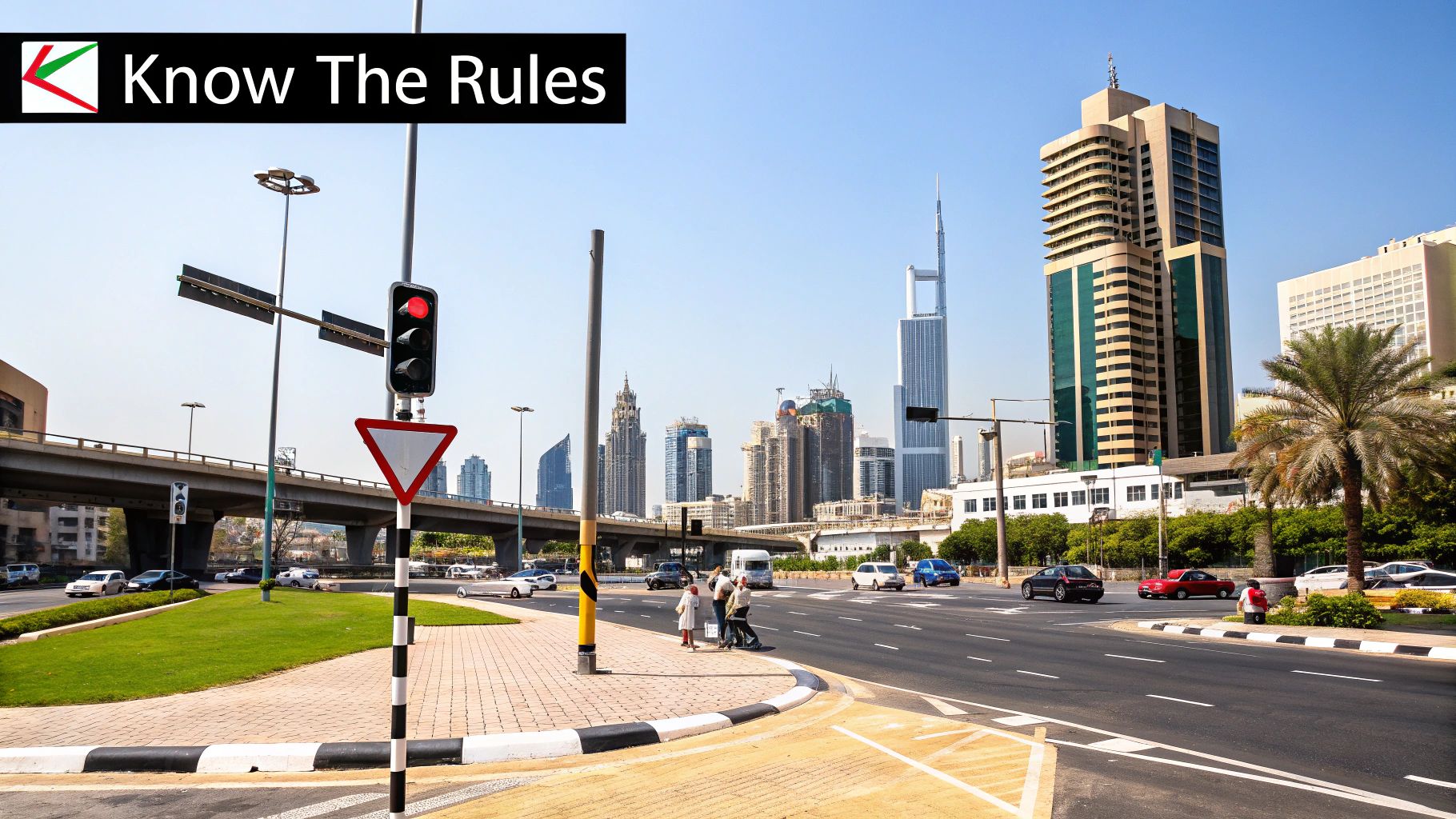
Driving in Dubai as a tourist isn't just about knowing basic international traffic laws. It's about understanding the specific regulations and local customs. Familiarizing yourself with these nuances can greatly improve your safety and help you avoid fines. Let's explore the essential traffic rules every tourist needs to know.
Navigating the Salik Toll System
Dubai uses the Salik toll system, an electronic method of collecting tolls. Every time you drive under a Salik toll gate, AED 4 is automatically deducted from a prepaid account. This is an important factor to consider when budgeting for transportation.
Rental companies typically handle Salik deductions for tourists and add the charges to your final bill. It's essential to confirm this with your rental company, such as Uptown Rent A Car, to avoid unexpected costs when you return the vehicle.
Decoding Parking Zones
Understanding Dubai's color-coded parking zones is vital for avoiding parking tickets. The different colors signify varying parking durations and fees. Red and blue zones are paid parking areas with time limits. Green zones offer free parking, but only for a limited time.
Always check the signage and use parking meters or mobile parking apps to pay. Ignoring these zones can result in substantial fines, impacting your travel budget.
Speed Limits and Enforcement
Dubai enforces strict speed limits that change depending on the road. These limits are closely monitored by speed cameras and radar systems. Even slightly exceeding the posted speed limit can result in a hefty fine. For instance, driving just 10 km/h over the limit can incur a significant penalty. Staying aware of speed limits is a key part of safe driving in Dubai.
Roundabout Etiquette and Lane Discipline
Navigating roundabouts in Dubai requires following specific rules. Always yield to traffic already on the roundabout and clearly indicate your intended exit. Maintaining proper lane discipline is also crucial for a smooth traffic flow.
Avoid sudden lane changes and always use your indicators to signal your intentions. These practices not only contribute to better traffic flow but also improve overall road safety.
Mobile Phone Restrictions
Using a mobile phone while driving is strictly forbidden in Dubai. This includes texting, browsing, and even holding your phone. While hands-free devices are allowed, minimizing all distractions is the safest practice.
The penalties for mobile phone violations are substantial, so prioritize safe driving and keep your phone out of reach. By understanding these essential traffic rules, you can navigate Dubai's roads confidently and enjoy a safe, hassle-free driving experience. This knowledge will contribute to a more pleasant and relaxed trip. Remember, responsible driving isn't just about avoiding fines; it's about ensuring everyone's safety on the road.
Understanding the Real Risks on Dubai Roads
Driving in Dubai presents unique challenges, especially for tourists. The city's diverse mix of nationalities and driving styles creates a dynamic road environment requiring careful attention. This section explores potential risks and provides valuable insights for staying safe.
Accident Patterns and Peak Risk Periods
Understanding accident patterns is key to safer driving. Rush hour traffic, particularly between 7-9 am and 5-7 pm, increases the risk of fender benders due to congestion.
Weekends also see a rise in accidents due to increased leisure travel. Adjusting your travel times can significantly reduce your exposure to these higher-risk periods.
Navigating Dubai's Diverse Driving Landscape
Dubai's international population brings a wide range of driving habits. This mix can sometimes lead to unexpected situations on the road.
Being aware of this diversity and practicing defensive driving techniques will help you anticipate and react safely to any unexpected maneuvers.
Emergency Response Capabilities
Dubai has an impressive emergency response system. Response times are generally swift and efficient. Knowing how to contact emergency services is crucial.
Familiarize yourself with the local emergency number, 999, and save it in your phone. Dubai also maintains high standards in its medical facilities. This provides peace of mind knowing you'll receive quality care if needed.
Accident statistics reflect both the challenges and the strong safety measures in place. In 2024, the UAE recorded approximately 6,500 road accidents, a slight decrease from previous years. Dubai, as the most populous emirate, contributes a significant share. The high volume of vehicles, coupled with a transient population including millions of tourists, presents unique risks. For detailed statistics, visit: Foremost Drive
Geographic Areas Requiring Extra Vigilance
Certain areas in Dubai demand increased vigilance. Construction zones often have changing lane configurations and reduced speed limits. Exercise added caution in these areas.
Pedestrian crossings are common throughout the city. Slowing down and being observant near these crossings is essential for pedestrian safety. By understanding these risk factors, you can better prepare for a safe and enjoyable driving experience in Dubai. Combining awareness with practical driving skills can significantly mitigate potential risks and allow you to explore the city with confidence.
Zero Tolerance: What Every Tourist Must Know About Alcohol
Dubai maintains a zero-tolerance policy on drinking and driving. This policy applies to both residents and tourists, and the penalties for violating it are severe. It's not a suggestion, but a strictly enforced law. This section provides essential information for any tourist planning to drive in Dubai.
Understanding the Zero-Tolerance Policy
Dubai's zero-tolerance policy means absolutely no alcohol is allowed in your bloodstream while driving. Even one drink could put you over the legal limit. This strict rule aims to ensure road safety for everyone. Enforcement is rigorous, with random checkpoints and advanced detection methods.
Dubai's authorities prioritize addressing drunk driving, particularly given the city's popularity as a tourist destination. In 2022, drunk driving caused 533 accidents, resulting in 22 fatalities and 129 injuries. This concerning statistic prompted a strong response. Authorities implemented the zero-tolerance policy, increased sobriety checkpoints, and initiated public awareness campaigns. Learn more here: Drunk Driving Statistics in Dubai.
How Enforcement Works
Dubai police use several methods to detect drunk driving, including random breathalyzer tests at checkpoints. They also conduct targeted stops based on observed driving behavior.
In addition, authorities utilize modern technology to identify drivers under the influence. These combined efforts significantly contribute to road safety within the city.
Consequences of Driving Under the Influence
Penalties for drunk driving in Dubai are substantial. They include significant fines, imprisonment, vehicle confiscation, and even deportation. These penalties apply even to first-time offenders. A conviction can have lasting consequences, affecting future travel and potentially impacting job prospects.
Alternative Transportation Options
Using alternative transportation after consuming alcohol is crucial given the stringent regulations and serious repercussions. Dubai offers several safe and convenient choices:
- Taxis: These are readily accessible and relatively inexpensive.
- Ride-hailing apps: Services like Careem and Uber offer convenient transportation.
- Public transportation: The Dubai Metro and bus system offer extensive coverage.
- Designated driver: Arrange for a friend or family member to drive.
Planning your transportation ahead of time is key to a safe and enjoyable experience, avoiding any potential legal issues. Utilizing these readily available options will protect both your well-being and your trip.
Practical Tips for Tourists
- Abstain completely if driving: This is the safest course of action.
- Familiarize yourself with the law: Understanding the policy and its implications is essential.
- Plan alternative transportation: Make sure you have a safe ride back to your accommodations.
- Don't risk it: The potential repercussions are simply not worth it.
By following these tips, tourists can have a positive experience in Dubai without compromising their safety or encountering legal problems. Being informed is key to a smooth and enjoyable vacation.
Practical Driving Strategies That Keep You Safe
Driving in Dubai as a tourist isn't just about knowing the rules. It's about having practical strategies to navigate the city's unique roads. This section offers essential tips for confidently handling Dubai's diverse traffic.
Defensive Driving in a Multicultural Setting
Dubai's roads host a mix of international driving styles. This blend of driving cultures can be unpredictable, making defensive driving essential. Defensive driving means anticipating potential hazards and reacting proactively. For example, be prepared for sudden lane changes or unexpected braking. This awareness minimizes accident risks.
Maintaining a safe following distance gives you ample reaction time, crucial in Dubai's fast-paced traffic. This buffer zone provides the space you need to maneuver safely in unexpected situations.
Handling Weather-Related Challenges
Dubai's weather can be challenging. Sandstorms can drastically reduce visibility, while sudden downpours can create slippery roads. In these conditions, reduce your speed and increase your following distance. If visibility is severely impaired, pull over to a safe location and wait for improvement. These precautions ensure your safety and the safety of others.
Mastering Highway Merging and Construction Zones
Dubai's highways are often busy. Merging requires confidence and precision. Signal your intentions early, check your blind spots, and accelerate smoothly to match the highway speed. Construction zones are common in Dubai, often involving lane closures and diversions. Pay close attention to signage and reduce your speed for safe navigation.
Optimizing GPS Navigation with Local Road Signage
While GPS is valuable, using local road signs is also crucial. Dubai's road network is complex, and GPS systems aren't always up-to-date. Combining both tools ensures accurate navigation and helps avoid unexpected detours. For familiarization with common vehicles on the road, check out this resource: Most Popular Cars in Dubai.
Practicing Patience and Avoiding Aggressive Driving
Patience is key when driving in Dubai. Avoid aggressive driving like tailgating, speeding, and unnecessary honking. These actions increase stress and accident risks. Focus on maintaining a calm and controlled driving style for a safer and more enjoyable driving experience. Driving in a new city should be enjoyable, not stressful. Use these driving strategies to navigate Dubai's roads safely and make the most of your trip.
Getting Your Rental Right: Requirements and Reality Checks
Renting a car in Dubai gives you the freedom to explore at your own pace. But first, you need to understand the rental process and the common issues tourists face. A little planning can save you time, money, and stress.
Essential Documents and Permits
Having the right documents is crucial for tourists driving in Dubai. Most international visitors can use their home country's driver's license for up to six months. An International Driving Permit (IDP) is highly recommended. It acts as an official translation of your license and can make things easier with local authorities.
Also, make sure you have your passport and credit card handy. These are essential for the rental process. Some companies might also require proof of travel insurance, so it's best to confirm this in advance.
Understanding Insurance Options
Choosing the right insurance is key. Basic insurance is usually included in the rental cost, but it might have limitations. Consider upgrading to Collision Damage Waiver (CDW) and Theft Protection for extra peace of mind. This extra coverage can protect you from large expenses if there's an accident or theft.
Deposits, Credit Card Holds, and Fees
Expect a security deposit, usually held on your credit card. This deposit varies depending on the rental company and the car you choose. Also, be aware of possible extra fees, like those for Salik tolls, additional drivers, or traveling between emirates. Knowing these charges upfront helps avoid surprises.
You might be interested in: The Rent-a-Car Industry Across Five Countries.
Decoding the Rental Agreement
Before signing, read the rental agreement thoroughly. Look closely at details like mileage limits, the fuel policy, and any driving restrictions. This careful review can prevent misunderstandings and ensure a smooth rental experience.
Vehicle Inspection and Reporting
Before driving away, inspect the car for any existing damage and make sure it's noted in the agreement. Taking photos or videos is a good idea, too. This protects you from being held liable for pre-existing damage. Report any problems to the rental company right away.
Choosing the Right Rental Company
Picking a reputable rental company is especially important for international visitors. Look for companies with 24/7 customer support and experience with international rentals. This ensures you'll have help if needed.
Key Accident Causes for Tourist Drivers
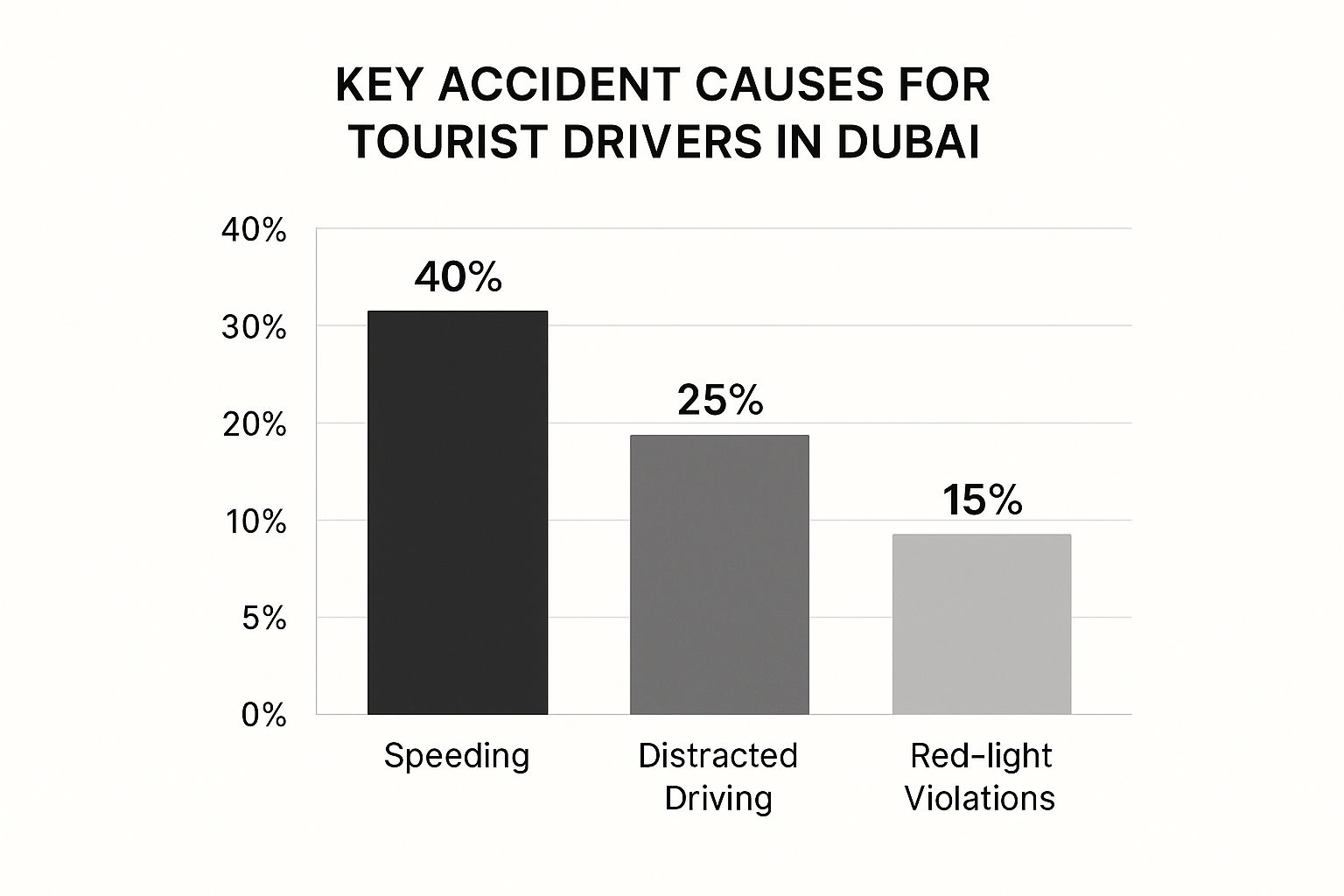
The infographic above shows the main reasons for accidents involving tourists in Dubai. Speeding accounts for 40% of accidents, followed by distracted driving at 25%, and red-light violations at 15%. This highlights the importance of following speed limits, staying focused, and obeying traffic signals. Being well-prepared and following these tips can help you enjoy a smooth and stress-free driving experience in Dubai.
To help you prepare, let's take a look at the documentation needed to rent a car.
Tourist Car Rental Requirements Comparison
Essential documentation and requirements for different tourist categories renting cars in Dubai.
| Requirement Type | GCC Residents | International Tourists | Long-term Visitors |
|---|---|---|---|
| Driver's License | Valid GCC license | Home country license (up to 6 months) / IDP recommended | Valid UAE license |
| Passport | Required | Required | Required |
| Credit Card | Required | Required | Required |
| Visa (if applicable) | Not applicable | Tourist visa / relevant visa | Residence visa |
| Insurance | Basic usually included, CDW/Theft Protection recommended | Basic usually included, CDW/Theft Protection recommended | As per UAE regulations |
This table summarizes the main requirements for renting a car in Dubai. While the core requirements are similar, the type of driver's license and visa requirements differ based on your residency status. Ensuring you have the correct documentation will make the rental process much smoother.
When Things Go Wrong: Emergency Action Plan for Tourists
Driving in Dubai offers an incredible sense of freedom, but it's important to be prepared for unexpected situations. This section provides a clear action plan for handling emergencies, from minor fender-benders to more serious incidents.
Handling Minor Accidents
If you're involved in a minor accident, the first step is to move your vehicle to a safe location, away from the flow of traffic. This prevents further disruption and ensures your safety. Then, contact your rental company immediately to report the incident and follow their instructions. Finally, thoroughly document the accident. Take photos of the damage and exchange information with the other driver. This documentation will be essential for any insurance claims.
Responding to Major Accidents
In a more serious accident, safety is paramount. Ensure everyone involved is out of harm's way and administer first aid if necessary. Immediately dial 999 for emergency services. Clearly explain the location and the nature of the accident to the dispatcher, remaining calm and answering their questions accurately. As with minor accidents, document the scene with photos and gather information from witnesses and other involved parties.
Navigating Insurance Claims and Local Authorities
After any accident, contact your insurance provider as soon as possible to start the claim process. Cooperate fully with local authorities, providing them with all the necessary information. This will help ensure a smooth and efficient resolution. Remember to keep copies of all documents related to the accident for your records.
Essential Contacts and Multilingual Support
Knowing the right contact numbers in an emergency is crucial. The table below, "Dubai Emergency Contacts for Tourists," provides key contact information for various emergency services, focusing on driving-related incidents. Dubai caters to a diverse tourist population, and thankfully, many services offer multilingual support.
To help you navigate emergencies while driving in Dubai, the following table provides essential contact information:
| Service Type | Phone Number | When to Use | Language Support |
|---|---|---|---|
| Police | 999 | Report accidents, crimes, or suspicious activity | Multilingual |
| Ambulance | 998 | Request medical assistance in case of injuries | Multilingual |
| Fire Department | 997 | Report fires or fire-related hazards | Multilingual |
| RTA (Roadside Assistance) | 8009090 | Request roadside assistance for breakdowns or minor incidents | Multilingual |
| Rental Company | (Check your rental agreement) | Report accidents or vehicle problems | Varies |
Having these contacts readily available can save valuable time and provide much-needed support during stressful situations.
Protecting Your Interests as a Tourist
When dealing with local authorities, maintain a polite and cooperative demeanor. Clearly explain your situation and provide any requested documentation. If you feel overwhelmed or uncertain about how to proceed, don't hesitate to contact your embassy or consulate. They can offer valuable guidance and support.
Being prepared with a clear action plan and the right information can transform a potentially overwhelming experience into a manageable one. With the right preparation, you can confidently navigate any driving challenges that may arise during your trip to Dubai.
Looking for a premium rental experience? Uptown Rent A Car offers a fleet of luxury vehicles and exceptional customer service. Book your dream car today.